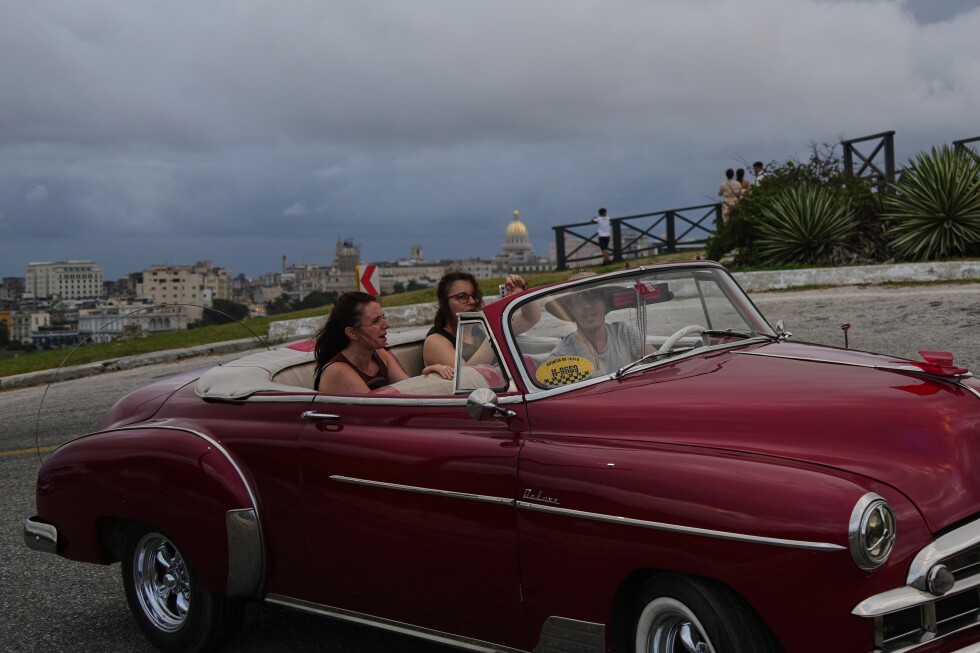
HAVANA — Under the shade of a beach almond tree, classic car drivers leap to their feet as tourists disembark from a yellow bus near Havana’s seawall. But hopes quickly fade as visitors snap selfies with the vintage vehicles—a 1950 Pontiac here, a 1960 Buick there—before walking away without booking rides.
“This is grim,” lamented Reymundo Aldama, leaning against his bubblegum pink 1957 Ford Fairlane convertible. “We’re waiting for them to come, we’re waiting for work.”
Cuba’s tourism sector is experiencing a catastrophic decline, with visitor numbers plummeting by more than half since 2018. The dual blows of COVID-19 pandemic restrictions and severe energy blackouts have been exacerbated by tightened U.S. sanctions, creating what experts warn could become an economic disaster for the island nation.
The crisis hits particularly hard for Cubans whose livelihoods depend on tourism. Rosbel Figueredo Ricardo, 30, who sells popular fried flour chips called “chivirico,” now loads only 50 bags daily compared to his previous 150. “I’m a mid-level industrial mechanical technician, and look at me here,” he said, supporting a partner and three children with another on the way.
Statistics reveal the dramatic downturn: from January to November 2025, Cuba welcomed approximately 2.3 million tourists, significantly fewer than the 4.8 million recorded in 2018. The industry, which once generated up to $3 billion annually, has seen restaurants sit empty, tourism buses run near-vacant, and classic car drivers struggle to find even one customer per day.
Multiple factors contribute to the decline. The Trump administration’s 2019 ban on cruise ship visits eliminated one of the most popular travel methods to the island. Recent disruptions in Venezuelan oil shipments following U.S. actions against the South American country have exacerbated energy shortages. Additionally, visitors report being deterred by growing tensions between the U.S. and Cuba, utility cuts, and accumulating garbage in tourist areas.
Gaspar Biart, a double-decker tourism bus driver with 16 years of experience, noted: “There’s been a huge change. Sanctions imposed by U.S. President Donald Trump have closed Cuba’s doors. We can’t even breathe.”
International visitors express mixed reactions. Vincent Seigi from Russia observed “so many poor people, sadly” and noted Cuba’s economic struggles might preview what could happen in his own sanction-impacted country. In contrast, Brazilian teacher Gloraci Passos de Carvalho admired Cuban resilience: “It’s a lesson for people, to survive with less… I see it in a positive light.”
With Venezuela’s support diminished, questions arise about whether China or Russia might fill the void. Meanwhile, classic car drivers like Aldama have slashed prices from $50 to $20-25 per tour, wondering how long they can continue before seeking alternative employment.