On the morning of April 7, 2026, US President Donald Trump issued an extraordinary threat to wipe out an entire civilization in Iran. By the end of that same day, he had done an abrupt about-face, announcing a two-week ceasefire between the two nations. The sudden, dramatic reversal left international observers stunned, struggling to parse what the sudden shift means for regional security and global order.
While it remains impossible to forecast with certainty whether the ceasefire will hold or how coming events will unfold, existing conflict dynamics already lay bare critical short-term vulnerabilities and severe long-term risks for the entire Middle East. Barely hours after the truce was announced, cracks began to emerge: the US and Iran have already put forward conflicting accounts of the agreement’s terms, most critically over whether the ceasefire applies to the ongoing war in Lebanon.
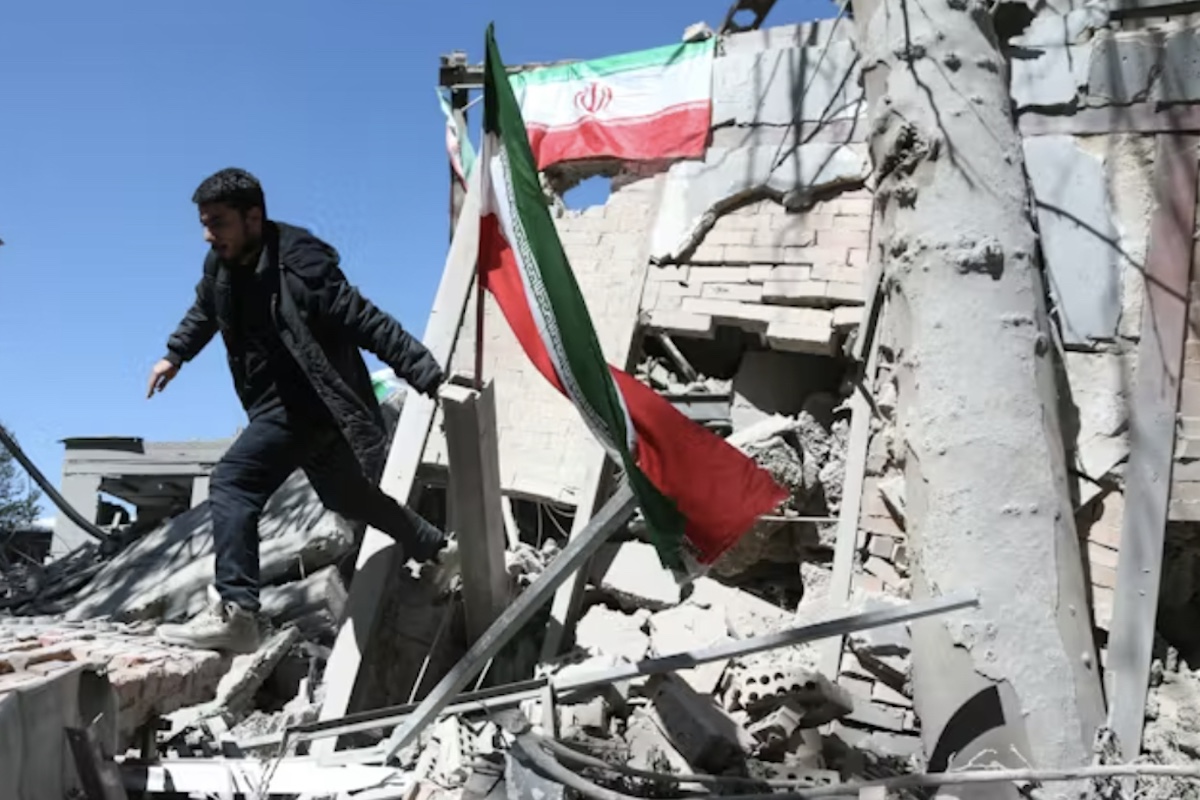
Pakistan, the lead mediator that brokered the deal alongside Iran, insists the truce extends to Lebanese hostilities. But the US and Israel, which has agreed to abide by Washington’s agreement, reject this framing. Just 24 hours after the ceasefire entered into force, Israel launched one of its most intensive bombing campaigns across Lebanon to date, leaving civilian homes destroyed and displacing hundreds. Photographic evidence captured by AP journalist Emilio Morenatti shows a Lebanese civilian salvaging what few belongings he can from the rubble of his destroyed home, a stark reminder of the human cost even after a formal ceasefire is declared.
As a scholar specializing in Middle East politics, I argue that the wide web of state and non-state actors involved in both negotiations and the conflict itself makes upholding any short-term truce an uphill battle. Over the past decade, shifting regional alliance structures have pushed many regional powers to pursue increasingly assertive foreign policies, deepening the long-running bitter rivalry between Iran and Saudi Arabia. The current war has only supercharged these competitive dynamics, giving both governments and armed militant groups new openings to gain leverage over their rivals and advance narrow interests.
This current crisis also underscores a painful truth: decades of external great power intervention, and a repeated preference for military escalation over diplomatic negotiation, have made sustainable conflict resolution exponentially more difficult in a region already scarred by centuries of imperial expansion, great power competition, and intractable political divides.
### Widening Regional Fault Lines
One of the most striking features of the war that erupted in Iran on February 28 is how rapidly it escalated geographically, drawing in a growing cast of actors far beyond the original three core parties: Israel, the United States, and Iran. All three core states are currently grappling with their own internal political crises, deep domestic polarization, and growing challenges to governing legitimacy. Meanwhile, outside powers including China, Russia, and Pakistan have all inserted their own strategic interests and diplomatic capital into the conflict, engaging indirectly to advance their own regional goals.
The conflict has also pulled in a wide range of regional governments and armed groups, from Saudi Arabia and the Gulf Cooperation Council states to Lebanon’s Hezbollah and Yemen’s Houthi movement. This broadening of the conflict is guaranteed to deepen pre-existing regional fault lines, raising the risk of sustained sectarian conflict and persistent tension for decades to come.
Already, the war has done profound damage to the United States’ reputation and credibility across the Arab world, while also eroding public trust in international legal and humanitarian frameworks meant to prevent civilian harm. The human toll of the conflict to date is staggering: more than 1,200 Iranian civilian casualties, over 3.2 million Iranians displaced from their homes, and widespread destruction of critical civilian infrastructure. Thirteen US service members have also been killed, alongside more than two dozen casualties in Israel and the Gulf states. This does not account for the catastrophic toll in Lebanon, where more than 1,500 people have died and over 1 million have been displaced since hostilities spilled over the border in early March.
### How Local Conflicts Fuel Regional Instability
The Houthi movement in Yemen offers a revealing case study of how long-running unresolved local disputes become entangled in wider regional conflict. The Houthi movement, a Zaydi Shia rebel group that seized Yemen’s capital Sanaa in 2014, has been the target of sustained military intervention by Saudi Arabia and the United Arab Emirates since 2015. That years-long military campaign pushed the group steadily into closer alignment with Tehran.
Avowed opponents of the state of Israel, the Houthis declared war on Israel immediately after the October 7, 2023 Hamas attacks and Israel’s subsequent military campaign in Gaza. In 2024, the movement launched a series of attacks on commercial shipping transiting the Red Sea near the Bab el-Mandeb Strait, a critical global maritime chokepoint. That campaign foreshadowed Iran’s own later decision to block the Strait of Hormuz, another key energy transit chokepoint, during the 2026 crisis.
The Houthi shipping campaign prompted the US to assemble a large international counterattack coalition, launch sustained military strikes against the group, and re-designate the Houthis as a foreign terrorist organization. The confrontation eventually ended with a US-Houthi ceasefire deal in May 2025. But the underlying regional disputes and domestic fractures that drove the Houthi involvement in regional conflict were never resolved. When the 2026 war in Iran broke out, the Houthis re-entered the fray, launching a direct attack on Israel on March 28.
The group has refrained from resuming Red Sea shipping attacks and is currently abiding by the April ceasefire. But its decision to join the war allowed the politically and militarily weakened Houthi movement to demonstrate its resolve, operational capacity, and loyalty to its alliance with Iran, even as Yemen continues to grapple with a catastrophic economic collapse and one of the world’s worst humanitarian crises. The Houthis now hold new leverage that they can use to derail ongoing diplomatic efforts if it serves their interests.
### The Heavy Cost of Rejecting Diplomacy
The Houthis are far from the only actor that has framed the 2026 war on Iran as an opportunity to expand regional influence. Just as the Houthis and their rivals use regional conflict to boost domestic legitimacy and gain strategic advantages, the core conflict parties – Iran, Israel, and the United States – are also re-fighting decades-old unresolved disputes on the battlefield.
Amid this cascade of overlapping crises and competing interests, the United States’ own strategic goals in the conflict have remained frustratingly unclear. The Trump administration has flip-flopped between framing the war as a mission to achieve regime change in Tehran and reframing it as an effort to prevent Iran from developing operational nuclear weapons capabilities.
So far, there is no indication that upcoming talks to extend the current two-week ceasefire into a full, permanent diplomatic agreement will succeed in stopping Iran’s uranium enrichment program. One of the core sticking points in the current negotiating framework is whether the international community will formally accept Iran’s right to conduct civilian nuclear enrichment.
This issue has a long, well-documented history: in 2018, the first Trump administration withdrew from the Joint Comprehensive Plan of Action (JCPOA), the multilateral Iran nuclear deal. Under that agreement, Iran had accepted strict limits on its uranium enrichment program to block any path to developing a nuclear weapon, and fully complied with inspections by the International Atomic Energy Agency for years. It was only after the US withdrawal from the deal that Iran began expanding its uranium stockpiles and advancing its enrichment program.
In her 2020 book *Not for the Faint of Heart*, which chronicles the 22-month diplomatic process that led to the JCPOA, former lead negotiator Ambassador Wendy Sherman detailed just how complex, challenging, and delicate multiparty diplomatic negotiations with Iran can be. But the 2026 war on Iran makes clear that the aggressive, military-first approach to Iran and the wider Middle East favored by the current US administration and Israeli government carries severe, long-lasting costs and risks.
After weeks of war with unclear strategic objectives, vague end goals, and catastrophic human costs, the Middle East is far less stable than it was before hostilities began. That has made the path to a long-term, durable peace far more difficult to achieve, even now that diplomacy has finally returned to the table.