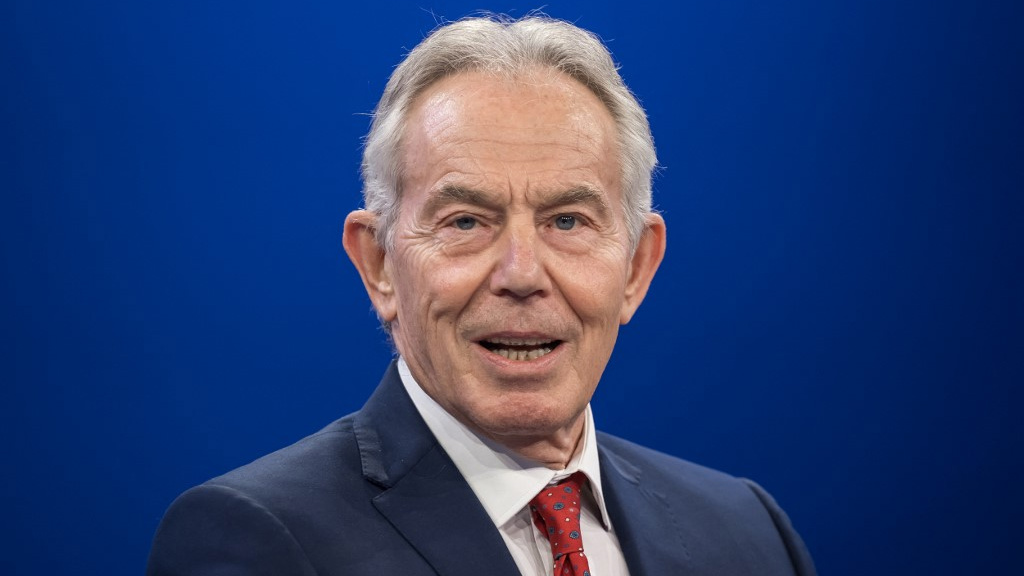
Former British Prime Minister Tony Blair attributed the protracted crisis in Gaza to “extremism” and “corruption” during his keynote address at the inaugural session of Donald Trump’s “Board of Peace” in Washington DC on Thursday. Blair asserted that decades of dysfunctional governance, characterized by ineffective institutions and absent economic opportunities, have stifled the region’s potential.
Despite acknowledging Gaza’s strategic advantages—including its Mediterranean coastline, proximity to major markets, and youthful demographic—Blair’s commentary notably omitted any reference to Israel’s military occupation or its role in the ongoing conflict. Instead, he championed President Trump’s 20-point reconstruction plan as the singular viable solution for Gaza’s future.
The event revealed significant diplomatic fissures. While Blair participated in a personal capacity, the United Kingdom has formally declined membership in the initiative. This distance was reinforced by Keir Starmer’s Labour government, with Blair’s former chief of staff, Jonathan Powell, privately clarifying that the ex-PM does not represent British state interests. Powell reportedly lobbied against Blair’s involvement, according to anonymous sources familiar with the matter.
Blair’s analysis faced immediate criticism from regional experts. Chris Doyle of the Council for the Arab-British Understanding (CAABU) labeled Blair a “serial failure in Palestine,” accusing him of possessing a colonial mindset and aligning with power structures rather than pursuing equitable solutions.
The historical context underscores the complexity: Israel’s 2005 withdrawal was followed by a stringent blockade after Hamas’s 2007 electoral victory, leading to four major military operations that resulted in extensive Palestinian casualties. Current estimates, including a Lancet study, indicate that violent deaths alone may exceed 75,000, with total fatalities representing over 3.4% of Gaza’s pre-war population.
Financially, nine nations—Kazakhstan, Azerbaijan, UAE, Morocco, Bahrain, Qatar, Saudi Arabia, Uzbekistan, and Kuwait—pledged $7 billion toward humanitarian efforts. However, the Board’s charter makes no explicit mention of Gaza or Palestinians, and the US has abandoned its longstanding advocacy for a two-state solution, marking a significant policy shift under the Trump administration.