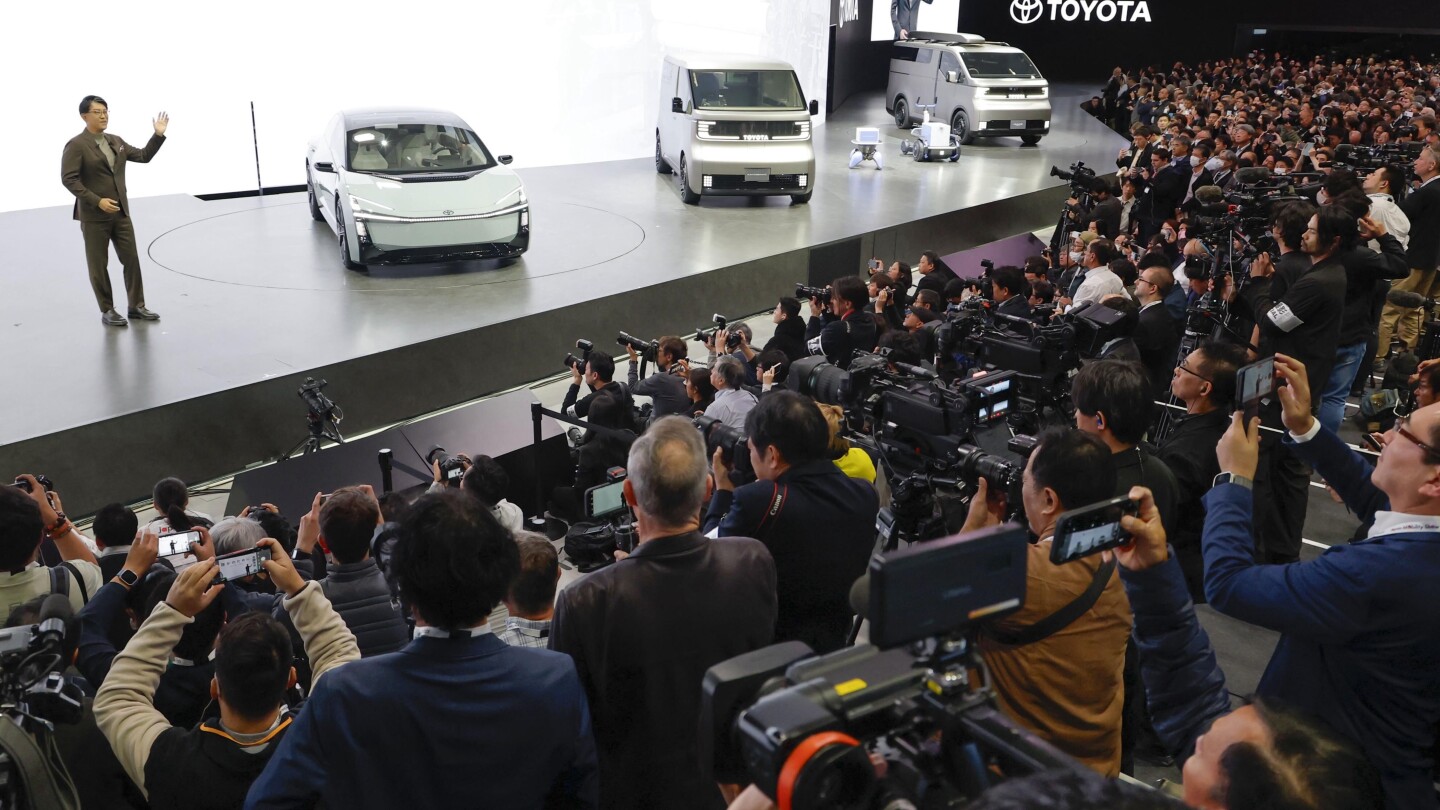
The Tokyo Mobility Show, currently underway at Tokyo Big Sight, is showcasing a dazzling array of futuristic transportation solutions, ranging from electric vehicles to cutting-edge personal mobility devices. Among the highlights is Honda Motor Co.’s Uni-One, a robotic chair designed for quick, quiet personal transport by 2035. Toyota Motor Corp. also unveiled a helicopter-like aircraft with six propellers, developed in collaboration with U.S. aviation firm Joby, though it remains in the experimental phase. The event, which opened to the public on November 9 after a media preview, emphasizes innovation in mobility while addressing broader industry challenges. A significant backdrop to the show is the looming impact of U.S. tariffs on Japanese automakers. President Donald Trump’s decision to raise auto tariffs from 2.5% to 15% is projected to slash over 2 trillion yen ($13 billion) from annual operating profits. Japanese automakers, including Mazda and Nissan, are responding with strategies to mitigate these effects. Mazda’s CEO, Masahiro Moro, highlighted efforts to develop emotionally intelligent vehicles and sustainable technologies. Nissan showcased its Sakura electric car prototype, featuring a solar-powered roof called the ‘Ao-Solar Extender,’ designed to generate electricity for household use and emergency power during disasters. Meanwhile, Toyota and Nissan are considering importing U.S.-made models back to Japan to address trade imbalances. The Japanese government has pledged to invest $550 billion in the U.S. and purchase Ford vehicles. Despite these challenges, Japanese automakers remain committed to innovation and market adaptation. Toyota’s CEO, Koji Sato, emphasized tailoring offerings to diverse customer preferences, while Nissan’s Ivan Espinosa underscored the importance of Japan as a core market. The show also featured Toyota’s Land Hopper, a collapsible electric bicycle designed to complement the upcoming Land Cruiser FJ. As automakers brace for the full impact of tariffs in 2024, analysts predict increased U.S. production and diversification into markets like Australia and Canada.