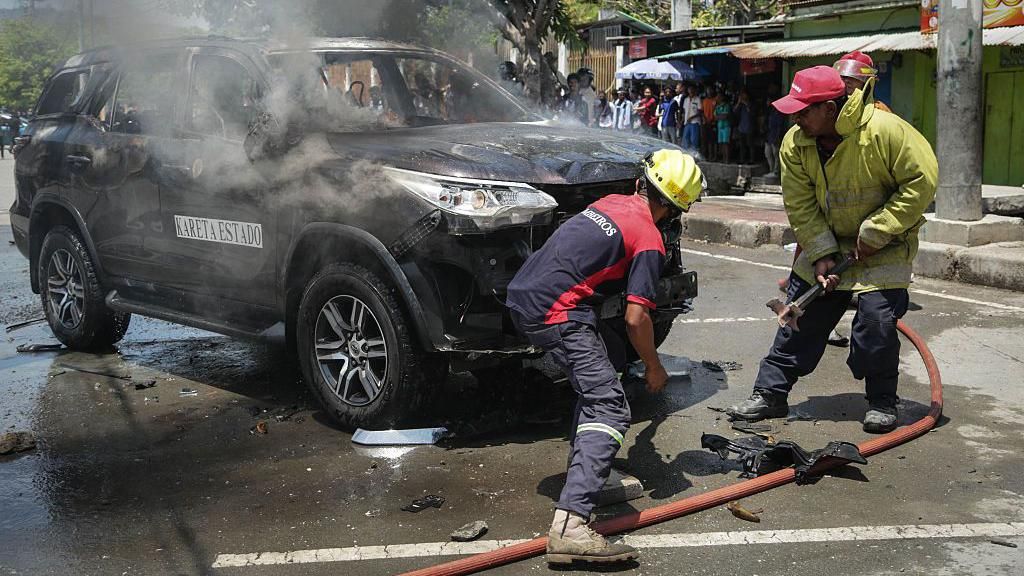
Timor-Leste has reversed its controversial decision to provide lawmakers with free cars following widespread public outcry and protests. The plan, which sparked outrage among citizens, led to demonstrations in the capital, Dili, where protesters burned tires and set a government vehicle ablaze. Police responded with tear gas, but the government ultimately succumbed to public pressure and canceled the initiative on Tuesday. Despite this, protests persisted on Wednesday, with an estimated 2,000 demonstrators demanding further reforms, including the abolition of lifetime pensions for retired lawmakers. The unrest reflects broader discontent with perceived government excesses and inequality in the region. Lawmakers in Timor-Leste earn an annual salary of $36,000, over ten times the country’s average income of $3,000, exacerbating public frustration. Protest leader Cezario Cesar highlighted the disparity, stating, ‘People don’t have access to good education, water, and sanitation… we have a lack of facilities, but they’re still creating laws to benefit themselves.’ The protests have expanded beyond the car issue, with demonstrators calling for systemic changes to address corruption and inequality. Similar anti-government movements have recently emerged across Asia, including in Nepal and Indonesia, driven by anger at political elites and economic hardships. Timor-Leste, one of Southeast Asia’s youngest and poorest nations, remains a symbol of democratic resilience, with protests seen as a normal part of its political landscape.