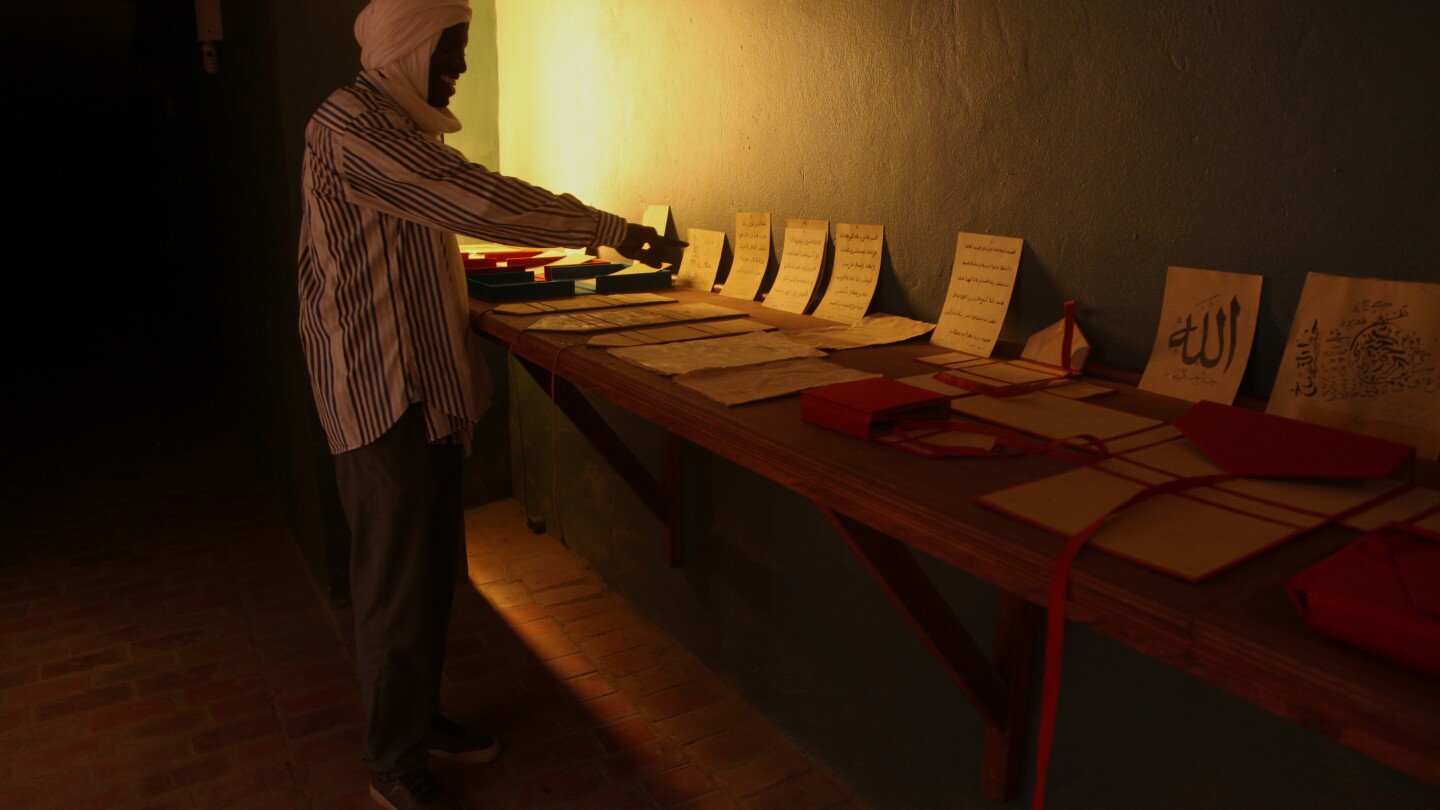
In a daring act of cultural preservation, Abdoulaye Cissé, the general secretary of the Ahmed Baba Institute of Higher Islamic Studies and Research, risked his life to smuggle 28,000 fragile manuscripts out of Timbuktu thirteen years ago. This heroic effort unfolded as al-Qaida-linked extremists overran the historic desert town. Under the cover of darkness, Cissé and his team transported the manuscripts via donkey carts, wooden boats, and buses on a perilous 1,200-kilometer journey to Mali’s capital, Bamako. The operation, which took a month, was fraught with danger but ultimately successful in safeguarding these irreplaceable artifacts of West African history. In August, the manuscripts were returned to Timbuktu, a move celebrated by local leaders and the Malian government as a triumph of cultural pride and preservation. However, the threat of al-Qaida persists, with recent attacks and a fuel blockade imposed by the JNIM group underscoring the ongoing instability in the region. Timbuktu, once a global center of Islamic learning, houses an estimated 377,000 manuscripts in both public and private collections. These documents, many of which were also smuggled to Bamako, challenge the misconception that African history was primarily oral. They provide a rich archive of West African empires, scholarly debates, and historical events dating back centuries. The manuscripts reveal a tolerant and respectful Islamic tradition, with one decree in a private library explicitly protecting women’s rights. The destruction of over 4,000 manuscripts and UNESCO World Heritage Sites by al-Qaida in 2012 was a devastating blow, prompting renewed efforts to digitize and protect these treasures. Today, nearly all of the institute’s manuscripts are digitized, with backups stored on remote servers. Despite these advancements, challenges remain, including the need for modern storage facilities and surveillance systems. Timbuktu’s residents, deeply committed to their cultural heritage, strive to balance preservation with accessibility, ensuring that these manuscripts continue to inspire and educate future generations.