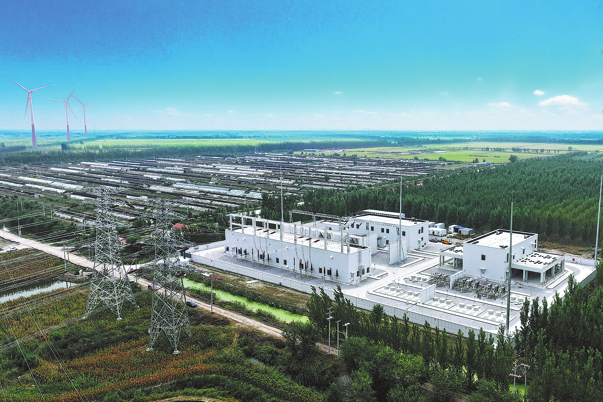
Tianjin has solidified its position as China’s premier hub for green electricity trading, with renewable energy transactions soaring to 17.3 billion kilowatt-hours in 2025—a staggering increase from just 12 million kWh recorded in 2021 when the national green electricity market launched. This exponential growth represents approximately 40% of the city’s energy trading activity, marking a transformative shift toward sustainable power infrastructure in the northern port city.
The remarkable expansion has yielded substantial environmental benefits, dramatically reducing carbon dioxide emissions and harmful pollutants including sulfur dioxide, nitrogen oxides and particulate matter. According to State Grid Tianjin Electric Power Co, the emission reductions achieved are equivalent to the annual carbon absorption capacity of 767 million mature trees.
China’s national green electricity market facilitates dual transactions encompassing both physical renewable energy and tradable green certificates. This innovative mechanism enables major energy consumers—particularly manufacturing facilities and data centers—to directly source verified clean power. The system provides corporate buyers with transparent documentation of their renewable energy usage, supporting both environmental targets and corporate sustainability reporting.
The development aligns with China’s broader ecological civilization initiatives, demonstrating how regional energy markets can drive nationwide progress toward carbon neutrality goals. Tianjin’s strategic location as a major industrial center and port city has positioned it ideally to lead this transition, combining renewable energy generation—including offshore wind farms visible from the Binhai New Area—with advanced trading infrastructure.