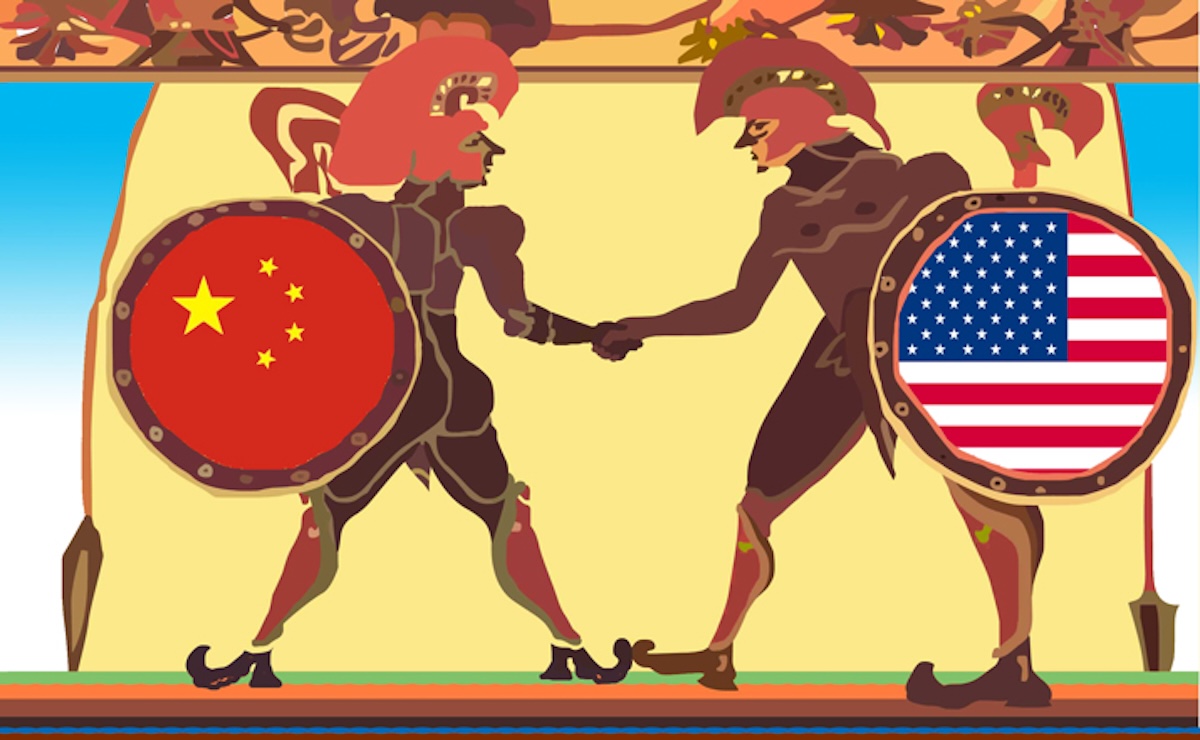
The 21st century has witnessed a seismic shift in global power dynamics, with China’s rapid ascent challenging traditional notions of military and economic dominance. The Thucydides Trap, a theory predicting inevitable conflict between a rising power and an established one, may have been averted due to China’s strategic maneuvers and the obsolescence of expeditionary navies. Recent events in the South China Sea, the Black Sea, and the Red Sea have demonstrated that traditional naval power is no longer the ultimate arbiter of global influence. China’s focus on building airstrips, missile sites, and naval bases in the South China Sea has extended its maritime security perimeter, while its anti-ship ballistic missiles (ASBMs) have rendered US carrier strike groups (CSGs) ineffective. The US Navy’s inability to respond decisively to challenges in the Red Sea and the South China Sea has exposed its limitations, leading to a reevaluation of alliances and strategies. Japan, South Korea, and other nations are increasingly realigning with China, recognizing its economic and technological prowess. China’s manufacturing sector, scientific output, and human capital pipeline have surpassed those of the US, solidifying its position as the established power. As nations adapt to this new reality, the speed of realignment will be astonishing, potentially benefiting all involved and allowing the US to focus on domestic recovery after decades of global hegemony.