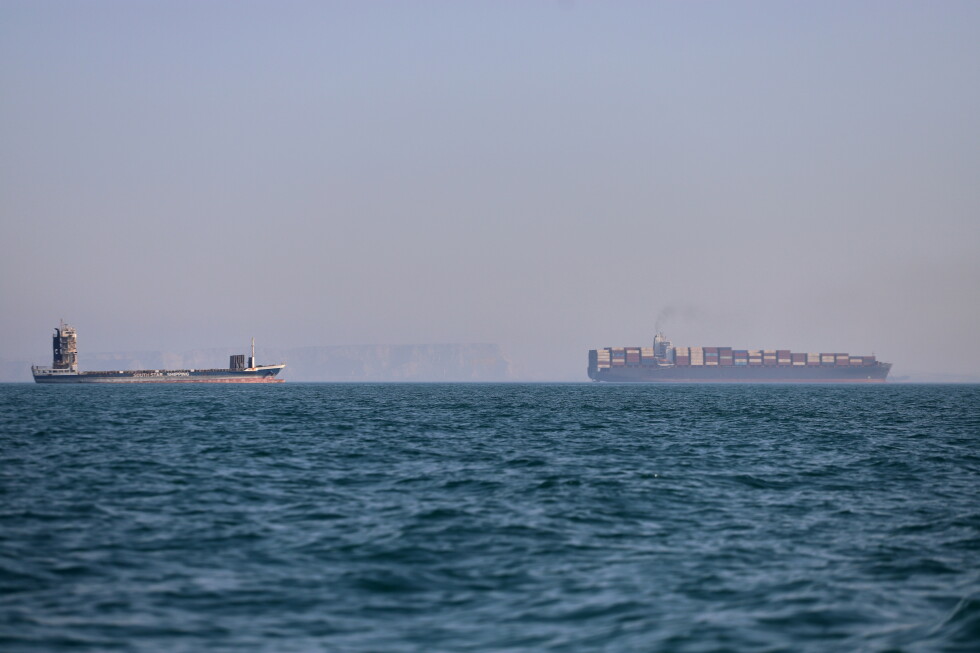
DUBAI, United Arab Emirates – A series of coordinated attacks targeting commercial vessels transiting the Strait of Hormuz, the world’s most critical energy chokepoint, has sent shockwaves through global maritime and geopolitical circles Tuesday, as Iran grapples with the state funeral of its longtime supreme leader Ayatollah Ali Khamenei, killed earlier in an ongoing regional conflict.
The United Kingdom Maritime Trade Operations (UKMTO), a British military-run maritime security body, confirmed that three separate tankers were struck in attacks within the narrow waterway that connects the Persian Gulf to the Arabian Sea. Two vessels were hit by projectiles in the early part of the day, while a third was targeted by a drone hours later. Officials confirmed no fatalities or serious injuries across all three incidents.
Of the two initial projectile strikes, one liquefied natural gas tanker sailing off Oman’s coast caught fire following the impact. Iranian state television claimed the vessel ignored official warnings before the attack, but stopped short of directly claiming responsibility for the assault. Initial assessments indicate the second tanker sustained structural damage, though its exact location at the time of the strike has not been publicly disclosed. The third vessel hit by the drone only suffered minor damage and was able to continue its scheduled voyage after the attack, UKMTO added. No environmentally hazardous leaks have been reported from any of the damaged vessels, and local maritime authorities have launched a full investigation into the coordinated assaults.
Qatari officials later identified the attacked LNG tanker as the Al Rekayyat, which was carrying Qatari natural gas through the strait. Majed Al-Ansari, spokesperson for Qatar’s foreign ministry, condemned the strike as an unacceptable violation of international navigation rules and global energy security, calling it a “serious and explicit violation” of international law. In a post on X, Al-Ansari said Qatar holds Iran fully legally responsible for the attack.
The attacks come amid escalating tensions over shipping access in the strait, which historically carries roughly 20% of the world’s traded oil and natural gas in peacetime. Last Thursday, Iran’s joint military command issued an official warning requiring all tankers transiting the waterway to use only Tehran-approved shipping lanes, and threatened “rapid and decisive reaction” to any interference by U.S. forces in the area. Just one day before the attacks, the U.S. Navy-led multinational Joint Maritime Information Center reassured shipping companies that the expanded route along Oman’s coast remains open and safe for all commercial traffic.
Negotiations between Washington and Tehran, which aim to secure full reopening of the strait, roll back Iran’s disputed nuclear program, and end the ongoing regional conflict that began on February 28, have been paused this week as Iran mourns Khamenei, who was killed in an airstrike earlier this month. The 86-year-old supreme leader’s body was transported Tuesday to Qom, the holy center of Shiite seminary education, ahead of his final burial in his native Mashhad at the Imam Reza shrine. Massive crowds of hundreds of thousands of mourners gathered at Jamkaran Mosque just south of Qom to pay their respects, with many holding banners featuring images of Khamenei and his son, Mojtaba Khamenei, who has been named as the new supreme leader. The younger Khamenei has not appeared at public funeral events, and is widely believed to be in hiding after sustaining wounds in the same airstrike that killed his father. Israel, which has targeted top Iranian leaders throughout the ongoing conflict, has openly threatened to kill Mojtaba Khamenei as well. Many mourners chanted calls for the death of U.S. President Donald Trump during Tuesday’s processions.
U.S. President Trump reignited tensions Monday during a White House appearance, warning Iran that it must “make a deal, or we’re going to finish the job.” “I’d rather make a deal, because I don’t want to affect 91 million people,” Trump said. “We can knock down their bridges in one hour. We can knock out their energy supply.”
The current standoff over the strait stems from an interim 60-day truce deal that allowed commercial ships to transit the waterway without fees, but Iran has since insisted it retains the right to control shipping routes and impose passage fees – a move that upends decades of established open-access practice for the international waterway. The U.S. and a coalition of Gulf Arab states have rejected Tehran’s demand for tolls. Prior attacks on shipping in the strait have sparked U.S. retaliatory strikes in the past, worsening regional conflict.
Despite the escalating tensions, data from shipping analytics firm Kpler shows that at least 108 commercial vessels crossed the strait via multiple routes over last weekend, indicating ongoing commercial activity even amid the standoff.