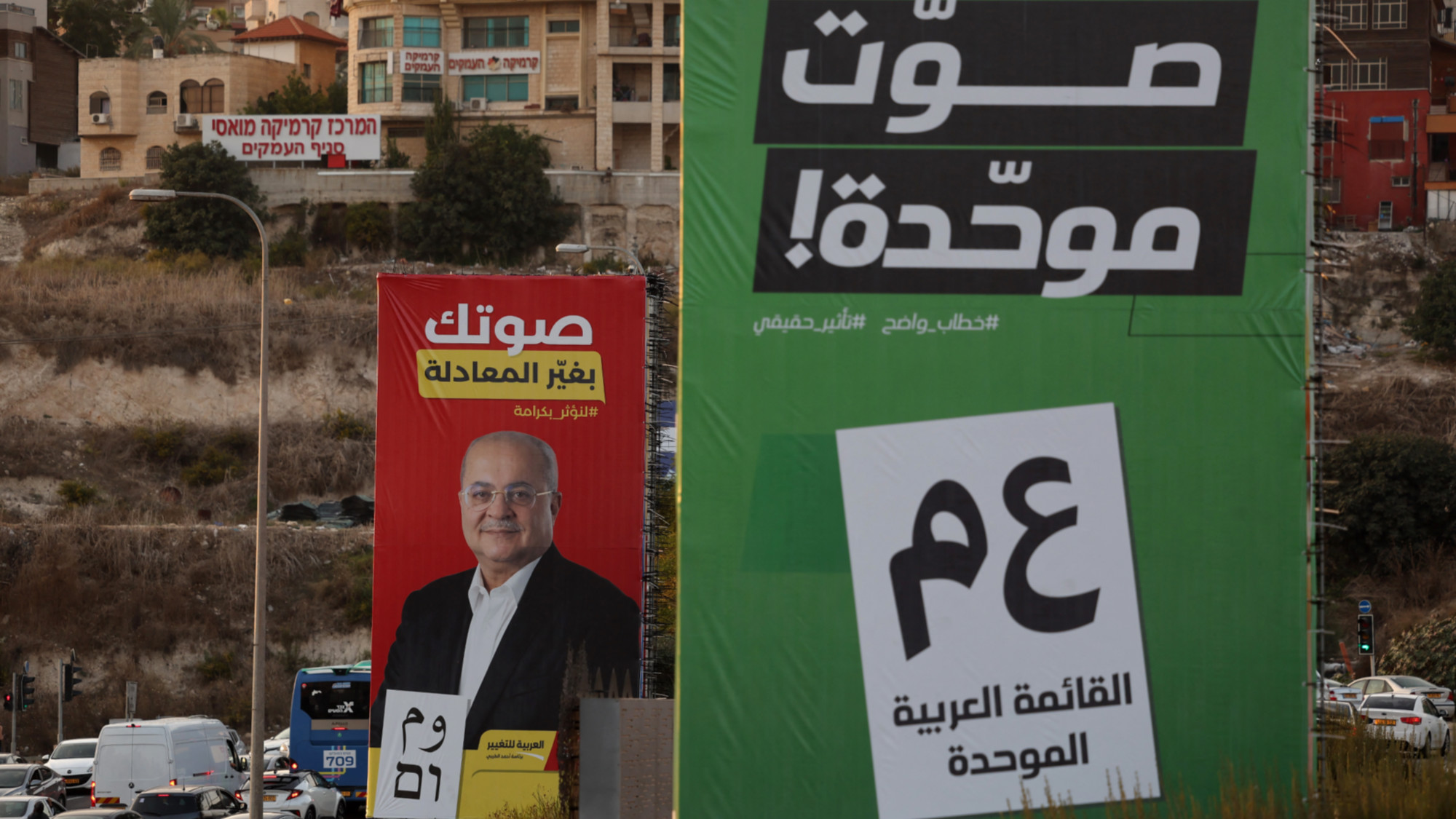
Ahead of Israel’s upcoming parliamentary elections scheduled for October 27, three Palestinian-led political parties operating within Israel announced a historic electoral alliance this Wednesday, reviving the Joint List framework that has historically united Palestinian political factions under a single electoral banner. The coalition, which brings together Hadash (the Democratic Front for Peace and Equality), Balad (the National Democratic Assembly), and Ta’al (the Arab Movement for Renewal), was formed to counter what the parties describe as mounting “fascist and racist” threats targeting Israel’s Palestinian citizen community.
In a shared official statement, the alliance laid out its core political objectives: to consolidate the collective political influence of Palestinian citizens of Israel and convert that momentum into more robust representation in Israel’s 120-seat legislature, the Knesset. “Our task is to harness our collective political weight and translate it into stronger representation in the Knesset,” the statement read. Beyond increasing representation, the parties emphasized their mission to center the interests of Palestinian citizens and their core national principles, while building a unified political force capable of unseating the current far-right Israeli government.
Talks to revive the Joint List have been underway for months, driven by growing pressure on fragmented Palestinian parties to set aside internal divisions. The original Joint List was first launched in 2015, formed in direct response to a controversial legislative change that raised the electoral threshold for Knesset entry from 2 percent to 3.25 percent of the national vote — a change widely interpreted as a deliberate tactic to exclude Palestinian political parties from parliament. The original coalition included the current three alliance members plus the United Arab List (Ra’am), but internal ideological and strategic disagreements led the bloc to fracture first in 2019, and again in 2022.
The push to reunify gained new urgency amid two unfolding crises: the ongoing military campaign in Gaza that many global observers and Palestinian leaders characterize as genocide, and a sharp rise in violent crime within Palestinian communities inside Israel. A nationwide mass strike and large-scale protests against gun violence held in the northern Israeli city of Sakhnin this January pushed leaders of all four former Joint List parties to sign a formal pledge to revive the unified electoral alliance. However, Ra’am leader Mansour Abbas confirmed in June that his party would not join the new coalition, choosing instead to run an independent electoral slate. Ra’am has even held preliminary discussions about adding Yoav Segalovich, a Jewish former Israeli police commander, to its candidate list.
At the height of the Joint List’s electoral success in 2020, the alliance secured 15 seats in the Knesset, earning its place as the third-largest political bloc in parliament. Latest pre-election polling indicates the new three-party alliance could win approximately 8 seats, while independent Ra’am is projected to claim an additional 6 seats. In recent years, Palestinian political parties have taken on growing strategic importance in Israeli politics, as traditional Jewish-led political blocs have consistently failed to secure the 61-seat majority needed to form a government on their own. This has repeatedly positioned Palestinian parties as potential kingmakers, able to throw their support behind either bloc to help form a ruling coalition.
Current polling mirrors this dynamic, indicating that both the bloc led by incumbent Prime Minister Benjamin Netanyahu and the competing opposition bloc headed by Gadi Eisenkot will fall short of a majority without the parliamentary support of Palestinian parties. Despite this, both major Israeli political blocs have publicly ruled out any partnership with Palestinian-led parties following the October election.