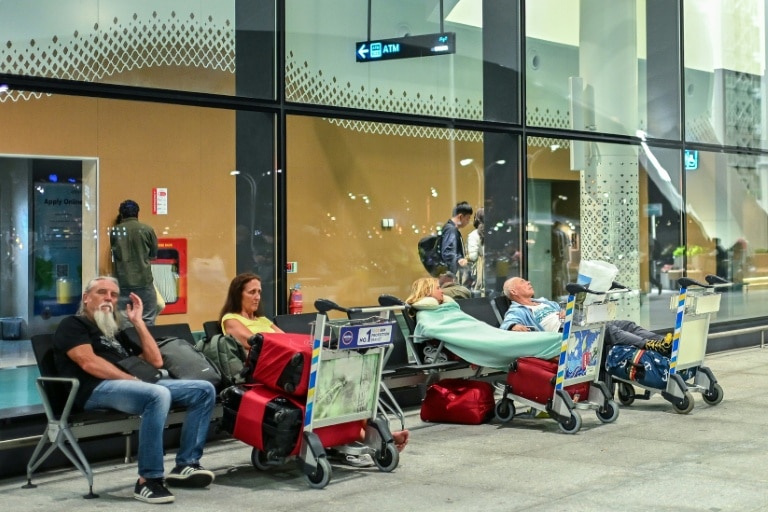
Global aviation networks faced their most severe disruption since the COVID-19 pandemic as escalating Middle East tensions forced widespread flight cancellations and airspace closures. The conflict, sparked by Iranian retaliatory strikes against US-Israeli military actions, has effectively shut down major Gulf aviation hubs including Dubai and Doha, stranding thousands of passengers worldwide.
Aviation analytics firm Cirium reported over 1,500 flight cancellations to the Middle East on Sunday alone, representing more than 40% of scheduled regional traffic. FlightAware data indicated broader global impacts with approximately 2,700 cancelled flights and 12,300 delays by Sunday evening GMT. The cascade of disruptions began when Iran, Iraq, Israel, Syria, Kuwait, Qatar, and the United Arab Emirates implemented full or partial airspace closures in response to military actions.
The economic consequences are already substantial, with industry experts estimating hundreds of millions of euros in losses for air transport providers. Didier Brechemier of Roland Berger noted the unprecedented scale of disruption, stating that even Russia’s invasion of Ukraine didn’t affect Middle Eastern transit hubs to this degree.
Passenger experiences ranged from terrifying to frustrating. Italian rapper BigMama documented her ordeal on Instagram after her flight from the Maldives was diverted to a desert location near Dubai amid missile attacks. ‘We keep hearing missiles over our heads. I’m terrified,’ she shared in an emotional video post. Other travelers faced practical challenges, with one Johannesburg passenger reporting rapidly escalating prices for alternative flights and uncertainty about accommodation.
France and Thailand have begun exploring evacuation options for their citizens, while tourism industry representatives discuss establishing ‘air bridges’ through alternative hubs like Istanbul. The crisis has dealt a significant blow to the Gulf monarchies’ reputation for security and stability, which has been central to their appeal as global business and tourism destinations.
Eyewitness accounts from Dubai described explosions rocking the Palm Jumeirah area, with drone debris causing fires at the luxury Burj Al Arab hotel. French tourist Claudine Schwartz reported being confined to her hotel’s lowest level during the attacks and subsequently registering with her government’s emergency hotline for stranded citizens.