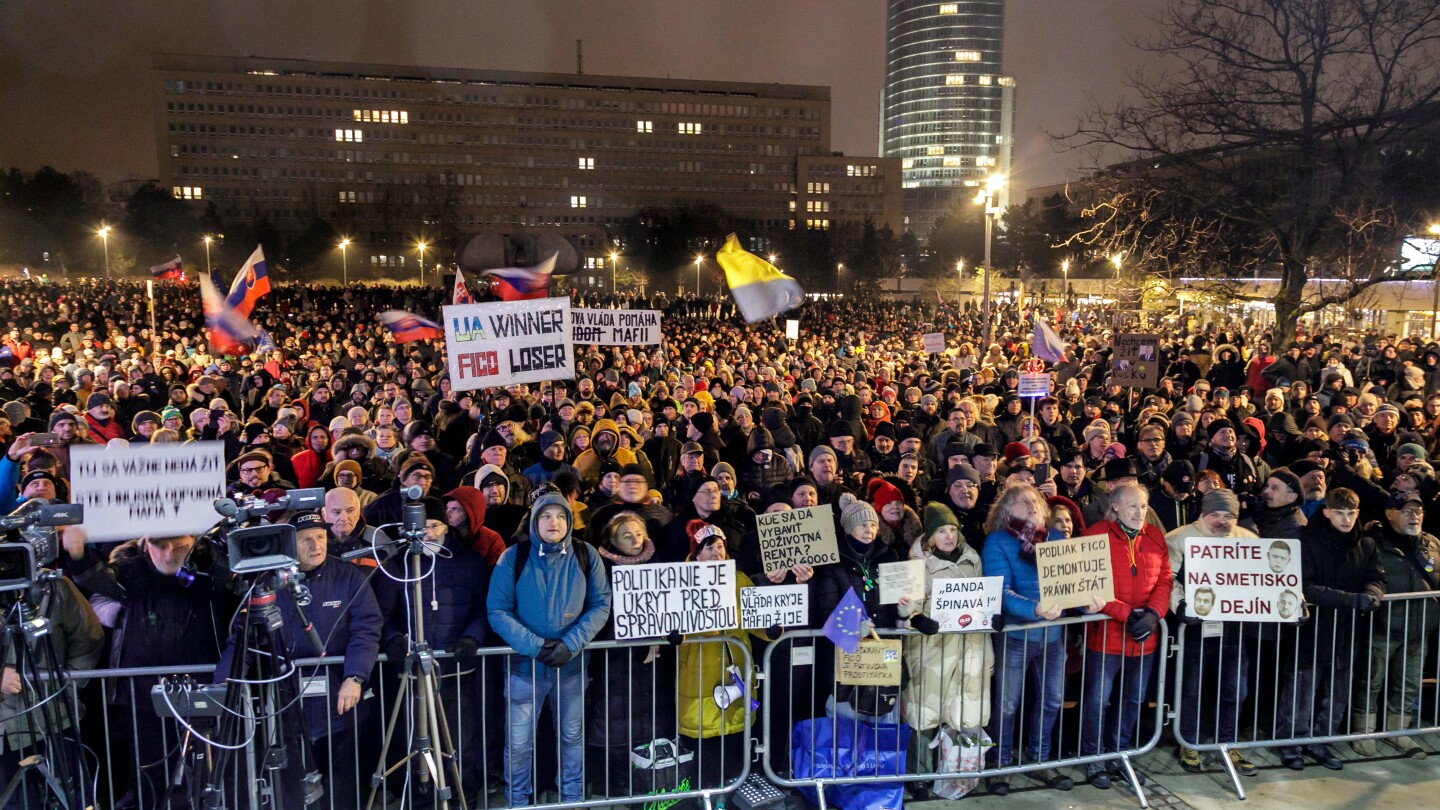
BRATISLAVA, Slovakia — Massive demonstrations swept across Slovakia on Tuesday as thousands of citizens mobilized against Prime Minister Robert Fico’s controversial governmental measures targeting the nation’s anti-corruption infrastructure. Protesters gathered in ten municipalities including the capital, where crowds at Freedom Square voiced their demands with resounding chants of “Resign, resign” directed at the populist leader.
The protests erupted following parliamentary approval of legislation that would dismantle the independent Whistleblower Protection Office—a move that has drawn sharp criticism both domestically and internationally. Simultaneously, lawmakers aligned with Fico’s coalition government endorsed penal code revisions that would prohibit evidence obtained through suspect cooperation with law enforcement, effectively eliminating mechanisms for reduced sentences in exchange for criminal intelligence.
Opposition leader Michal Šimečka of the Progressive Slovakia party addressed the rally, declaring: “Slovakia stands alone as the only nation where governmental authorities enact legislation specifically designed to facilitate criminal and mafia activities.” Protesters displayed banners with the stark message: “Fico’s government helps mafia.”
The reforms have raised particular concerns regarding their potential benefit to Tibor Gašpar, Deputy Speaker of Parliament and Fico ally, who faces impending trial for alleged establishment of a criminal organization. Demonstrators have appealed to President Peter Pellegrini, typically a government supporter, to exercise his veto power against the legislation.
Notably, the protest marked the first participation of László Gubík, leader of the Hungarian Alliance representing Slovakia’s 450,000-strong Hungarian minority. Critics increasingly draw parallels between Fico’s policies and the democratic backsliding observed in Viktor Orbán’s Hungary, signaling growing international concern over Slovakia’s political trajectory.