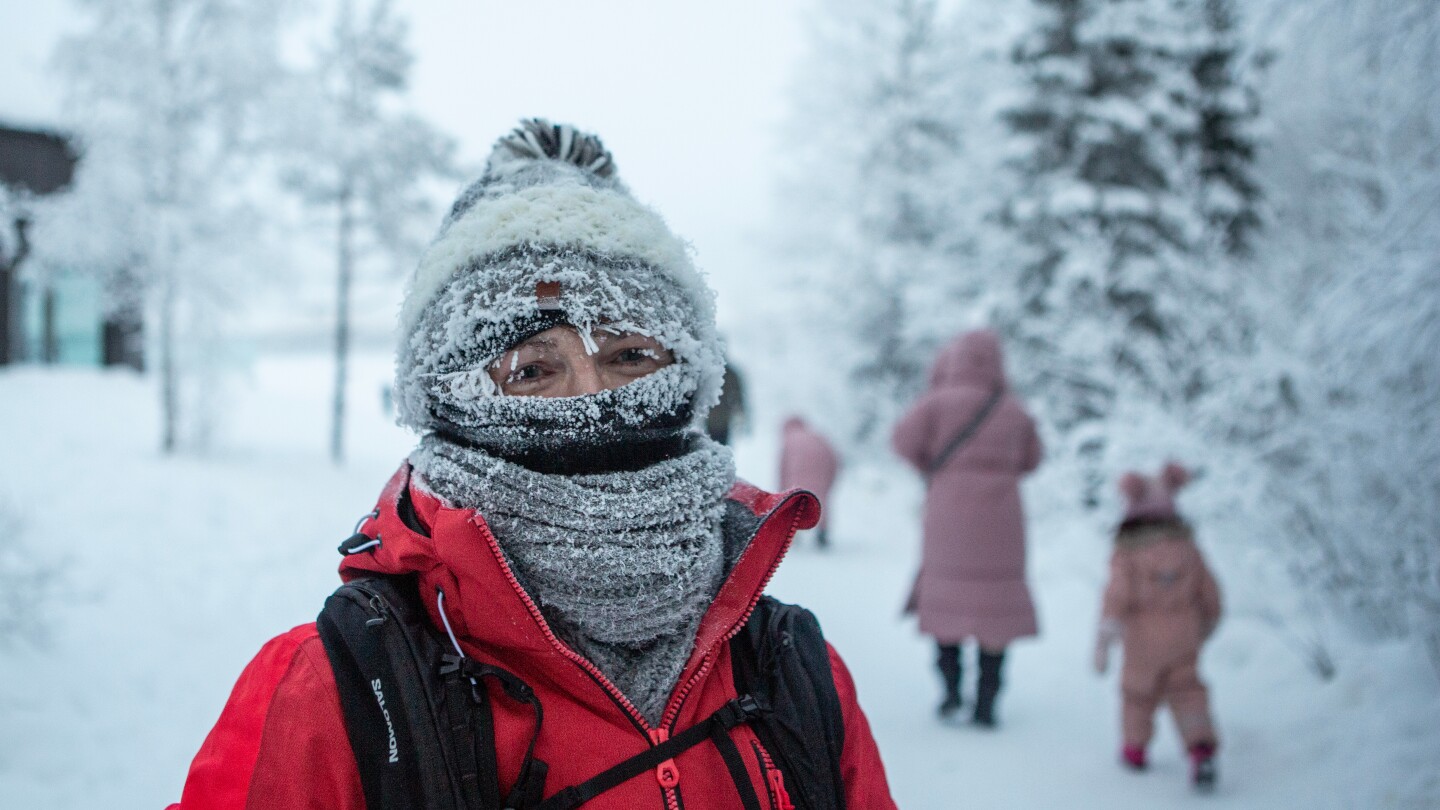
An extreme Arctic cold front has triggered widespread travel chaos across Northern Europe, with Finland’s Lapland region experiencing the most severe disruptions. At Kittilä Airport, a key gateway to Finnish Lapland, all flight operations were suspended Sunday as temperatures plummeted to -37°C (-34.6°F), creating dangerously frigid conditions that made aircraft de-icing and ground operations impossible.
The deep freeze left thousands of tourists stranded in the popular winter destination, with meteorologists predicting even more severe conditions Monday with temperatures approaching -40°C (-40°F). While Finns are accustomed to harsh winter weather, the current cold snap has proven exceptionally severe compared to recent years.
The travel disruptions extended far beyond Finland’s borders. Germany’s rail network continued experiencing significant delays and cancellations Sunday after Deutsche Bahn suspended all northern services Friday due to heavy snowfall. In North Rhine-Westphalia, Germany’s most populous state, authorities preemptively closed all schools Monday, shifting to remote learning amid forecasts of dangerously icy roads.
Baltic nations implemented similar precautions. Both Estonia and Lithuania issued travel advisories urging drivers to postpone nonessential journeys due to approaching blizzards, while Latvia activated snow alerts across its western regions. The persistent cold weather system has affected vast areas of northern, central, and eastern Europe, combining heavy snowfall, high winds, and treacherous road conditions to create one of the most challenging winter travel scenarios in recent memory.