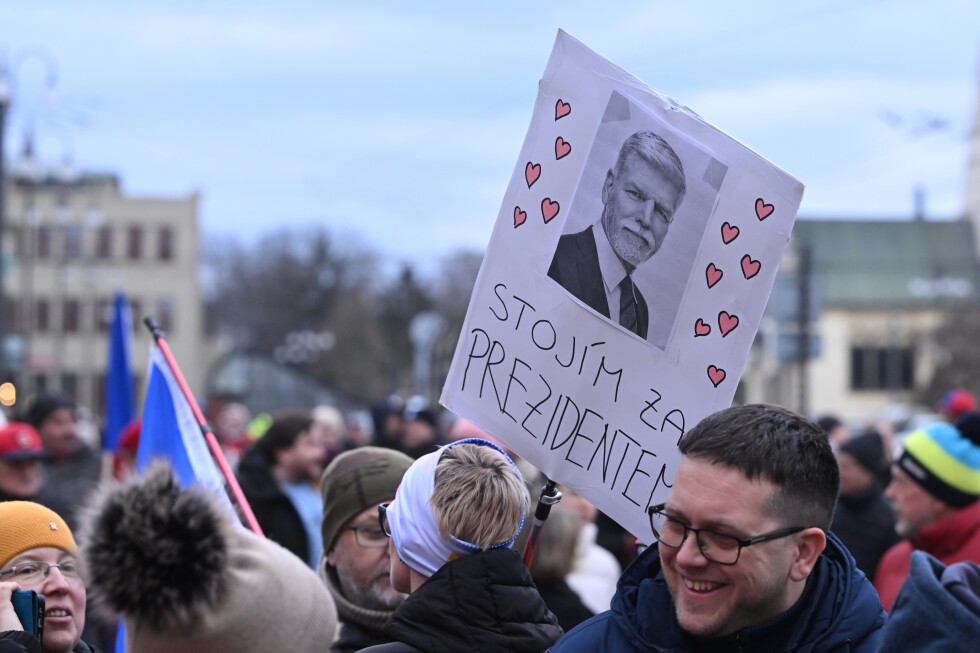
PRAGUE — The Czech Republic witnessed widespread civic mobilization on Sunday as thousands of citizens participated in coordinated demonstrations across approximately 400 municipalities, including major urban centers like Brno. These protests, organized by the pro-democracy group Million Moments, represent a significant show of support for President Petr Pavel amid an escalating constitutional confrontation with Foreign Minister Petr Macinka’s political faction.
The political crisis originated from President Pavel’s principled refusal to appoint Filip Turek as environment minister, a nomination put forward by the eurosceptic Motorists party. This decision followed media revelations exposing Turek’s history of publishing content with racist, homophobic, and sexist undertones on social media platforms. Although Turek offered partial apologies while disputing certain allegations, the president maintained that such appointments would violate ethical governance standards.
Foreign Minister Macinka has escalated tensions by accusing the president of constitutional violations and issuing veiled threats of political consequences. President Pavel has characterized these actions as attempted blackmail, creating an unprecedented standoff between the presidential office and the governing coalition.
This confrontation occurs against the backdrop of a fragile government formation led by populist Prime Minister Andrej Babiš, whose coalition includes the anti-migrant Freedom and Direct Democracy party alongside the Motorists group. The coalition’s agenda includes distancing the country from Ukrainian support mechanisms, challenging EU policy frameworks, and restructuring public broadcaster financing—moves that critics argue threaten democratic institutions.
Mikuláš Minář, the lead organizer of the protests, emphasized that the demonstrations transcend presidential support, representing a broader defense of democratic values against what participants perceive as oligarchic and extremist influences. The protests explicitly position the Czech Republic against the pro-Russian orientations of neighboring Hungary and Slovakia, highlighting the geopolitical dimensions of this domestic political struggle.