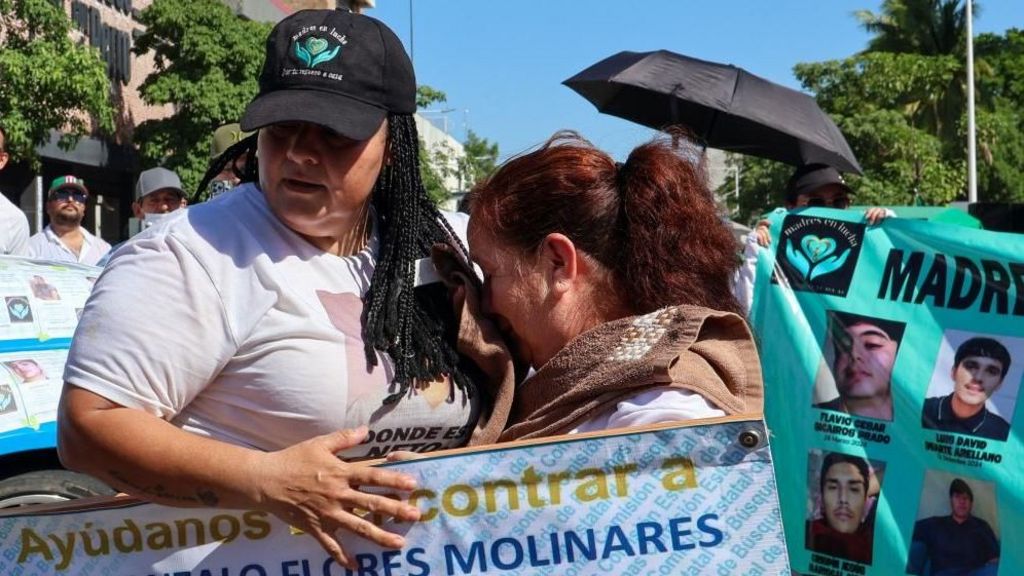
Two years after a deadly internal conflict erupted within the notorious Sinaloa cartel, thousands of frustrated residents of Culiacán, the capital of Mexico’s Sinaloa state, filled the city’s streets on Sunday to raise their collective voice against the unrelenting violence that has upended daily life across the region.
The cycle of bloodshed that has sent murder and disappearance rates skyrocketing across the state traces back to the 2022 arrest of high-profile drug lord Ismael “El Mayo” Zambada by U.S. authorities. Following Zambada’s capture, his faction of the cartel—dubbed La Mayiza—leveled accusations of betrayal against Los Chapitos, the faction led by the sons of jailed cartel founder Joaquín “El Chapo” Guzmán. What began as a dispute quickly devolved into open, brutal warfare that has left ordinary civilians trapped in the crossfire.
Protest organizers said the timing of the march was intentionally chosen to mark the second anniversary of the conflict’s start. Dressed in symbolic white clothing, attendees carried handcrafted posters bearing photos of their missing loved ones and hand-painted signs reading “We don’t want fear, we want peace.” The demonstration brought together a broad coalition of participants: relatives of missing and murdered victims, local business associations, civil society organizations, and leaders from the Catholic Church, which backed the call for an end to bloodshed.
The event opened with a public Mass led by Culiacán’s bishop, who directly addressed the warring cartel members in a heartfelt plea. “Stop, look at what’s happening, look at the affected families, look at the young people and at our city,” he told the crowd. “No amount of power, of money, territory or ambition is worth more than a human life.”
Among the attendees were family members of a one-year-old boy killed just one week before the march, when a stray bullet struck the toddler in the head during a cartel shootout in the city. The child’s death was just the latest high-profile example of the growing human cost of the conflict that has blighted Sinaloa, a state home to more than 3 million residents.
Official data confirms the widespread harm of the internecine war: alongside surging murders and enforced disappearances, rates of extortion and street robbery have also climbed sharply across the state. The economic toll is equally devastating: local business leader Sergio Esquer, who also holds a leadership position with center-left opposition party Movimiento Ciudadano, told reporters that more than 5,000 small and medium businesses have permanently closed since the feud began. “That’s the tragedy Sinaloa is experiencing,” Esquer told AFP.
Beyond the cartel violence, Sinaloa has also been roiled by recent political upheaval that has further destabilized the state. In April, U.S. federal prosecutors publicly named Sinaloa Governor Rubén Rocha and nine other current and former state officials as co-conspirators who collaborated with Los Chapitos to smuggle illicit narcotics into the United States. Rocha has repeatedly denied all allegations of wrongdoing, but stepped down temporarily from his post to allow Mexican federal prosecutors to launch an official investigation.
Three weeks before Sunday’s protest, Rocha returned to office after his temporary leave. But just days later, he requested a second leave of absence, following a public social media post from Mexican President Claudia Sheinbaum that did not name Rocha directly, but warned that “power without principles becomes arrogance.”
For the thousands of marchers who turned out on Sunday, the demonstration is just the latest step in a long fight to reclaim safety and normalcy for their community, after two years of chaos that has left thousands of families shattered.