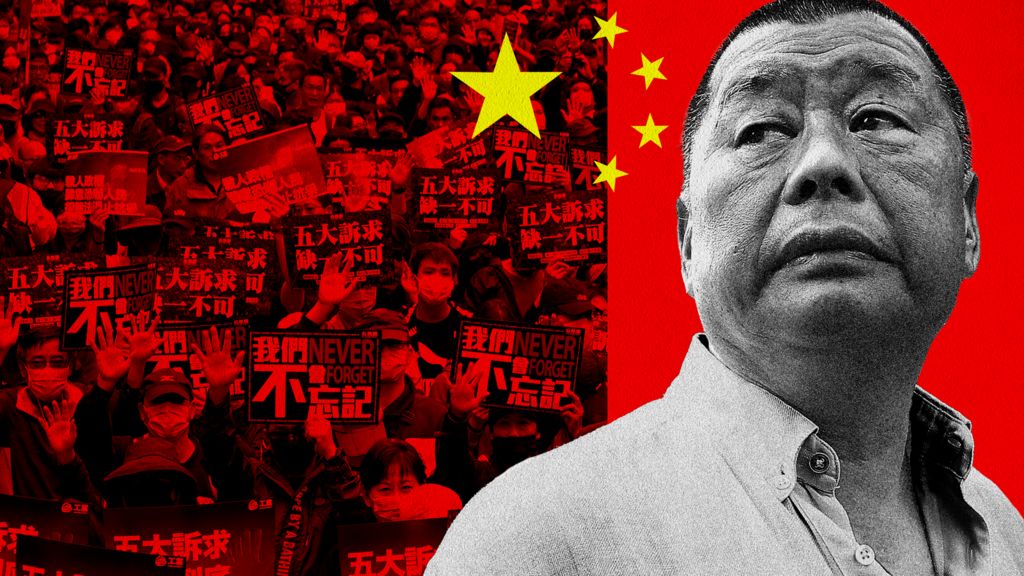
Hong Kong’s High Court has delivered a landmark verdict in the national security case against Jimmy Lai, the 78-year-old British citizen and founder of the now-defunct Apple Daily newspaper. The court found Lai guilty on all charges, including collusion with foreign forces, which carries a maximum penalty of life imprisonment.
The ruling concluded that Lai harbored “a rabid hatred” of the Chinese Communist Party and pursued an “obsession to change the Party’s values to those of the Western world.” The court determined that Lai had actively worked to oust the Party or remove its leader Xi Jinping from power through his media operations and political activities.
Lai’s journey from a Chinese refugee to a Hong Kong business magnate forms the backdrop to this case. Arriving in Hong Kong in 1959 at age 12, Lai built a commercial empire that included the Giordano clothing chain before venturing into media with the establishment of Apple Daily in 1995. The newspaper revolutionized Hong Kong’s media landscape with its innovative layout and controversial content mix that ranged from investigative journalism to adult entertainment guides.
The prosecution built its case around Lai’s use of Apple Daily as a platform for anti-government sentiment during the 2019 protests. Evidence presented during the 156-day trial included testimony from former associates indicating Lai instructed editorial staff to “urge people to take to the streets.” The court particularly noted Lai’s meetings with U.S. officials, including then-Vice President Mike Pence, and his campaign urging readers to write to President Donald Trump to “save Hong Kong” as evidence of colluding with foreign forces.
Hong Kong Chief Executive John Lee welcomed the verdict, stating that Lai had used his newspaper to “wantonly create social conflicts” and “glorify violence.” Lee emphasized that the national security law does not permit anyone to harm the country “under the guise of human rights, democracy and freedom.”
The case has drawn international attention as a bellwether for Hong Kong’s legal environment under the national security law imposed by Beijing in 2020. Supporters of Lai, including family members and former colleagues, maintain that he was merely advocating for Hong Kong’s traditional values of rule of law and freedom of expression.
Lai’s defense argued throughout the trial that his actions constituted legitimate political expression rather than criminal activity. The media tycoon testified that he had only advocated for what he believed were Hong Kong’s core values: “rule of law, freedom, pursuit of democracy, freedom of speech, freedom of religion, freedom of assembly.”
The verdict comes amid broader changes in Hong Kong’s political landscape, with authorities stating the city has moved from “chaos to governance” while critics point to an exodus of residents and diminished freedoms. The case represents one of the highest-profile applications of the national security law that Beijing says was necessary to restore stability after prolonged protests.