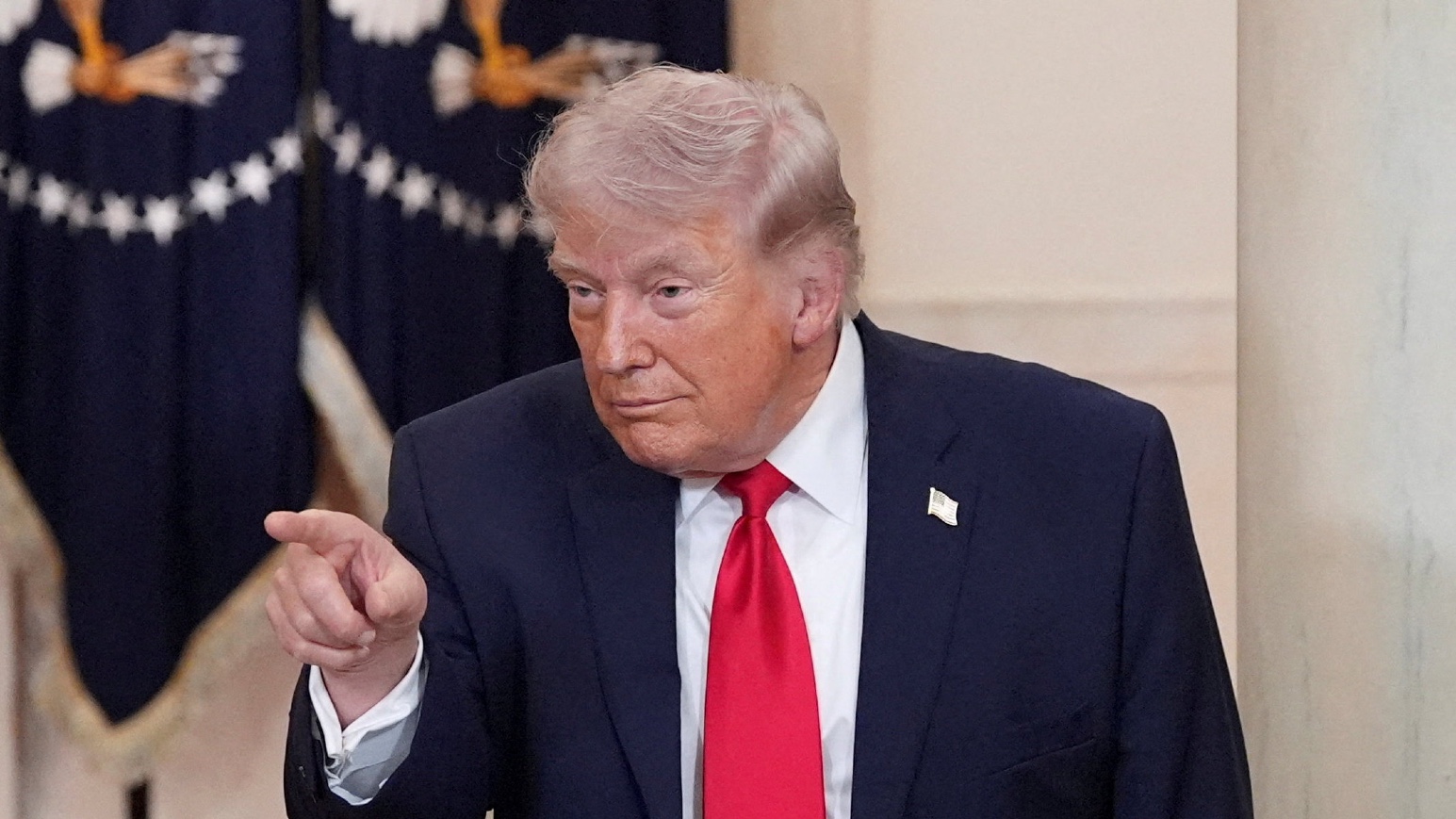
A closed-door, press-excluded Easter gathering between U.S. President Donald Trump and a select group of handpicked Christian leaders took an unexpected turn this week, when the White House accidentally livestreamed portions of the private event before hastily pulling the footage from its official YouTube channel within hours. The originally closed designation was not out of the ordinary for such off-the-record meetings with conservative religious allies, but the leaked footage laid bare a series of unscripted, controversial comments that offer a rare unvarnished look at Trump’s relationships with his evangelical base and his approach to foreign and domestic politics.
Opening his remarks, Trump immediately called on Erika Kirk, widow of late Turning Point USA CEO and conservative commentator Charlie Kirk, urging her to “sue the hell out of” those pushing conspiracy theories that question the official narrative of Kirk’s killing. The arrested young suspect was identified as the perpetrator in official accounts, though emerging forensic evidence has fueled unfounded speculation that other parties were involved, and Trump’s open call for legal action against the spread of these conspiracies marked an unusually blunt intervention into the case.
Over the course of his 40-minute address delivered to a crowd of long-time religious supporters who have repeatedly backed Trump through prayer and political mobilization, the former real estate developer leaned into uncharacteristically candid banter, leaning into jokes and personal asides that he rarely shares in public settings. Reflecting on the Easter story of Jesus’ entry into Jerusalem as king, Trump seized the moment to reference the widespread “No Kings” protests organized by Democrats across the country just days earlier, joking to the room: “They call me king. Now, do you believe it? I’m such a king. I can’t get a ballroom approved.” The quip came just one day after a federal judge ruled Trump had exceeded his executive authority to approve demolishing part of the White House grounds to construct a resort-style ballroom, adding a sharp topical punchline that drew laughter from the friendly crowd. “Pretty amazing… I could be doing a lot more if I was a king,” he added.
Trump went on to repeat a long-held talking point pushed by conservative evangelical leaders that has become a core part of his campaign messaging around religious freedom: “I’ve often said that to be a great nation, you have to have religion. I believe that so strongly. You have to have religion, and you have to have God.” This line of rhetoric aligns with claims from leading conservative groups including The Heritage Foundation that Christians face widespread marginalization in the U.S., with liberals allegedly replacing traditional greetings like “Merry Christmas” and “Happy Easter” with generic, secular holiday language. Multiple independent fact-checking efforts have found no documented evidence to support this claim of systemic erasure of Christian expression. Notably, Trump himself has never been outwardly religious, having said publicly on two separate occasions that “nothing will get me into heaven” during his decades in the public eye. Even so, evangelical Christian voters and groups—most of whom identify as Christian Zionists—remain some of the largest donors to Trump’s political campaigns, a loyalty he acknowledged in his remarks, noting, “When someone’s nice to me, I love that person. Even if they’re bad people. I couldn’t care less. I’ll fight to the end for them.”
Trump’s remark on religion came without any acknowledgment of the ongoing military campaign being waged by the U.S. and Israel against Iran, a conflict that has drawn widespread international condemnation for civilian casualties. He also made only a passing reference to the history of conflict tied to religious difference, noting, “There have been more wars over religion than trade, and everything else.”
Following Trump’s address, the president’s long-time spiritual advisor Paula White, a prominent televangelist, took the stage to draw a parallel between Trump’s political struggles and the story of Jesus Christ’s resurrection. “Because of his resurrection, you rose up,” White told Trump. “Mister president, no one has paid the price like you have paid the price. It almost cost you your life. You were betrayed and arrested and falsely accused.” Her comments referenced the multiple federal criminal charges Trump faces over his efforts to overturn the 2020 presidential election and two documented assassination attempts against him. “It’s a familiar pattern that our lord and saviour showed us, but it didn’t end there for him, and it didn’t end there for you. God always had a plan.”
White, who recently called on Christian donors to tithe 10 percent of their income to her ministry, which funds Israeli settler projects in the occupied West Bank, has long been tied to pro-Israel politics within Trump’s orbit. Middle East Eye has previously reported that White was the key figure behind the firing of anti-Zionist Catholic activist Carrie Prejean-Boller from Trump’s Religious Liberties Commission during his first term.
Leading evangelical figure Franklin Graham, son of iconic evangelist Billy Graham, followed White with a prayer for the president that included fiery anti-Iranian rhetoric. “The Persians, Iranians, are wanting to kill every Jew, woman, child, and do it all in one day,” Graham claimed. “Father, we pray for the people of Iran who want freedom and be set free from these Islamic lunatics. The wicked regime of this government wants to kill every Jew and destroy them with an atomic fire, but you have raised up President Trump. You have raised him up for such a time as this. And Father, we pray that you’ll give him victory.”
Trump echoed Graham’s calls for victory in the Iran conflict, but blamed North Atlantic Treaty Organization (NATO) allies for failing to back his administration’s efforts to forcibly reopen the Strait of Hormuz to shipping linked to the U.S. and Israel. “Nato treated us very badly, and you have to remember, because they’ll be treating us badly again if we ever need them. And hopefully we’re never going to need them,” Trump told the crowd. He called out specific allies, noting that British King Charles III will visit the U.S. in two weeks, saying “He’s a nice guy… but they [the UK] weren’t the best.” Charles has faced widespread international criticism for accepting the invitation amid the ongoing U.S.-led bombing campaign in Iran that has hit civilian targets including schools and hospitals.
Trump then turned to French President Emmanuel Macron, mocking both Macron’s refusal to deploy French naval assets to the Gulf and making a crude joke about his marriage to Brigitte Macron. “Then I call up France, Macron, whose wife treats him extremely badly,” Trump said to laughter from the room. He recounted his request for French military support, saying he asked Macron to send ships immediately to the Gulf as the U.S. campaign continues, claiming Macron responded: “No, no, no, cannot do that, Donald. We can do that after the war is won.” Trump delivered the response in a mocking exaggerated French accent, pushing back: “No, no, I don’t need after the war is won, Emmanuel.”
On Thursday, a day after the closed event, Macron publicly responded to Trump’s comments, calling them “neither elegant nor up to par.” The jab came just one week after Brigitte Macron visited the White House to meet with former first lady Melania Trump to work on a joint initiative to protect children and adults from cyberbullying.
Trump concluded his criticism of NATO, arguing the alliance is unreliable when the U.S. needs military support: “Many of them said, ‘We’ll be there after the war is completed.’ And so I learned about Nato. Nato won’t be there if we ever have a big one. You know what I mean by the big one,” he said, in an apparent reference to a potential large-scale military conflict between the U.S. and another global great power.