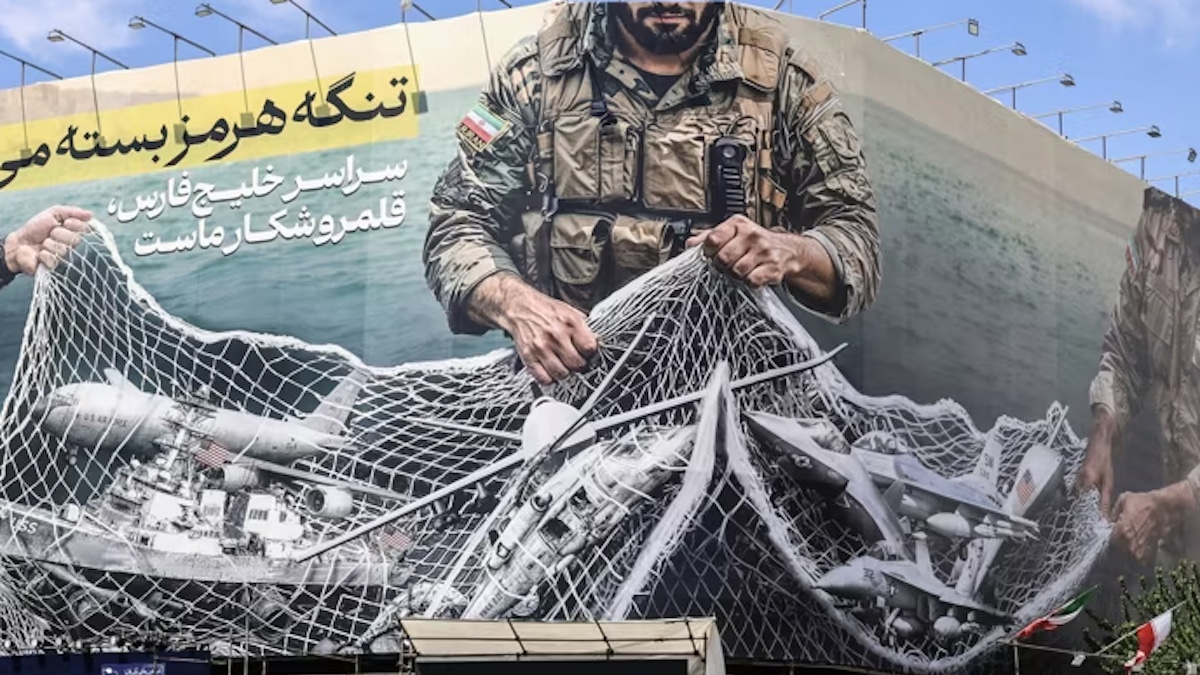
Thirty-nine days into the 2026 joint military campaign waged by the United States and Israel against Iran, US President Donald Trump announced a two-week ceasefire on April 7. The truce was negotiated through Pakistani mediation, built on a 10-point peace framework initially proposed by Iran itself. When assessing the outcome of the conflict, analysts frame Iran’s success not as a decisive knockout blow, but as a remarkable demonstration of resilience: emerging standing after 12 grueling rounds against a far heavier opponent, a result that qualifies as victory by any reasonable measure.
The core strategic goal of the US-Israeli campaign was to decapitate Iran’s ruling government, a mission that ended in complete failure. Though top Iranian leader Ayatollah Ali Khamenei was assassinated alongside members of his family, Iran’s 88-member clerical Assembly of Experts swiftly installed his son Mojtaba Khamenei as his successor, maintaining unbroken institutional continuity. Other high-profile assassinations, including that of Iran’s civilian defense minister and pragmatic centrist National Security Council Secretary Ali Larijani, are widely categorized as war crimes. Following these losses, President Masoud Pezeshkian appointed IRGC General Majid Ebnelreza as acting defense minister, and hardline former IRGC commander Mohammad Bagher Zolghadr stepped into Larijani’s national security role. In a stark unintended consequence, Trump and Israeli Prime Minister Benjamin Netanyahu effectively executed an accidental internal coup that removed Iran’s moderate pragmatic leadership and replaced them with uncompromising far-right hardliners.
When the conflict began, Iran was already diplomatically isolated, facing international backlash following a violent crackdown on mass anti-government protests that left thousands dead. But the extreme brutality and widespread war crimes committed by US and Israeli forces shifted global public and official sentiment, leaving many countries at minimum rhetorically supportive of Iran, and uniformly opposed to the unprovoked invasion. In the conflict’s aftermath, Israel has been left a global pariah. While the United States’ sheer economic and military power insulates it from full pariah status, its global standing has plummeted dramatically, and it can expect far less international cooperation in the coming years.
Iran inflicted staggering damage on 13 US military bases spread across the Middle East, most of which are now largely destroyed, with total estimated damages reaching roughly $1 billion. Using low-cost, readily available drones, Iranian forces took out hundreds of millions of dollars worth of advanced radar installations in Kuwait and neighboring states, blinding US air defenses and clearing the way for deadly missile barrages, including a high-impact strike on Israel’s Dimona nuclear facility. The conflict delivered a clear, global lesson: hosting US military bases no longer provides security for host nations—it instead exposes them to catastrophic military risk.
Most US military personnel were forced to evacuate their destroyed bases and relocate to local civilian hotels. Thanks to Iran’s extensive and effective intelligence network across the Gulf, many of these hotels were subsequently targeted by drone strikes. Multiple US personnel arrived back in Washington D.C. with nothing but the clothes on their backs, receiving little to no support from US Defense Secretary Pete Hegseth. The future of US military basing across the Gulf is now an open question, with regional leaders re-evaluating the costs of hosting American forces. Even the continued presence of US troops in Iraq is uncertain, as Iraqi Shiite factions openly aligned with Iran supported Tehran throughout the conflict.
Strict Israeli military censorship has obscured the full scale of damage sustained by the country, but confirmed strikes have hit the Haifa oil refinery, as well as key military and intelligence research facilities. Netanyahu drastically overestimated the effectiveness of Israel’s air defense interceptor systems. Thousands of Israeli civilians have been displaced from their homes and forced to sleep in bomb shelters, and Israel is burning through its interceptor stockpiles far faster than Iran is exhausting its ballistic missile arsenal. If the conflict resumes, Israel would quickly face a situation where it is completely exposed to Iranian strikes. Already, stocks of Israel’s advanced Arrow interceptors are so depleted that the military has been forced to allow missiles targeting low-population areas to hit their targets, rather than waste limited interceptors. For these reasons, it is Israel that pushed for the current ceasefire, making it clear that Israel lost the conflict on points.
Beyond military resilience, Iran emerges from the war with stronger economic prospects than it had entering it. Before the conflict, Iran’s oil revenue was limited by US sanctions. Now, Trump has been forced to lift sanctions on Iranian petroleum exports, and there is little chance they can be reimposed in the tight 2026 global energy market. The conflict has also given Iran the leverage to impose new tolls on commercial shipping passing through the Strait of Hormuz. Tehran has proven it can use cheap drone strikes to disable oil and LNG tankers that refuse to pay, and building a 100% effective anti-drone defense system is prohibitively expensive for shipping companies and regional powers. Insurers also require full protection, which no existing defense system can guarantee. Threatening to strike Iranian oil infrastructure to force Iran to abandon the tolls is no deterrent: any attack on Iranian rigs would be met with retaliatory strikes on Saudi, UAE, Bahraini, and Kuwaiti oil facilities, which would cripple global energy supplies entirely. Iran already demonstrated this capability during the conflict, damaging Kuwaiti oil fields, striking a major Saudi petrochemical complex in Jubail, and knocking out 17% of Qatar’s total LNG production capacity at Ras Laffan. Combined, Iran’s new oil export access and Hormuz tolls are projected to deliver annual revenue multiple times higher than pre-war export earnings to China alone.
The conflict has, of course, inflicted devastating human and infrastructural damage on Iran. The 39-day campaign killed an estimated 3,600 Iranians, including at least 1,665 civilians – among them at least 200 children and 200 women – and wounded roughly 20,000 more. Israel has claimed the death toll is as high as 6,000, but that is widely dismissed as exaggerated wartime boasting from Netanyahu and Hegseth. Key Iranian research institutions, university programs, steel mills, petrochemical complexes, and other critical infrastructure have been destroyed, but analysts widely expect these can be rebuilt with covert support from Russia and China, both of which have a clear strategic interest in maintaining a strong Iran capable of countering US and Israeli power in the region.
The US Department of Defense claims it deployed 26 aircraft types, four land-based missile systems, and six sea-based weapons systems to strike roughly 13,000 targets inside Iran. Human rights observers note that many of these targets were civilian infrastructure, marking strikes that would qualify as war crimes of the same kind that led to the prosecution of German and Japanese military leaders after World War II. Independent analysts have not been able to separate US strikes from Israeli strikes, leading to questions about whether the 13,000 target figure counts joint US-Israeli strikes. US military outlet *The Stars and Stripes* reported that CENTCOM stated strikes targeted Iranian command and control centers, IRGC headquarters, intelligence sites, missile launchers, drone batteries, and anti-ship and anti-air installations, in addition to a major bridge near Tehran, and weapons manufacturing warehouses and bunkers.
Despite the extensive bombing campaign, Iran never lost command and control over its military and government. While roughly 1,200 IRGC personnel and officers were killed, the force has between 125,000 and 190,000 active personnel, and there was no shortage of qualified leaders to step into vacant roles. Iran also maintains a 400,000-strong conventional army, plus an additional 400,000 to 800,000 Basij militia members. The chain of command remained unbroken, with lower-ranking officers promoted to fill senior vacancies without any collapse of military order. Strikes on IRGC, police, and Basij facilities have not weakened the Islamic Republic government in any measurable way; in fact, these institutions gained greater domestic legitimacy by successfully resisting foreign invasion.
A further major blow to US and Israeli claims of success is the widespread use of Iranian decoys. Many strikes that the coalition counted as destroyed missile launchers, drones, and weapons facilities actually hit nothing more than cleverly disguised decoys made of cheap materials that inflicted no real harm to Iran’s military capacity. When the war began, Iran held roughly 2,500 ballistic missiles. After 39 days of fighting, an estimated 1,000 missiles remain intact – a figure that already accounts for the thousand or more missiles Iran fired at Israel and Gulf targets during the conflict. Since eliminating Iran’s ballistic missile arsenal was a core war goal for the coalition, this outcome marks another clear failure; only half of Iran’s launchers were destroyed, leaving the country with a robust second-strike deterrent capability. Iran also still retains tens of thousands of Shahed drones, its low-cost weapon of choice for asymmetric strikes.
While the war is a pyrrhic victory for Iran in some respects – it has suffered extensive human and industrial losses, and gained new hostile neighbors among Gulf states – it still qualifies as a clear victory. The government remains standing, the coalition’s core strategic goals all ended in failure, and Iran leaves the conflict with greater economic and strategic leverage than it held before the first strike.