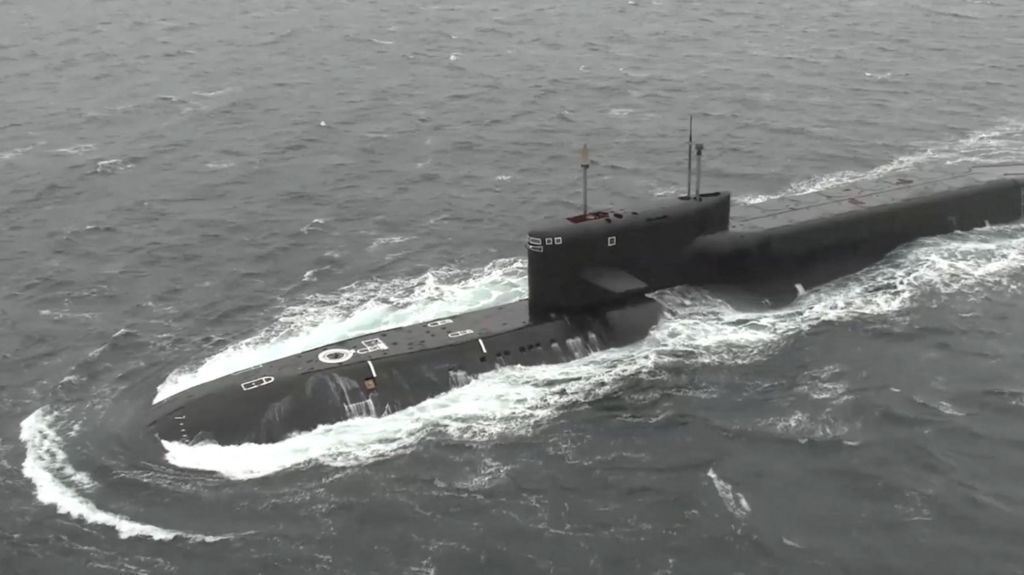
In a landmark move to bolster regional security, South Korea and the United States have finalized an agreement to jointly develop nuclear-powered submarines. The White House confirmed the partnership on Thursday, highlighting that the US has approved the construction of ‘attack submarines’ and will collaborate on sourcing nuclear fuel. This agreement signifies a deepening of the strategic alliance between the two nations, particularly as tensions escalate on the Korean Peninsula with North Korea’s nuclear ambitions and China’s expanding influence in the region. The deal follows a broader trade agreement reached last month, which reduced reciprocal tariffs between the two countries from 25% to 15%. US President Donald Trump had initially imposed a 25% tariff on South Korea earlier this year, but negotiations led by South Korean President Lee Jae Myung resulted in a reduction, contingent on Seoul’s commitment to invest $350 billion in the US, including $200 billion in cash and $150 billion in shipbuilding. The White House statement emphasized that the US would work closely with South Korea to advance the submarine project, including securing fuel sources. Trump also revealed on his social media platform, Truth Social, that the submarines would be constructed at a Philadelphia shipyard owned by South Korean conglomerate Hanwha. Currently, only six nations—the US, China, Russia, the UK, France, and India—possess nuclear-powered submarines. South Korea, which already operates a fleet of 20 diesel-powered submarines, views this development as a significant upgrade in its defense capabilities. Nuclear submarines offer greater speed, range, and stealth, enabling South Korea to counter North Korea’s growing nuclear threat more effectively. South Korean Defense Minister Ahn Gyu-back described the submarines as a ‘proud achievement’ and a critical step in strengthening national defense. However, experts caution that while the submarines enhance South Korea’s military posture, they may not drastically alter the balance of power on the Korean Peninsula. Dr. Yang Uk of the Asan Institute for Policy Studies noted that the submarines primarily serve to reassure South Korean voters of their government’s response to North Korea’s nuclear arsenal. Meanwhile, China has expressed concern over the agreement, with Ambassador Dai Bing urging Seoul to handle the matter ‘prudently.’ The deal also underscores the ongoing strategic competition between the US and China in the region, with South Korea navigating a delicate geopolitical balance. As the agreement moves forward, the next step involves revising the nuclear cooperation framework between the US and South Korea to facilitate the transfer of nuclear fuel and establish military usage guidelines.
The US will help South Korea build nuclear ‘attack’ submarines – here’s what that means