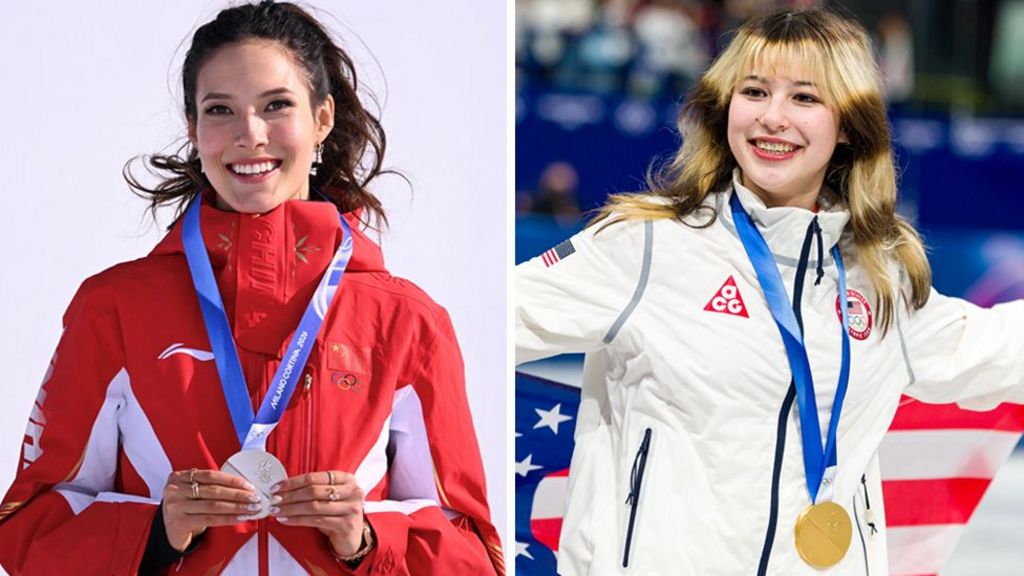
The 2026 Winter Olympics in Milan have become the stage for an unexpected digital conflict centered around two American-born athletes of Chinese descent—freestyle skier Eileen Gu and figure skater Alysa Liu. Despite their parallel backgrounds as first-generation immigrants and champions in their respective sports, they have been cast as opposing symbols in a geopolitical narrative extending far beyond athletic competition.
This ideological divide emerged when Gu, competing for China, expressed sympathy for US skier Hunter Hess after he faced criticism from former President Trump. Her comments ignited a firestorm among conservative commentators who labeled her a ‘traitor’ for representing China while enjoying US citizenship benefits. Simultaneously, Liu—competing for the US as the daughter of a political activist who fled China—has been celebrated as a patriot by these same voices.
The controversy reveals deeper sociological dimensions beyond nationalism. Professor Yinan He of Lehigh University notes that ‘personal identity is increasingly centered on national loyalty in the public eye, diminishing tolerance for dual identity.’ Gu’s background—educated at elite institutions including Stanford—has led some to frame her choice as a ‘mercenary business decision’ rather than genuine cultural connection. Conversely, Liu’s family narrative of political dissent has positioned her as a symbol of democratic values.
Chinese social media reflects the inverse perspective, where Gu is celebrated as the ‘Snow Princess’ and national icon while Liu receives minimal attention—with occasional comments questioning why anyone would ‘praise this anti-China person.’
The athletes’ performance pressures have intensified under these conditions. Gu recently described feeling like she was ‘skiing with the weight of two countries on my shoulder’ after placing second in women’s slopestyle—a statement that further fueled criticism from those who argued she only represented one nation.
This phenomenon exemplifies what Professor Stanley Thangaraj identifies as ‘the incredibly precarious social and political landscape that Asian Americans must navigate,’ where any political stance risks dislocating them from American identity. When Marvel actor Simu Liu voiced support for Gu, he immediately faced demands to ‘go back to China.’
As the Games continue, the athletic achievements of both women have become secondary to their unwitting roles in a broader cultural confrontation between the world’s two superpowers.