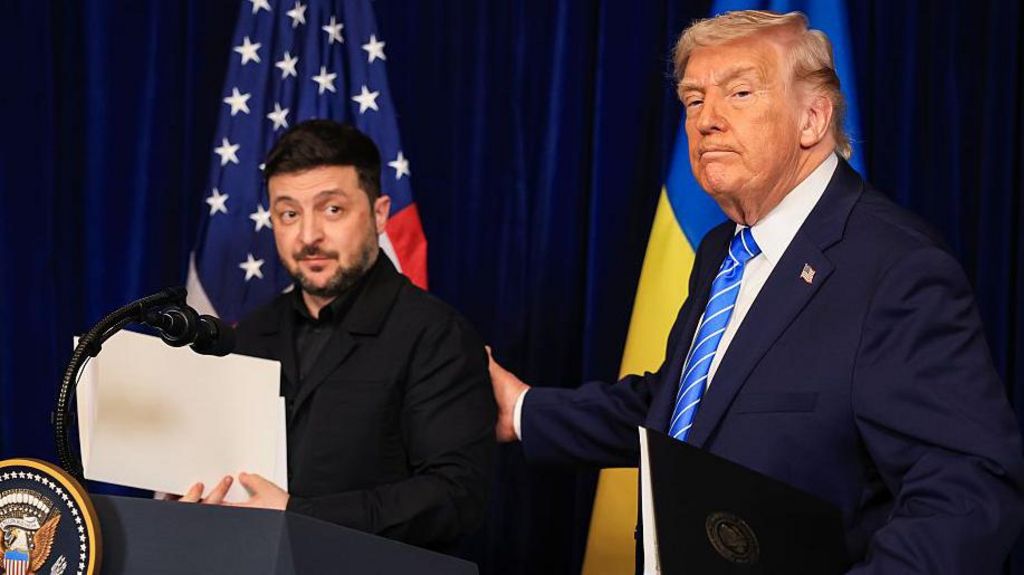
As diplomatic efforts intensify to end nearly four years of full-scale conflict, Ukrainian President Volodymyr Zelensky has expressed profound skepticism regarding Russia’s commitment to genuine peace negotiations. Despite assertions from both Washington and Moscow that negotiations are approaching their final phase, fundamental disagreements over territorial control and nuclear facility management continue to impede progress.
The central sticking points revolve around the disputed Donbas region and the occupied Zaporizhzhia Nuclear Power Plant. President Vladimir Putin maintains maximalist demands for complete control of Ukraine’s industrial east, including the strategic cities of Sloviansk and Kramatorsk. Zelensky has countered with a compromise proposal: establishing a demilitarized zone with mutual troop withdrawals, to be monitored by international forces. ‘We cannot simply withdraw—it violates our laws and abandons 300,000 Ukrainian citizens,’ Zelensky emphasized.
Simultaneously, the fate of Europe’s largest nuclear facility remains contentious. The Zaporizhzhia plant, under Russian occupation since March 2022, requires substantial reactivation investment and demilitarization. While the United States has proposed trilateral management, Ukraine advocates for bilateral control with the U.S., implicitly allowing energy distribution to Russia. Moscow, however, insists through Rosatom chief Alexei Likachev that only Russian administration can guarantee operational safety.
The trust deficit between nations remains profound. Zelensky openly declared, ‘I don’t trust Russians and I don’t trust Putin,’ directly contradicting former President Trump’s characterization of Putin’s intentions. Additional complications include security guarantees for Ukraine, potential Russian reparations from frozen European assets, and constitutional barriers regarding NATO membership.
Zelensky insists any agreement must undergo a national referendum preceded by a 60-day ceasefire—a condition the Kremlin rejects as potentially prolonging hostilities. With analysts estimating a Russian conquest of Donetsk could take until 2027 at current rates, the urgency for resolution contrasts sharply with the complexity of outstanding issues.