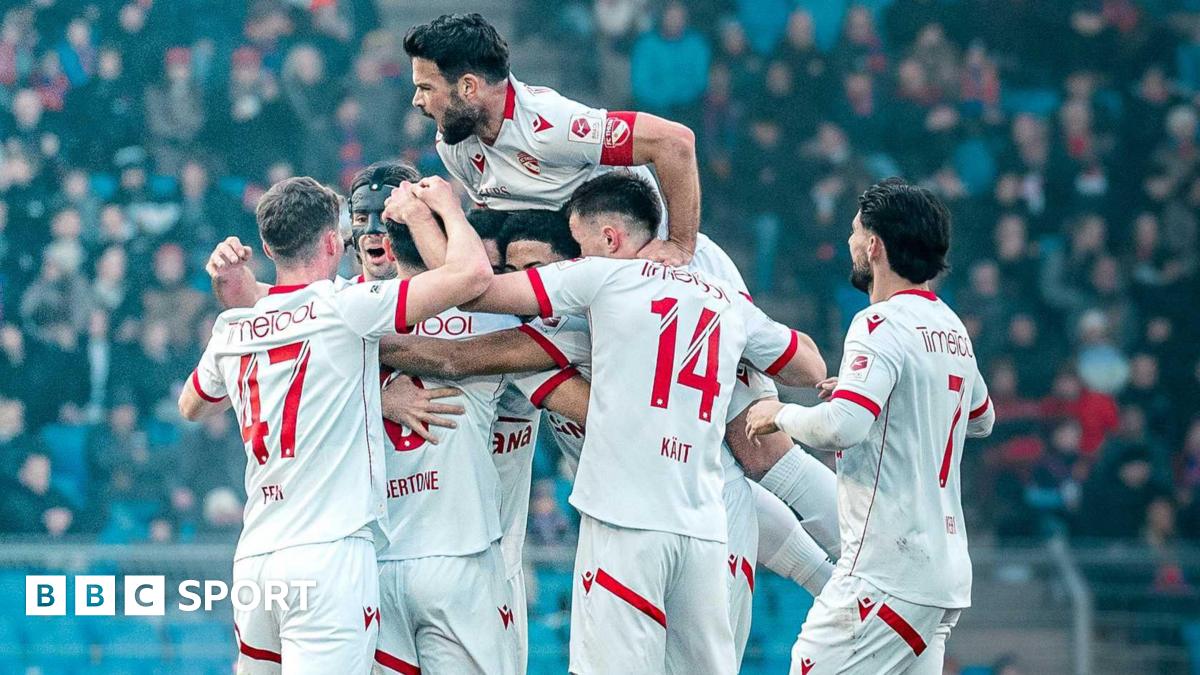
In the shadow of the Swiss Alps, along the shores of crystal-blue Lake Thun, a football miracle is unfolding that has drawn comparisons to Leicester City’s iconic 2015-16 Premier League fairytale. For newly promoted FC Thun, a small-town club that barely escaped financial collapse just five years ago, a historic top-flight title is now all but guaranteed, with a 15-point lead at the top of the Swiss Super League and only seven matches left to play.
The story of Thun’s 2025-26 season is inseparable from the personal journey of club president Andres Gerber, a former Swiss national defender who took the helm in 2020. In the years since he took office, Gerber has navigated crippling financial uncertainty and devastating personal loss: his brother died of cancer in 2021, and today Gerber honors his memory with daily cold-water swims in Lake Thun, come rain or shine. When he stepped into the presidency, the club was on the brink of extinction, saved only by repeat last-minute investments from Chinese multi-club owner Chien Lee and board member Beat Fahrni, with the most recent rescue coming as recently as early 2024. After suffering relegation from the top flight in 2020, Thun spent five seasons in the second tier, finally earning promotion last year following an 11-point win in the Swiss Challenge League, bouncing back from a 2023-24 play-off final defeat.
No pundits predicted what would come next. Powerhouses Young Boys of Bern (19 miles from Thun, 17-time Swiss champions and regular European competitors) and FC Basel, both with vastly larger player budgets and squad values, were the overwhelming pre-season title favorites. But those big-name clubs have been plagued by inconsistency this season, while Thun has delivered a performance no one saw coming. Barring a catastrophic collapse in the final seven games, Thun will become just the second Swiss club in history – and the first since Grasshopper Zurich in 1952 – to win back-to-back second division and top-flight titles. For a 128-year-old club that has never lifted a major senior trophy, hailing from a town of only 45,000 residents, this would go down as one of the most remarkable underdog triumphs in modern European football.
Thun’s dominance is not a fluke of luck, but the product of a deliberate, effective system crafted by head coach Mauro Lustrinelli, a former Thun club legend who scored the two qualifying goals that sent the club to the Champions League group stage back in their 2004-05 historic campaign. The 50-year-old coach, who previously managed Switzerland’s Under-21 national team before taking the permanent Thun job in 2022, has built a dynamic, vertically oriented attack built on high pressing and quick transitions, rejecting the modern obsession with possession football. “If we can score with two passes, why do we have to make 10 or 20 passes?” Lustrinelli told BBC Sport. “For me it is not the most important thing to have the ball in our half.” The data backs up his approach: despite averaging just 46.5% possession this season – lower than eight other Super League sides – Thun ranks first in the league for touches in the opposition penalty area, is the league’s top scoring side, and has conceded the fewer goals than any other club. In February, they set a new Swiss top-flight record with 10 consecutive wins, breaking the previous club record they set in their 2004-05 Champions League run. Swiss football journalist Craig King describes the side as streetwise and clever: “Their style of play isn’t pretty but they are smart and control games in whichever way they can. They win games that they are second-best in because of that cunning in the side that accentuates the positives of a squad that lacks the depth and overall skill of the more illustrious sides in the league.”
Crucially, Thun’s success has not been bought with big money. Transfermarkt data shows the club sits mid-table in the 12-team Super League for transfer spending this season, and their entire squad has a combined market value of just £13.8 million – the second lowest in the league, and a fraction of Young Boys’ £61 million valuation and defending champions Basel’s £51.5 million. Instead of clearing out the promoted squad to sign big-name new additions, Lustrinelli retained the core of players that had already thrived in his system, betting on continuity over roster upheaval. “People said we had to change the squad,” Lustrinelli explained. “But it was really important to give continuity to a group that did something special. This group had a good mentality and a winning mindset.” That gamble has paid off handsomely: North Macedonian striker Elmin Rastoder, who scored 13 goals across three second-tier seasons, has already netted 12 times in the top flight this term; striker Christopher Ibayi has nine goals after scoring just three last season; and academy graduate Franz-Ethan Meichtry has added eight more. The squad is perfectly balanced by the addition of experienced title winners Kastriot Imeri and Leonardo Bertone (both former Young Boys) and the steady leadership of captain Marco Burki, with Imeri thriving as a team-focused player after joining on loan. Lustrinelli credits the team’s extraordinary results to intangibles that money can’t buy: “These things make the big difference, that you have a team on the pitch who can suffer together and stick together when things don’t go well, to grow and develop together.”
For Lustrinelli, leading Thun to this historic run is more than a job – it’s a lifelong dream. When he returned to the club as coach, he came with a singular goal: to create something special for a community that has always punched above its weight. “My mission is to help this club, the players, to reach something special and historical. To go to the glory. But it’s not just a mission, it’s a joy,” he said. If Thun closes out the title, it will take its place alongside other iconic underdog wins like Kaiserslautern’s 1997-98 Bundesliga title, Leicester’s 2015-16 Premier League miracle, and Mjallby’s 2025 Swedish title. More than that, Lustrinelli says the run carries a bigger message for the future of the sport: “Some value is not with money. For the future it’s important that you can have something good without money. One of the most beautiful things we can do is show the world there are crazy moments, and for the kids in the stadium, so that they can hope to become footballers in the future and give emotions.”
Even Thun’s biggest title rivals are celebrating the club’s fairytale run. Christian Fassnacht, a winger for Young Boys who previously played for Thun, put it simply: “That’s why we love football, because it has its own rules, and stories like this go around the world. All of Switzerland is happy for FC Thun.”
As the club closes in on history, captain Marco Burki has already teased a celebration to match president Gerber’s daily lake tradition: when the title is secured, the entire squad will join Gerber for a dip in Lake Thun. “That’s the smallest thing we would do,” Burki said. “I cannot speak for everyone, but I think they have no other choice.” Right now, football is watching, and it seems only a matter of time before a new chapter of Swiss football history is written by the unlikeliest of champions.