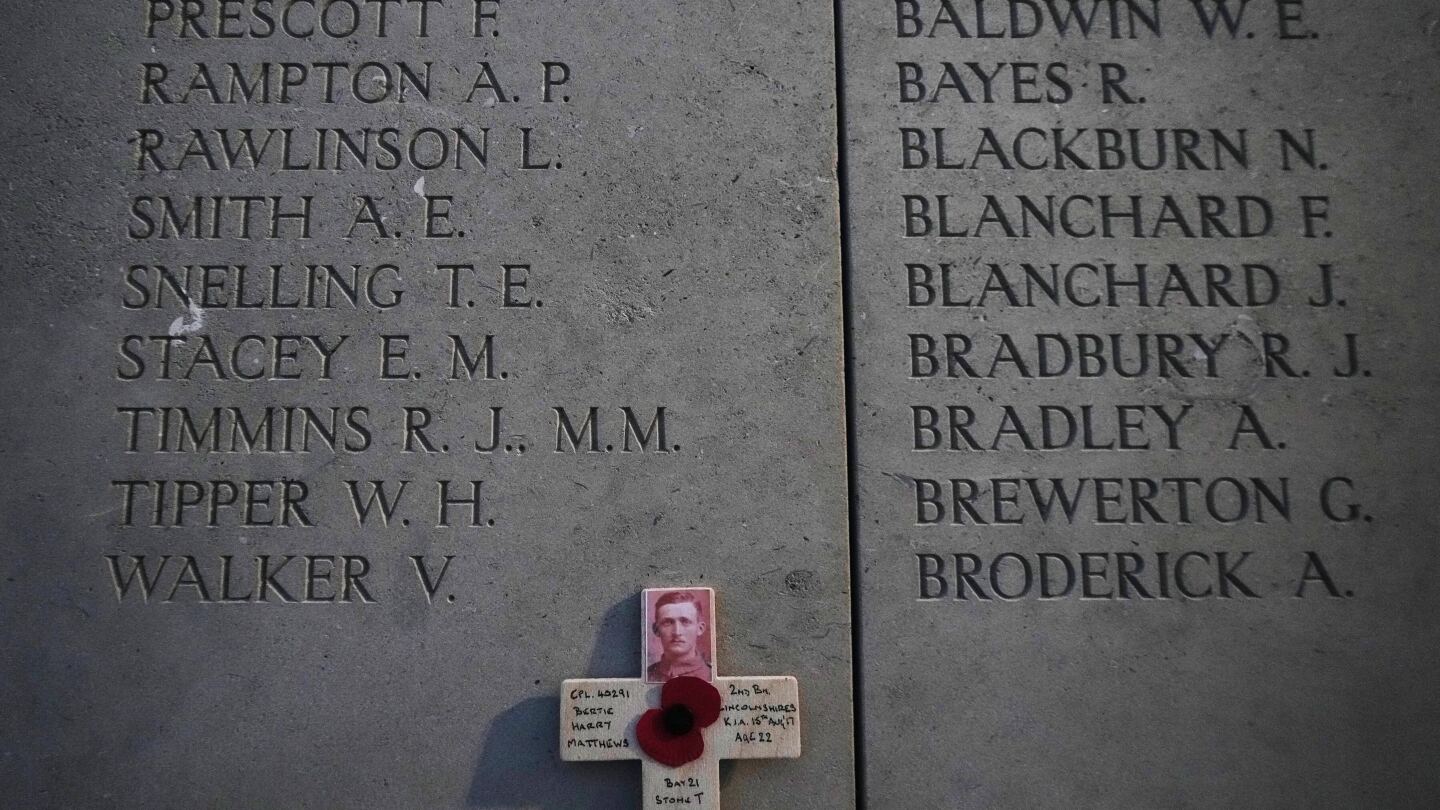
In Ypres, Belgium, a town forever etched in history as a symbol of the horrors of World War I, authorities unveiled a renovated memorial on Tuesday to honor the tens of thousands of soldiers who perished without graves. The solemn ceremony coincided with Armistice Day, known as Veterans Day in the United States and Remembrance Day in Britain, marking the end of the Great War in 1918. From 1914 to 1918, the conflict pitted the armies of France, the British Empire, Russia, and the U.S. against a German-led coalition, including the Austro-Hungarian and Ottoman empires. Nearly 10 million soldiers lost their lives, with hundreds of thousands dying in Ypres alone. The Flanders region, where the war introduced brutal innovations like poison gas and aerial surveillance, became a grim testament to the evolution of modern warfare. In the aftermath of World War I and later World War II, the international community established institutions like the United Nations and the European Union to prevent future conflicts. However, the specter of war looms once more. Across Europe, nations are rearming in response to Russia’s full-scale invasion of Ukraine, while airspace violations and sabotage incidents near EU borders have heightened tensions. Beyond Europe, conflicts in Gaza, Sudan, and rising militarization in Asia underscore a world grappling with instability. The resurgence of authoritarian movements further challenges the global democratic order, casting a shadow over the lessons of history.