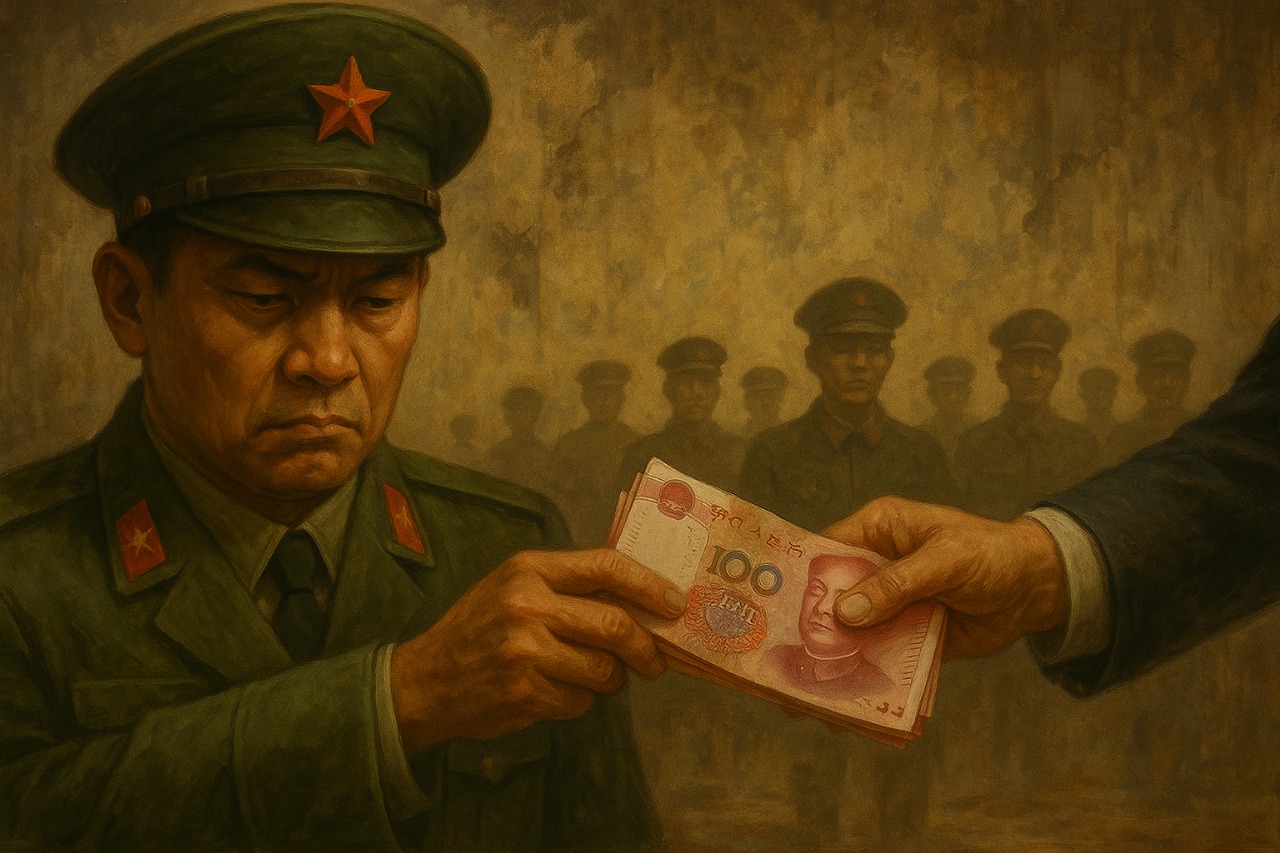
China’s ambitious military modernization program faces severe structural challenges as widespread corruption scandals and political purges disrupt defense production and operational readiness. According to the Stockholm International Peace Research Institute (SIPRI), China’s major state-owned defense enterprises experienced the most significant decline among global arms producers in 2024, with combined revenues dropping 10% to $88.3 billion.
The report highlights specific cases: China North Industries Group Corporation Limited (NORINCO) reported a 31% sales plunge following the removal of its chairman over corruption allegations, while China Aerospace Science and Technology Corporation (CASC) saw a 16% revenue decrease as satellite and launch-vehicle programs were postponed. Even Aviation Industry Corporation of China (AVIC), China’s largest defense producer, experienced a 1.3% revenue decline due to slowed aircraft deliveries.
Analysts suggest these industrial setbacks reveal deeper systemic issues within China’s military apparatus. President Xi Jinping’s extensive anti-corruption campaign, which included purging nine senior PLA generals including Rocket Force Commander Wang Houbin, appears increasingly focused on consolidating political control rather than addressing structural deficiencies. This centralization of authority has created a culture where political loyalty outweighs professional competence, potentially undermining military effectiveness.
Research from multiple international institutes indicates that corruption remains embedded in procurement systems, weapons development, and promotion structures despite years of anti-graft efforts. The situation draws concerning parallels to Russia’s pre-invasion military, where systemic corruption created hollowed-out forces that performed poorly in actual combat conditions.
The U.S. Department of Defense’s 2024 China Military Power Report notes that these disruptions have affected critical modernization programs, including missile systems essential for potential Taiwan contingencies. Additionally, experts observe that the PLA’s organizational culture discourages decentralized decision-making and mission command principles necessary for modern warfare.
These developments suggest that unless China addresses the fundamental incentives privileging political alignment over merit, its military modernization may continue to be hampered by the same structural weaknesses that have compromised other authoritarian militaries.