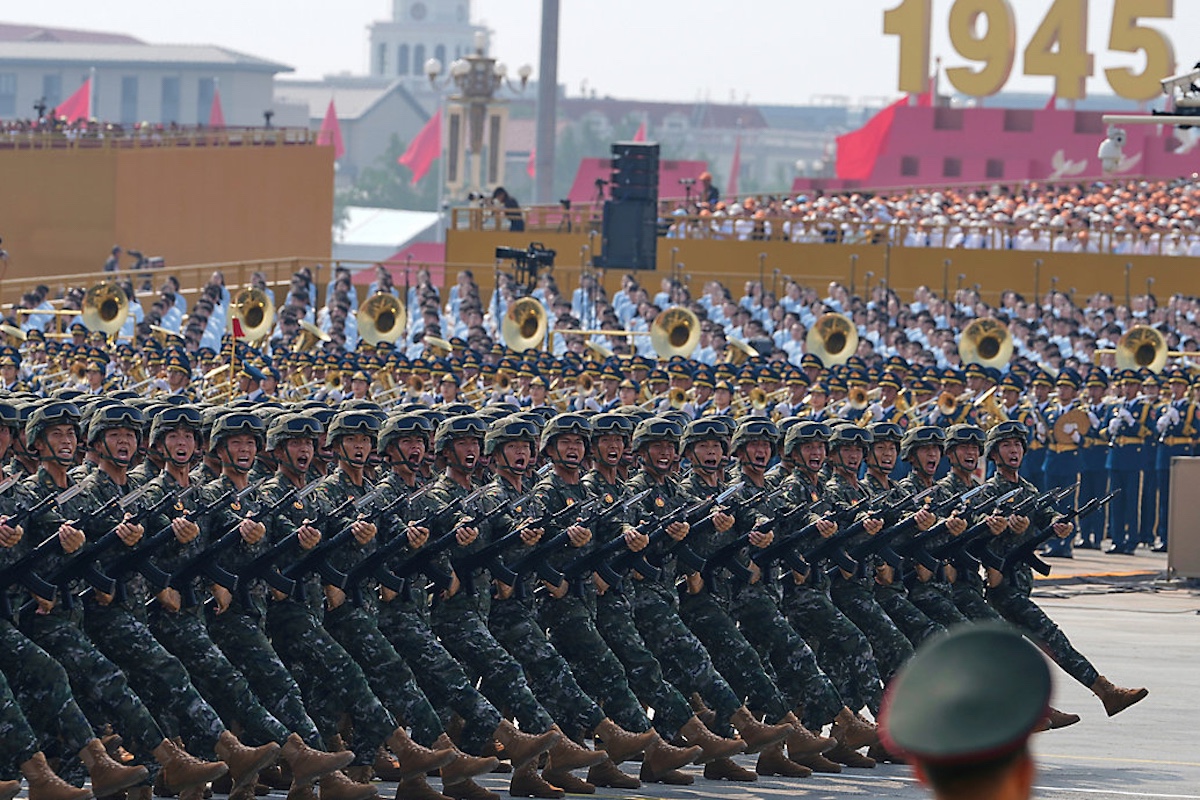
China’s recent military parade, marking the 80th anniversary of the end of World War II, showcased its advanced defense capabilities, including DF-41 intercontinental ballistic missiles and J-20 stealth fighters. This display of military prowess aimed to project confidence abroad and reassure domestic audiences. The event underscored China’s transformation from a nation reliant on Soviet imports to a global leader in defense manufacturing, with state-owned enterprises like AVIC, CASIC, CSSC, and CETC driving innovation in aviation, missiles, shipbuilding, and electronics. Today, China boasts the world’s largest navy, with over 370 vessels, and a modernized PLA Rocket Force and Air Force. However, this show of strength has unintended consequences. While China has achieved continental primacy, leveraging infrastructure projects and economic influence across Central Asia and Mongolia, its maritime ambitions face resistance. Regional powers like Japan, Australia, and the Philippines are bolstering their defenses and deepening ties with the U.S. to counterbalance China’s growing influence. Despite its industrial scale, China’s defense exports remain limited, and its assertive actions in the South China Sea and Taiwan Strait have heightened regional anxieties. The paradox of China’s military rise is that it has inadvertently reinforced the U.S.-led security architecture in the Indo-Pacific, diminishing the geopolitical returns on its vast investments.