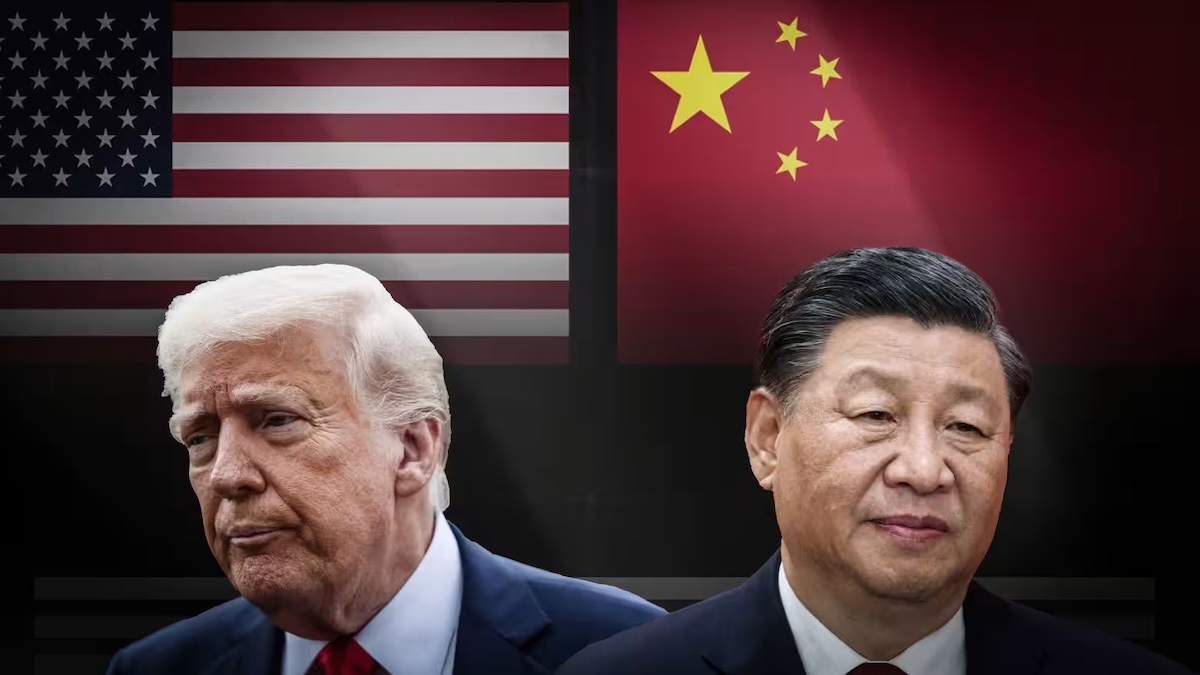
The global ripple effects of the United States and Israel’s joint military campaign against Iran have extended across continents, reaching deep into Asian geopolitics – and nowhere is this indirect influence more consequential than for Taiwan’s security amid ongoing cross-Strait tensions with mainland China. This analysis explores two core, interconnected questions that sit at the center of regional security calculations: first, how the Iran conflict alters perceptions of U.S. willingness to intervene militarily to defend Taiwan, and second, how it shifts Beijing’s calculus of whether to launch an invasion of the island.
Critics of the U.S. campaign against Iran have raised a host of objections: they argue the operation was unnecessarily aggressive, that Washington skipped over ongoing diplomatic negotiations with Tehran without cause, that Iran posed no immediate threat justifying a large-scale attack, that U.S. leaders failed to consult allies before moving forward, and that they underestimated Iran’s capacity to sustain retaliatory action even after heavy damage to its conventional military forces. But for Taiwan, the central concern runs in the opposite direction: whether the current U.S. administration is bold enough to commit American troops to the island’s defense, rather than stepping back from a cross-Strait conflict.
For years, many foreign policy observers have framed former President Donald Trump’s approach to global affairs as leaning toward isolationism. Prominent commentators, including Temple University Tokyo campus Professor Robert Dujarric, former U.S. National Security Advisor John Bolton, and The Guardian foreign affairs analyst Simon Tinsdall, have all argued that Trump prioritizes avoiding a major war in Asia over blocking China from annexing Taiwan.
It is true that China would be a far more formidable opponent than Iran, so willingness to engage in large-scale operations in the Middle East does not automatically translate to willingness to fight a great-power conflict in the Indo-Pacific. Even so, the Iran campaign demonstrates that this U.S. administration is willing to rule out the option of deploying large conventional forces in distant conflicts outside of the Western Hemisphere – a key shift that Beijing cannot ignore.
Beijing’s longstanding strategic approach to territorial expansion follows a framework of cautious aggression: it first probes for weakness, only advancing further if it encounters minimal resistance. This aligns with the classic strategic guidance often attributed to early Soviet leaders Josef Stalin and Vladimir Lenin: “If you hit mush, keep going; if you hit steel, pull back.” For a Chinese leadership that relies heavily on gray zone tactics to advance its interests without open war, the pattern of bold actions taken by the Trump administration – from the targeted strike that killed Quds Force commander Qasem Soleimani during his first term, to the political intervention in Venezuela, the tightening of Cuba’s oil blockade, the large-scale bombardment of Iran, and even public discussions of seizing Greenland – comes as a striking departure from previous expectations of U.S. restraint.
Given this track record of unilateral, forceful action, it is now effectively impossible for Chinese planners to confidently conclude the U.S. would refuse to militarily intervene to defend Taiwan.
This uncertainty around U.S. intervention leads to the second critical question: how the Iran conflict changes the likelihood that China will choose to launch an invasion of Taiwan.
Some analysts have argued that Washington’s adoption of a “might makes right” approach, visible in its actions against Iran and Venezuela, gives Beijing a green light to pursue its own territorial goals by force against Taiwan. But this argument misses key realities of Chinese strategic planning. Beijing does not tie its policy decisions to a normative standard set by the United States. The Chinese government has long maintained it will use force against Taiwan if its leadership deems it necessary, a threat formalized in the 2005 Anti-Succession Law.
For years, Chinese state propaganda has emphasized the narrative that the U.S. is a declining “paper tiger,” pointing to the 2021 withdrawal from Afghanistan as proof of American weakness. But the U.S. military’s smooth, successful execution of the complex large-scale operation in Iran, thousands of miles from the American homeland, offers a stark counterpoint. Meanwhile, Chinese-supplied military equipment – particularly air defense systems – performed poorly in both Venezuela and Iran, offering Chinese leadership an unvarnished reminder that the U.S. armed forces remain the most capable in the world.
While Chinese officials and state media publicly condemned the U.S. campaign as illegal and brutal, many independent and state-aligned Chinese analysts openly acknowledged American operational competence. Prominent Chinese foreign affairs scholar Zheng Yongnian concluded the U.S. “still [ranks] number one” in global military power. Analyst Niu Tanqin noted he “cannot but admire” the U.S. military’s performance, and leading international relations scholar Shi Yinhong confirmed that the tactical success of American forces “strongly impressed the leaders [in Beijing].” This clear demonstration of coordinated, advanced military capability carries tangible deterrent weight for Beijing’s Taiwan planning.
At the same time, Chinese observers have also noted that the Iran campaign has diverted U.S. military focus and depleted stockpiles of key weapons that would be used to counter Chinese expansion in the Indo-Pacific. U.S. officials have insisted the conflict has not delayed pre-planned weapons deliveries to Taiwan that the island has already purchased, noting that munitions used in Iran are drawn from existing U.S. military stockpiles rather than from production lines allocated for foreign sales. Even so, the U.S. has temporarily reallocated significant military capabilities from Asia to the Middle East for the Iran campaign, including Patriot interceptors, THAAD anti-missile systems, the USS Abraham Lincoln carrier strike group, two additional guided-missile destroyers, and two Marine expeditionary units.
U.S. forces have also expended large stockpiles of high-value precision weapons, most notably Tomahawk cruise missiles – a system that would play a critical role in any Indo-Pacific conflict thanks to its long range, powerful warhead, and newly developed anti-ship variant. To date, the U.S. has fired between 850 and 1,000 Tomahawks in the Iran campaign, and replacing the entire stockpile will take two to three years at a cost of roughly $3.5 million per missile. This has led some analysts to speculate that the diversion of forces and depletion of munitions creates a new window of opportunity for China to attack Taiwan, arguing that U.S. military stockpiles were already stretched thin before the Iran conflict, and China could now count on U.S. forces running out of critical munitions far more quickly in a cross-Strait war.
This window-of-opportunity argument holds weight only if one accepts the premise that Chinese leader Xi Jinping has already decided to forcibly annex Taiwan as soon as the odds of success appear favorable. But that premise fails to account for the massive risks and downsides that a full-scale invasion would pose for China’s leadership.
In any invasion scenario, China would have to plan for a coordinated defensive response from Taiwanese, U.S., and Japanese forces. Even as the U.S. draws down its precision munition stockpiles, Taiwan is on track to assemble what it calls “the world’s highest density of anti-ship missiles” by the end of 2026. Japan has also begun mass production of its new Type 25 anti-ship cruise missile – a system with range covering the entire Taiwan Strait – and began deploying the weapon in March 2026.
A Chinese victory is far from guaranteed, and even a limited victory would likely be pyrrhic. The U.S. Navy would almost certainly interdict China’s seaborne energy imports, and a full-scale war in the Taiwan Strait would halt commercial shipping along most of China’s eastern coast for weeks or months. The resulting economic turmoil could trigger widespread social and political unrest within mainland China, and Beijing would face a generations-long challenge to pacify and govern a hostile Taiwanese population.
Beyond these immediate military and economic risks, Beijing has no pressing need to resort to force against Taiwan in the near term. Chinese strategic thinking holds that U.S. comprehensive power is in gradual decline, while China continues to advance in industrial and technological capacity. Over time, this shift improves Beijing’s relative position, increasing the likelihood that Washington will eventually choose to step back from competition for strategic leadership in East Asia on its own.
Domestically, Xi is still in the midst of a sweeping purge of roughly half of China’s senior military commanders, with a disproportionate share of those removed coming from the People’s Liberation Army Rocket Force – the service branch that would play a central role in any invasion of Taiwan. This ongoing leadership reshuffle creates significant internal uncertainty that discourages any high-stakes military gambit in the near term.
Politically, Beijing also has reason to wait for a more favorable outcome through peaceful means. Taiwan’s main opposition Kuomintang (KMT) accepts Beijing’s core position that Taiwan is part of a single China, and Beijing holds out hope that the KMT will regain control of Taiwan’s presidency in the 2028 election. Recent political developments have bolstered these hopes: KMT Chairwoman Cheng Li-wun’s high-profile visit to mainland China in April 2025 underscored the party’s willingness to engage with Beijing, and the KMT holds a legislative majority in coalition with the Taiwan People’s Party. Incumbent President Lai Ching-te of the ruling Democratic Progressive Party (DPP) has struggled with low approval ratings – his ratings were negative for most of 2025 and hover around 50 percent in 2026 – and the KMT successfully defeated a 2025 DPP recall campaign that attempted to remove 31 KMT legislators, with all 31 retaining their seats. While it remains far from certain that the KMT will win the presidency in 2028 and implement a more Beijing-friendly cross-Strait policy, current trends give Beijing ample reason to wait and watch rather than rush to war.
Diplomatically, Beijing also has incentives to avoid conflict this year. Trump and Xi are scheduled to hold two formal summits in 2026, and Beijing is eager to stabilize bilateral economic relations, which are currently under a temporary truce after a years-long trade war that saw the U.S. impose steep tariffs on Chinese imports and China threaten to restrict rare earth exports to the U.S. A sudden invasion of Taiwan would derail this economic stabilization effort. Additionally, Beijing will have the opportunity during the summits to push for limited U.S. concessions on Washington’s support for Taipei; the U.S. has already agreed to delay the announcement of a major new arms sale to Taiwan until after Trump’s first May 2026 meeting with Xi, creating an opening for Beijing to secure a limited political win without resorting to force.
Finally, the Iran conflict has drawn new attention to underrecognized vulnerabilities in Taiwan’s energy security: the island relies on seaborne imports for more than 95 percent of its oil and liquid natural gas (LNG), with LNG accounting for roughly half of Taiwan’s electricity generation. Taiwan’s strategic LNG reserve only covers 8 to 11 days of demand, and while its 100-day oil reserve is more robust, the island remains highly exposed to any disruption of maritime supply routes. Addressing these energy vulnerabilities, along with hardening Taiwan’s western coastline with mobile, survivable anti-ship and anti-air missile batteries, should be a top priority for Taipei’s security planners.
Even with these new challenges highlighted by the Iran conflict, the campaign does not create immediate additional risk of an invasion for Taiwan. Despite the depletion of U.S. precision munitions and the diversion of some regional forces to the Middle East, Beijing faces a host of compelling domestic, political, and strategic incentives to hold off from launching a high-risk invasion attempt for the foreseeable future.