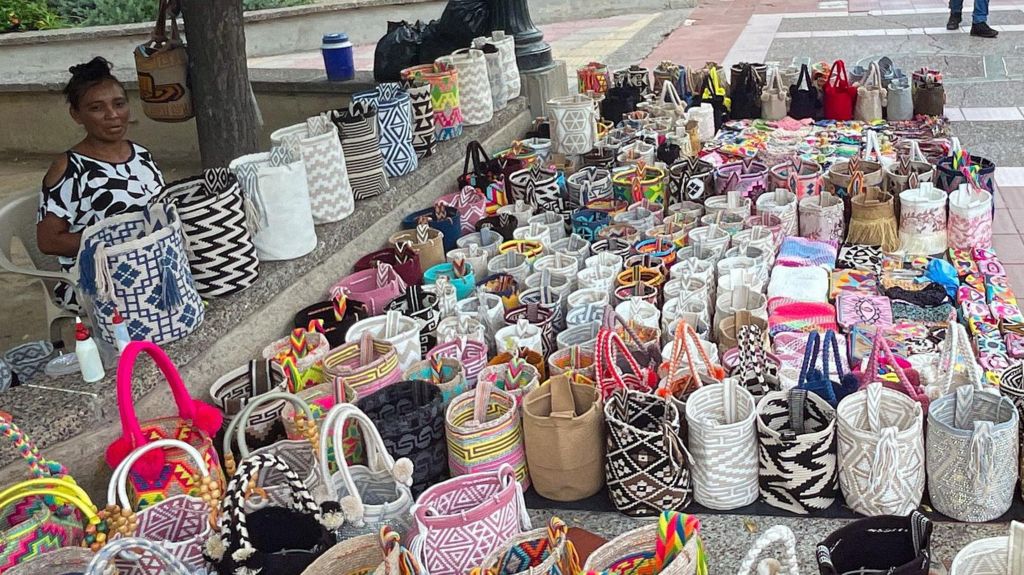
In the vibrant city of Riohacha, Colombia, the traditional Wayuu mochila bags have transcended their indigenous roots to become a global fashion staple. Once exclusive to the Wayuu, Colombia’s largest indigenous group, these handwoven bags are now celebrated worldwide, adorning international boutiques, fashion events, and online platforms like Etsy, Amazon, and Instagram. For Sandra Aguilar, a mochila seller on Riohacha’s palm-lined promenade, each sale is a testament to her heritage. ‘Thanks to online posts, international visitors are becoming very knowledgeable about the mochila,’ she says, highlighting the growing appreciation for its ancestral value. The Wayuu, numbering around 380,000 in Colombia, have woven these bags for centuries, with geometric patterns reflecting clan identity, spirituality, and the natural world. Weaving is not only a cultural practice but also a vital source of income in La Guajira, Colombia’s second-poorest province. While the global demand has brought economic opportunities, it has also introduced challenges, including exploitation and the erosion of traditional craftsmanship. Many artisans face low wages, with intermediaries offering as little as $5.50 per bag, leaving weavers with minimal profit. However, socially-conscious entrepreneurs and organizations are working to promote fair trade and cultural preservation. Laura Chica, founder of Chila Bags, emphasizes the importance of high-quality, traditionally patterned mochilas, ensuring artisans receive fair wages. Her brand has gained international recognition, featured in Vogue China and showcased at fashion weeks worldwide. Yet, the market remains divided. While some brands prioritize sustainability and fair trade, others focus on mass production, often at the expense of quality and fair pay. Organizations like Fundación Talento Colectivo and One Thread Collective are empowering weavers through education and leadership workshops, aiming to foster autonomy and entrepreneurship. Yamile Vangrieken, a weaver from Riohacha, exemplifies this shift. Leading a group of relatives, she collaborates with One Thread Collective to export their bags, providing stable income and microloans. Despite the challenges, the mochila’s rise in global fashion has brought increased recognition to the Wayuu and their artistry. ‘We are also artists, even if we don’t have a title that says so,’ Aguilar asserts. ‘Our essence is in our designs, in our products, and we mustn’t let that go.’