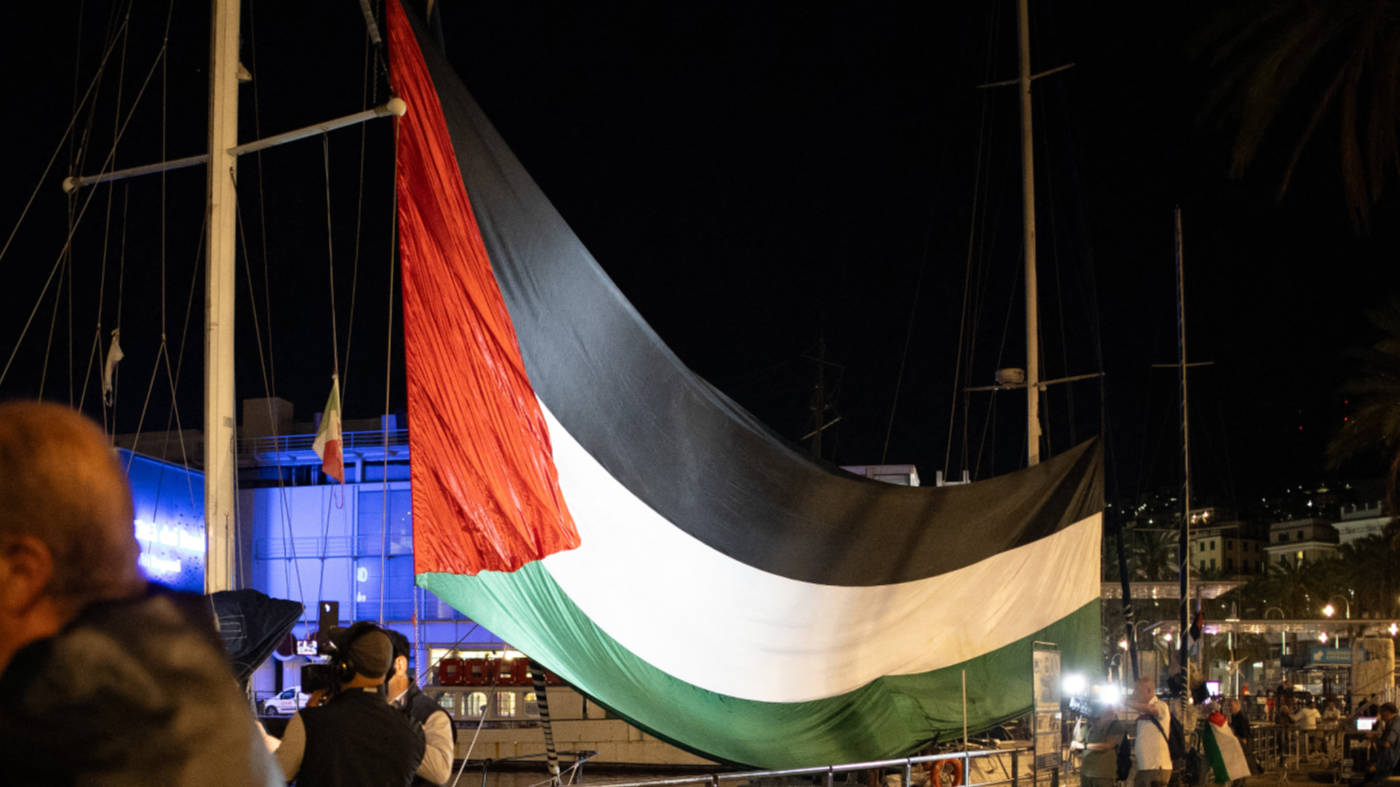
The Global Sumud Flotilla has captured international attention as it embarks on a mission to deliver humanitarian aid to Gaza, defying Israel’s longstanding naval blockade. Comprising over 300 activists from 44 countries, including prominent Swedish climate activist Greta Thunberg, this civilian-led initiative represents the largest maritime aid convoy to Gaza since Israel’s invasion in October 2023. However, the flotilla faced adversity even before reaching its destination, enduring drone-launched projectile attacks while anchored in Tunisia on September 8 and 9. The Tunisian government condemned these strikes as ‘premeditated,’ underscoring the risks faced by such missions. Israel has a history of intercepting Gaza-bound flotillas, most notably in 2010 when Israeli forces stormed the Mavi Marmara, resulting in the deaths of 10 Turkish activists. Earlier this year, two other aid vessels, the Madleen and the Handala, were similarly raided by Israeli forces in international waters. The flotilla’s name, ‘Sumud,’ derives from the Arabic word meaning ‘perseverance,’ ‘steadfastness,’ or ‘resilience.’ In the Palestinian context, Sumud embodies everyday acts of resistance against Israel’s occupation and policies of ethnic cleansing. For some, Sumud manifests in rebuilding homes destroyed by Israeli bombings in Gaza; for others, it means enduring the daily challenges of Israeli checkpoints in the West Bank. For the Palestinian diaspora, Sumud is reflected in their adherence to the Boycott, Divestment, and Sanctions (BDS) movement. The concept of Sumud traces its modern roots to the aftermath of the 1967 Arab-Israeli war, when Israel captured the West Bank, Gaza Strip, and other territories, displacing hundreds of thousands of Arab residents. Since then, Sumud has become a symbol of Palestinian resilience, often represented by the olive tree, a historic and cultural staple of Palestinian life. Despite decades of attacks on olive groves by Israeli forces and settlers, replanting these trees remains a powerful act of Sumud. Palestinian lawyer and writer Raja Shehadeh has described Sumud as the ‘Third Way’ of resistance—neither violent nor passive—but a steadfast commitment to remaining on Palestinian land. The Global Sumud Flotilla, inspired by this ethos, aims to highlight the ongoing plight of Palestinians and their unwavering resilience in the face of oppression.