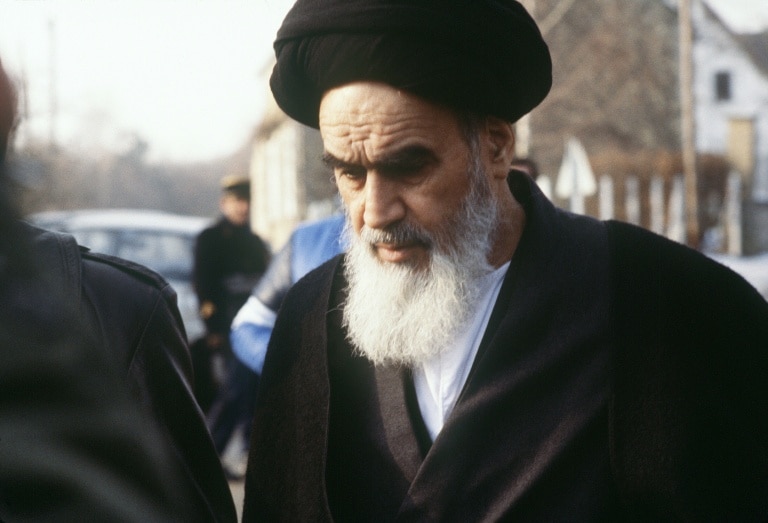
Nearly five decades after Ayatollah Ruhollah Khomeini orchestrated Iran’s Islamic revolution from a quiet French village, Neauphle-le-Château continues grappling with its unexpected place in global history. Located just 40 kilometers west of Paris, this affluent community became the unlikely command center where the exiled cleric spent 120 days plotting the overthrow of Iran’s Shah Mohammad Reza Pahlavi in late 1978 and early 1979.
The ayatollah’s arrival transformed this sleepy village into an international media spectacle. André, an 86-year-old resident who witnessed the events, recalls the sudden invasion of journalists and young Iranian students who flocked to the village. According to Iran specialist Bernard Hourcade of France’s CNRS research institute, France provided the ideal exile location precisely because Iranians could enter without visas.
The revolutionary leader’s activities primarily involved recording incendiary speeches on cassette tapes that were smuggled into Iran, galvanizing opposition against the Shah’s regime. His presence brought heightened security measures, with police checkpoints and blocked roads disrupting village life. While some longtime residents like 87-year-old Michel acknowledge the inconvenience caused to direct neighbors, others minimize the historical significance, noting it was but a brief chapter in the village’s long history.
The physical legacy remains contentious. The house where Khomeini stayed was destroyed in a mysterious explosion in February 1980, just months after his return to Iran. Though a commemorative signboard was installed years later, it was vandalized in 2023. Despite this, the village maintains an enduring connection to Iran—annual pilgrimages continue with 150-200 participants, including Iran’s ambassador, marking the anniversary of Khomeini’s return. In reciprocal recognition, Tehran has named a street after Neauphle-le-Château, where the French embassy now stands.
Current residents like Lydie Kadiri, who arrived in 1999, note that the association remains inescapable. The village’s identity remains intertwined with those four months that changed Middle Eastern history forever, particularly as contemporary tensions between Iran and Western powers bring renewed attention to Khomeini’s legacy.