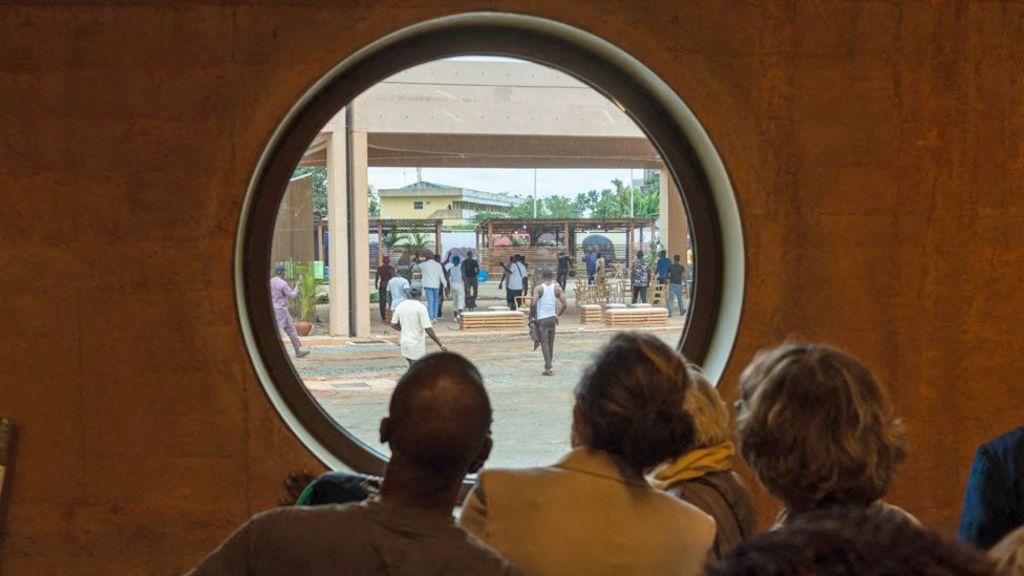
The much-anticipated opening of Nigeria’s Museum of West African Art (Mowaa) in Benin City has been marred by political disputes and protests, casting a shadow over what was meant to be a celebration of regional creativity. The six-hectare campus, designed by renowned British-Ghanaian architect Sir David Adjaye, was envisioned as a cultural hub to honor the legacy of the Benin Bronzes and foster contemporary African art. However, tensions escalated when the Edo state government revoked the museum’s land use rights, citing a name change from ‘Edo Museum of West African Art’ to simply ‘Mowaa.’ This decision followed protests demanding the museum be renamed the Benin Royal Museum and placed under the control of the local traditional ruler, Oba Ewuare II. The controversy highlights deeper political rivalries, with the new governor’s administration seeking greater influence over the project, which was championed by the previous governor, Godwin Obaseki. The museum, a $25 million initiative funded by international donors and the Edo state government, aims to create over 30,000 jobs and contribute $80 million annually to the regional creative economy. Despite its ambitious goals, the absence of the Benin Bronzes—looted by British soldiers in 1897 and now scattered across Western museums—remains a contentious issue. Mowaa’s executive director, Phillip Ihenacho, emphasized the museum’s broader vision to inspire contemporary African creativity across various art forms, rather than focusing solely on historical artifacts. As the government works to resolve the dispute, Mowaa’s staff remain committed to redefining the role of a modern African museum, even in the face of political and logistical challenges.