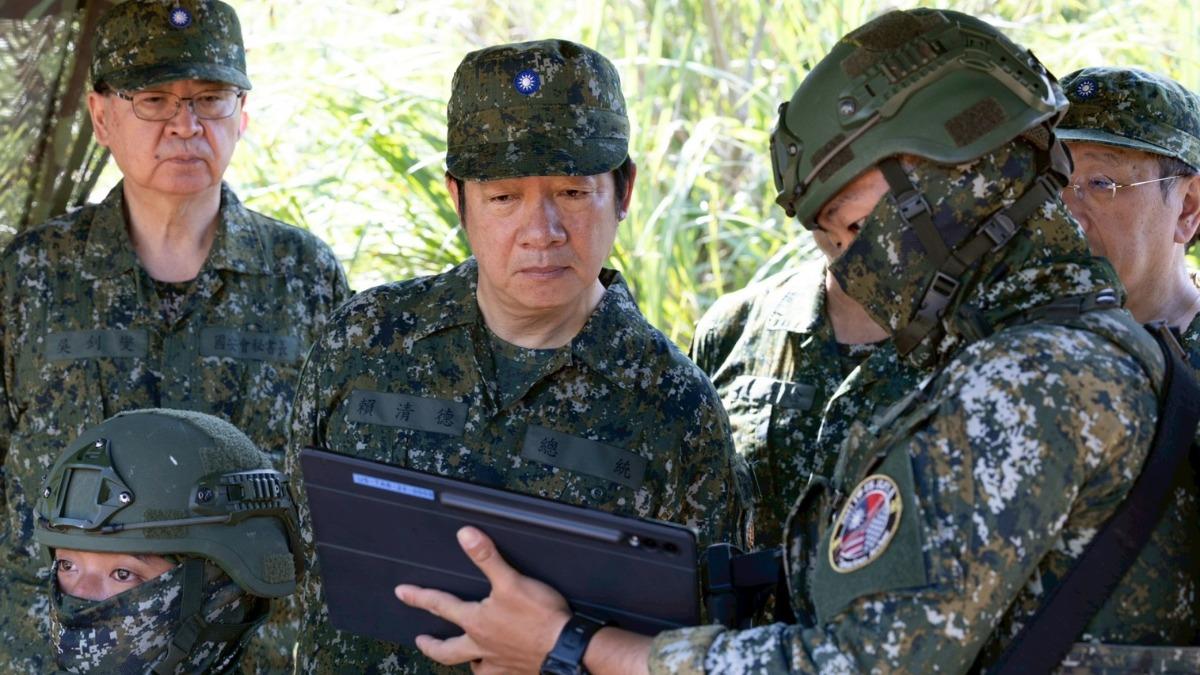
The escalating military pressure from China on Taiwan has reignited debates within the United States about whether to intervene militarily if China decides to attack the island. Analysts have long argued that the US should distance itself from Taiwan to preserve its relationship with China. This argument has gained traction as China’s strength and assertiveness grow, raising the potential costs of continued US support for Taipei. Lyle Goldstein, Director of the Asia Program at Defense Priorities, recently highlighted these concerns in an article published in Time magazine, warning of the risks posed by Taiwan’s current president, Lai Ching-te, whom he labels as ‘reckless.’ Goldstein argues that Lai’s rhetoric and actions could inadvertently drag the US into a conflict with China. However, critics note that Lai’s policies largely mirror those of his predecessor, Tsai Ing-wen, and that his statements on Taiwanese sovereignty are consistent with the Democratic Progressive Party’s long-standing position. China’s aggressive posture toward Taiwan is driven not solely by Lai’s leadership but also by its growing military capabilities and the perception of a wavering US commitment to Taiwan’s defense. While some argue that defending Taiwan is not in America’s vital interest, others emphasize Taiwan’s strategic and economic importance, particularly as a global hub for semiconductor manufacturing and a key player in the First Island Chain. The debate underscores the complex dynamics of US-China-Taiwan relations and the high stakes involved in any potential conflict.