When NASA’s Artemis II mission crew glide into the shadow of the Moon on Monday, they will enter a rare and profound chapter of human space exploration that few have experienced before. Scheduled to begin at approximately 23:47 BST, the Moon’s bulk will completely block the radio and laser signals that connect the four astronauts aboard the Orion capsule to mission control 240,000 miles away on Earth. For nearly 40 minutes, the Artemis II crew will travel through the dark of the lunar far side, completely cut off from all contact with home.
This moment of intentional isolation is not an unplanned mishap—it is an unavoidable milestone of any lunar mission, one that links the current generation of Artemis explorers directly to the Apollo astronauts who first blazed this trail more than half a century ago. No human has ever traveled farther from Earth than the Artemis II astronauts, who have maintained a steady, calming connection with Houston mission control through every phase of their journey so far. That steady link, which has anchored the crew to home throughout their outward voyage, will vanish abruptly when they dip behind the lunar horizon.
In a pre-mission interview with BBC News, Artemis pilot Victor Glover shared his reflection on the coming silence, asking people across the globe to seize the 40 minutes as a moment of shared connection rather than distance. “When we’re behind the Moon, out of contact with everybody, let’s take that as an opportunity,” Glover said. “Let’s pray, hope, send your good thoughts and feelings that we get back in contact with the crew.”
The experience of lunar radio blackout carries heavy echoes of the 1969 Apollo 11 mission, when command module pilot Michael Collins faced a nearly identical period of isolation while Neil Armstrong and Buzz Aldrin made their historic first steps on the lunar surface. For 48 minutes as his module circled the far side of the Moon, Collins lost all contact with both his crewmates on the surface and mission control back on Earth. In his 1974 memoir *Carrying the Fire*, Collins wrote that he felt “truly alone” and “isolated from any known life,” but noted that he felt no fear or crippling loneliness. In later years, he even recalled the silence as a moment of unexpected peace, a welcome break from the constant stream of communications from mission control that filled his active workday.
While the astronauts themselves will get a rare, undisturbed window to focus on lunar observation during the blackout—capturing high-resolution imagery, mapping lunar geology, and simply absorbing the unparalleled view of the Moon up close—teams on the ground will spend the 40 minutes in quiet anticipation. At Goonhilly Earth Station in southwest England, a massive deep-space antenna has been tracking Orion’s position throughout the mission, feeding precise location data back to NASA headquarters. This marks the first time the facility has tracked a human-crewed lunar mission, and Goonhilly chief technology officer Matt Cosby admits the team will feel a flicker of tension during the blackout.
“We’re going to get slightly nervous as it goes behind the Moon, and then we’ll be very excited when we see it again, because we know that they’re all safe,” Cosby told the BBC. For the future of lunar exploration, however, communication blackouts like this one are expected to become a thing of the past. As NASA and other global space agencies work toward establishing a permanent sustainable lunar base and expanding exploration of the far side of the Moon, constant, reliable communications coverage will be a non-negotiable requirement.
“For a sustainable presence on the Moon, you need the full comms – you need the full 24 hours a day, even on the far side, because the far side will want to be explored as well,” Cosby explained. Initiatives like the European Space Agency’s Moonlight program are already moving forward with plans to deploy a network of communications satellites in lunar orbit, designed to deliver uninterrupted coverage for all future missions, regardless of where a craft or surface outpost is located around the Moon.
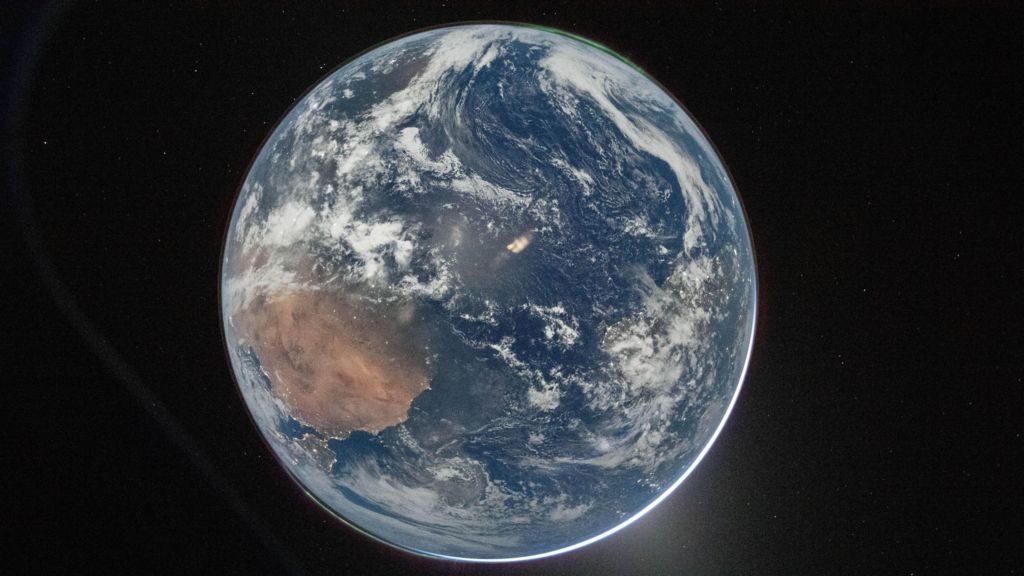
As the Artemis II crew prepare for their 40 minutes of silence, millions around the world will be waiting alongside ground teams for the moment the Orion capsule emerges from the Moon’s shadow. When the signal reconnects, the world will breathe a collective sigh of relief, and the history-making crew will once again be able to share their unprecedented views of the Earth and Moon with everyone waiting back home. The stunning new image of Earth captured by the crew from Orion in the past week, which has already captivated the public, offers a small preview of the breathtaking sights the astronauts will share once contact is restored.