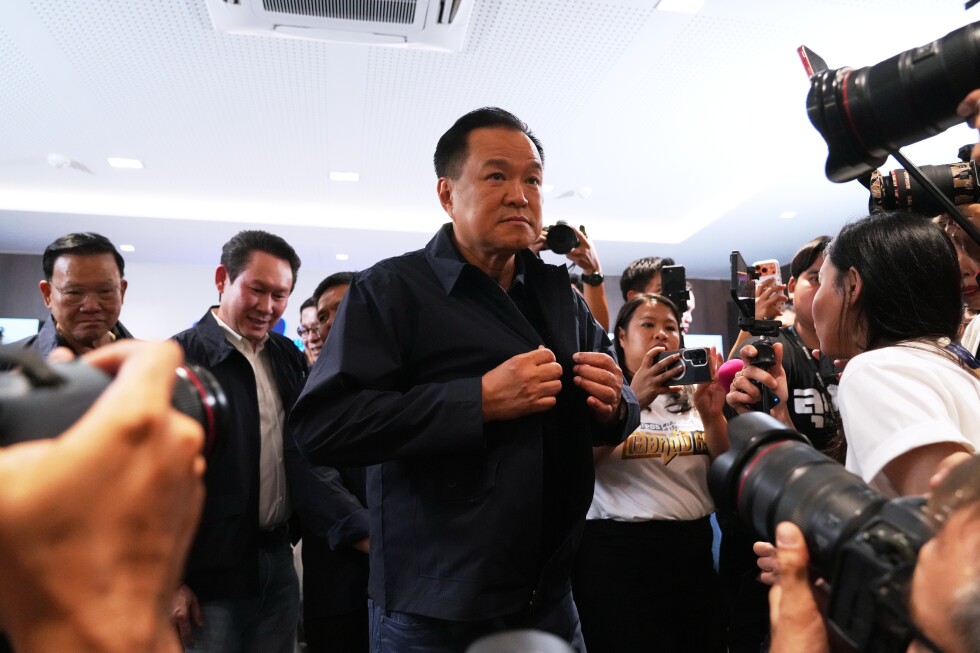
BANGKOK — Thailand’s political landscape has shifted decisively as the conservative Bhumjaithai Party, led by Prime Minister Anutin Charnvirakul, emerged victorious in the nation’s general election. According to unofficial results from approximately 94% of polling stations reported by the state Election Commission on Monday, the party secured approximately 193 seats in the 500-member House of Representatives.
The election, characterized by a voter turnout of approximately 65%—significantly lower than the 2023 election—unfolded against a backdrop of sluggish economic growth and rising nationalist sentiments. This outcome marks the first clear conservative victory in Thai politics in recent years.
The House of Representatives comprises 400 directly elected constituency lawmakers and 100 additional members selected through party-list proportional representation. With Bhumjaithai falling short of the 251-seat majority required to independently elect a prime minister, the party must now seek one or two coalition partners to form a government, potentially securing Anutin’s return as premier.
The progressive People’s Party, previously anticipated to lead the polls, captured second place with 118 seats, demonstrating strong performance in Bangkok and surrounding provinces. Notably, the party outperformed Bhumjaithai in party-list voting by approximately 3.8 million votes.
Pheu Thai, the populist vehicle for former Prime Minister Thaksin Shinawatra’s political machine, experienced a disappointing outcome with just 74 seats. Political analysts widely expect Pheu Thai to join a Bhumjaithai-led coalition government if invited.
Anutin’s path to victory involved strategic repositioning following initial popularity declines due to flooding incidents and financial scandals. Recent border clashes with Cambodia enabled him to reframe his leadership during crisis, emphasizing national security and economic stimulus throughout his campaign.
Napon Jatusripitak, director of the Center for Politics and Geopolitics at Bangkok-based think tank Thailand Future, noted that beyond nationalist sentiment, Bhumjaithai successfully leveraged traditional patronage networks outside urban centers, strategically positioning itself as the natural home for well-connected local politicians.
Additionally, Sunday’s ballot included a constitutional referendum, with approximately 60% of voters endorsing the initiation of a formal drafting process to replace Thailand’s 2017 military-drafted constitution, though numerous procedural steps remain before implementation.