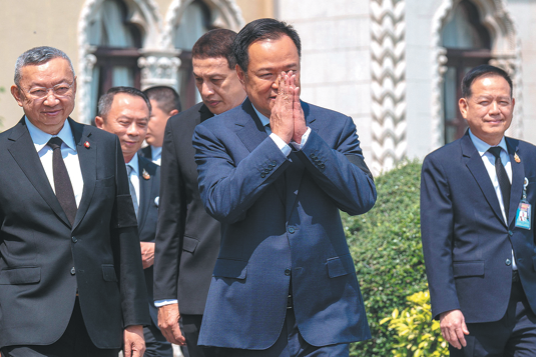
Thailand’s political arena witnessed a dramatic conservative realignment on Monday following Prime Minister Anutin Charnvirakul’s Bhumjaithai Party achieving an unexpectedly decisive triumph in the nation’s general election. With 94% of ballots tallied, the party secured a commanding 193 out of 500 parliamentary seats according to Reuters calculations based on election commission data.
The election outcome, which propelled Thai stocks approximately 3% higher to reach their most elevated level in over a year, positions Bhumjaithai substantially ahead of rival factions. The left-leaning People’s Party trailed significantly with 118 seats, while the Pheu Thai Party captured third position with 74 parliamentary spots.
Prime Minister Anutin characterized the result as “a victory for all Thais” during his Monday news broadcast, though he remained circumspect regarding imminent coalition negotiations. “We need a strong government,” Anutin emphasized, indicating his intention to form an administration with substantial majority support while awaiting final election tallies.
The conservative leader outlined key policy objectives including enhanced border security through construction of a wall along Thailand’s frontier with Cambodia and military strengthening. Anutin previously signaled that incumbent ministers of finance, foreign affairs, and commerce would retain their portfolios if his government returned to power.
The political upset comes despite late-January polls showing the People’s Party leading significantly. Analysts attribute Bhumjaithai’s surge to heightened nationalism stemming from regional conflicts with Cambodia. In a parallel development, voters overwhelmingly endorsed constitutional reform with nearly two-thirds supporting charter replacement—a process expected to require at least two years and additional referendums.
The People’s Party has explicitly ruled out participation in a Bhumjaithai-led coalition, with leader Natthaphong Ruengpanyawut confirming they would not pursue an alternative governing alliance. Anutin maintained that all considerations remain subject to party consultation, noting “There are still procedures to follow” regarding government formation.