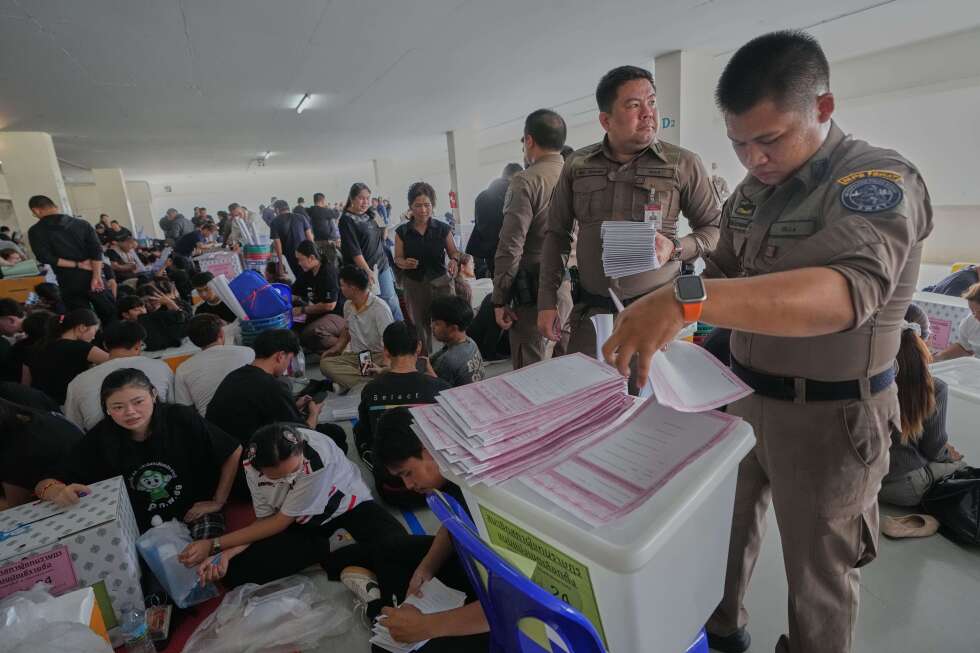
BANGKOK — Thailand stands at a political crossroads as millions of voters participate in Sunday’s snap general election, confronting a complex electoral landscape shaped by competing ideologies and power dynamics. The electoral contest emerges as a triangular struggle between progressive reformism, establishment conservatism, and traditional patronage politics.
The electoral battlefield presents three dominant forces with distinct visions: the reform-oriented People’s Party, the establishment-backed Bhumjaithai Party led by incumbent Prime Minister Anutin Charnvirakul, and the populist Pheu Thai Party representing the political machinery of exiled billionaire Thaksin Shinawatra. This political trifecta operates within a nation grappling with economic stagnation and rising nationalist sentiments.
Electoral projections indicate no single party will secure an outright parliamentary majority, necessitating complex coalition negotiations. The progressive People’s Party, successor to the dissolved Move Forward Party that triumphed in the 2023 elections, faces significant governing obstacles despite potential plurality victory. Its reform agenda targeting military, police, and judicial institutions faces resistance from conservative power structures.
Prime Minister Anutin’s Bhumjaithai Party has leveraged recent border tensions with Cambodia to bolster its national security credentials, rebranding its leadership image following earlier challenges from natural disasters and financial controversies. The party employs sophisticated grassroots mobilization techniques and traditional patronage networks, particularly in the vote-rich northeastern regions.
Meanwhile, the Pheu Thai Party continues its political resilience campaign, utilizing populist economic policies and the enduring influence of the Shinawatra political dynasty. The party has moderated its stance to gain acceptability within Thailand’s conservative establishment, nominating Thaksin’s nephew as its premier candidate while emphasizing economic revitalization and direct cash distribution programs.
Adding constitutional significance to the election, voters simultaneously consider a referendum authorizing parliamentary proceedings to replace the 2017 military-drafted charter. This constitutional question highlights the fundamental divide between pro-democracy advocates seeking reduced military influence and conservatives prioritizing political stability.