BANGKOK — Military tensions reignited along the Thailand-Cambodia border on Monday as both nations exchanged airstrikes and artillery fire while mutually accusing each other of initiating hostilities. The escalation represents a significant breach of the U.S.-mediated ceasefire agreement established in October following deadly clashes in July that resulted in dozens of military and civilian casualties.
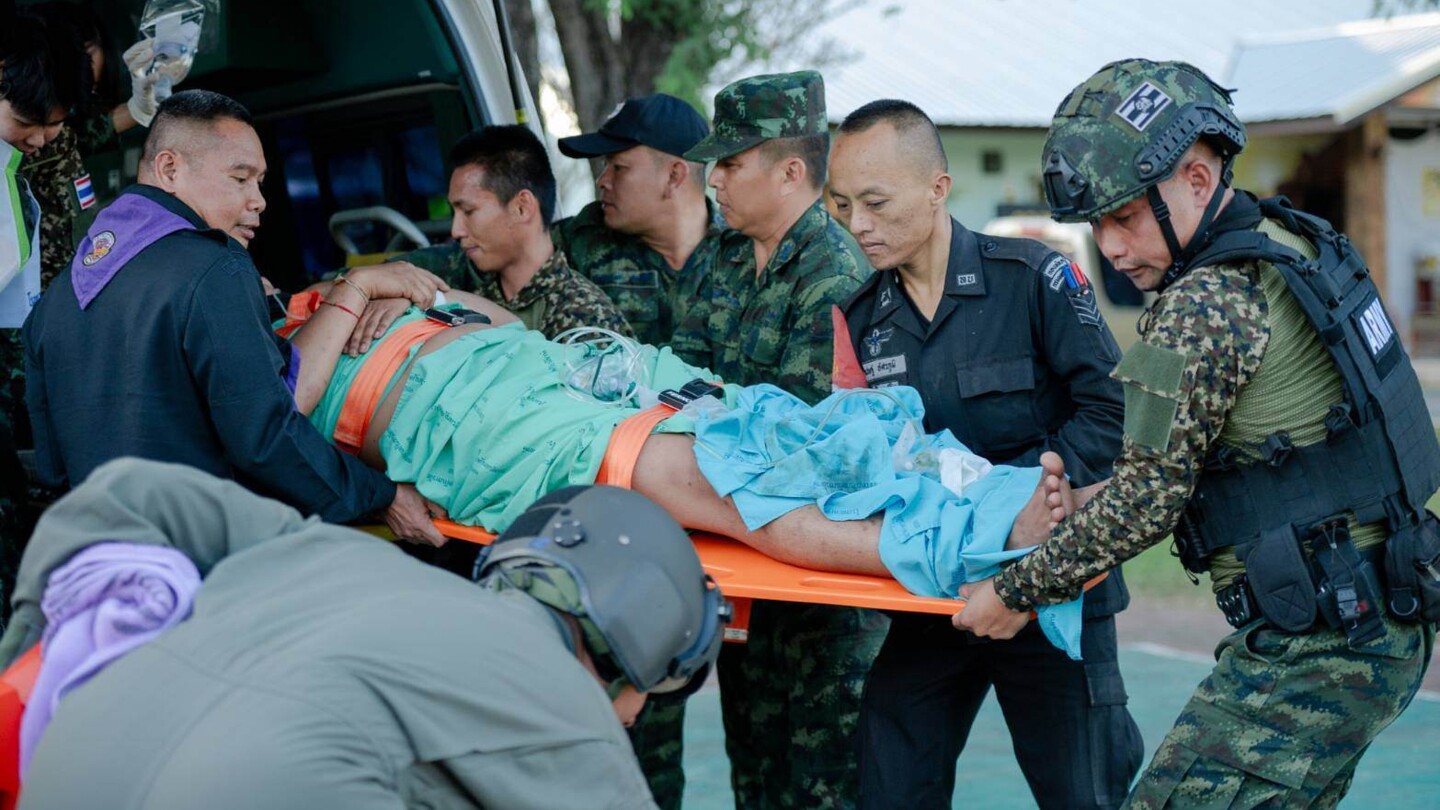
Thai military authorities reported one soldier killed and four wounded, claiming Cambodian forces initiated the conflict with cross-border attacks. In response, Thailand deployed aircraft to strike what it identified as Cambodian military positions. “Our forces conducted aerial operations against multiple military targets to suppress Cambodian supporting fire attacks,” stated Thai Army spokesperson Major General Winthai Suvaree, adding that civilian evacuations were underway in affected border regions.
Cambodia’s Defense Ministry provided a contradictory account, with spokesperson Maly Socheata asserting that Thai military forces launched the initial assault. “Cambodia did not retaliate during the Monday morning attacks,” Socheata emphasized, while urging Thailand to “immediately cease all hostile activities threatening regional peace and stability.”
The Cambodian Education Ministry implemented emergency measures, closing several border-area schools. Social media documentation showed students being hurriedly evacuated, with many transported via motorcycles as families sought safety from the renewed violence.
This latest outbreak follows Sunday’s border skirmish that both sides similarly attributed to the other nation. The fragile U.S.-brokered truce, negotiated through President Donald Trump’s administration, had already been jeopardized last month when Thai troops sustained injuries from landmine explosions, prompting Thailand to indefinitely suspend its implementation of the ceasefire agreement.
The current confrontation draws upon centuries of historical enmity between the neighboring nations, with modern territorial disputes originating from a 1907 French colonial-era map that Thailand contests. The International Court of Justice’s 1962 ruling granting Cambodia sovereignty over the Preah Vihear temple area remains a particularly sensitive issue in bilateral relations.
Despite the October ceasefire agreement, the fundamental border demarcation disputes remain unresolved, continuing to fuel tensions between the Southeast Asian neighbors.