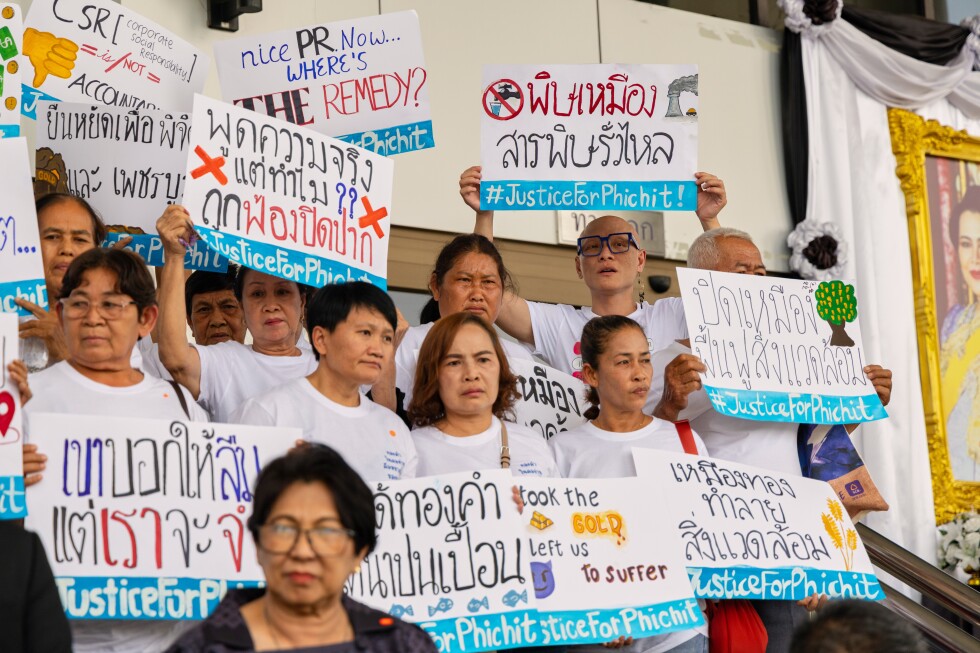
In a groundbreaking environmental ruling, Thailand’s Bangkok Civil Court has declared the operator of the nation’s largest gold mine legally accountable for widespread contamination affecting local communities. The verdict, delivered Tuesday, represents a significant victory for over 300 villagers from Phichit province who initiated the country’s first environmental class action lawsuit against Australian-owned Akara Resources, operator of the Chatree Gold Mine.
The court determined the mining company failed to substantiate that toxic heavy metals found in residents’ bloodstreams—including arsenic, cyanide and manganese—originated from sources unrelated to their operations. Consequently, the court mandated compensation ranging from 50,000 baht ($1,535) to 200,000 baht ($6,143) per affected individual, supplemented by payments for medical treatment and psychological distress.
Legal experts are hailing this decision as a transformative precedent for environmental litigation across Southeast Asia. Emilie Palamy Pradichit of the Manushya Foundation noted the ruling establishes whether communities perceive judicial systems as “a pathway or a dead end” in environmental justice matters.
The case’s resolution follows years of complex legal battles, including medical surveys, counter lawsuits, and direct intervention from former Prime Minister Prayuth Chan-ocha, who utilized post-coup military authority to suspend mining activities in 2016. Although Kingsgate Consolidated subsequently sued the Thai government for unfair license revocation, both parties reached a settlement last year.
This verdict emerges amidst a regional surge in ‘polluter pays’ litigation, with similar cases advancing in the Philippines and Indonesia. According to the Grantham Research Institute, approximately 225 climate litigation cases were filed globally in 2024, reflecting a growing trend of communities seeking corporate accountability for environmental damage.
Georgina Lloyd of the United Nations Environment Program confirmed that “Asia’s share of climate and environmental litigation is increasing,” noting expansion both in case volume and geographical scope. This trend is particularly evident in climate-vulnerable regions like Southeast Asia, where extreme weather events have caused billions in damages.
Despite compensation falling short of plaintiffs’ expectations, the establishment of corporate liability represents a substantial victory. As plaintiff Thanyalak Boontham stated outside the courtroom: “The fight is also for our future generation. I’d like them to be able to grow up in a good environment.”