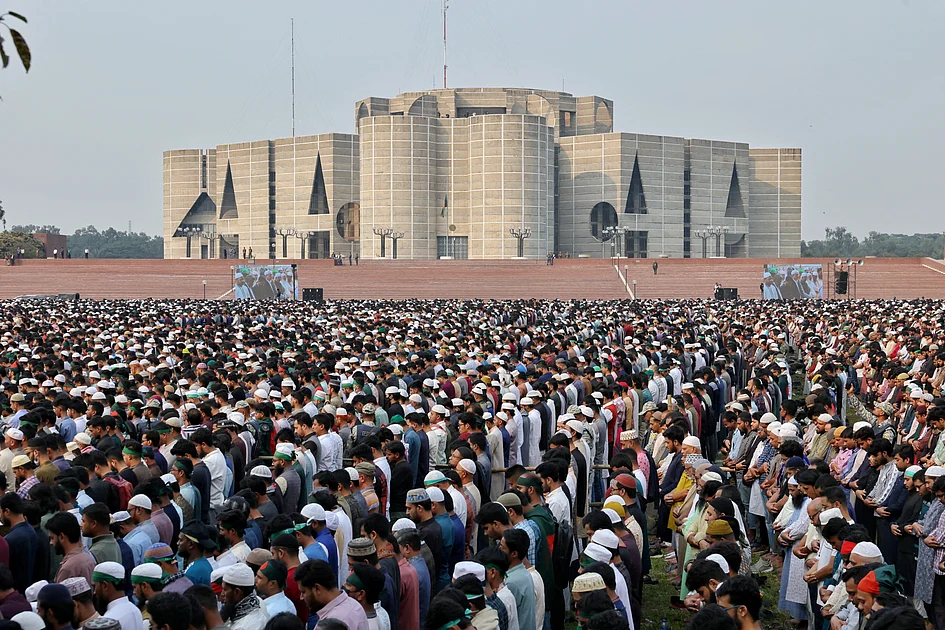
Dhaka witnessed an overwhelming outpouring of grief as tens of thousands of mourners gathered Saturday for the funeral of Sharif Osman Hadi, a prominent student leader whose assassination has plunged Bangladesh into renewed political turmoil. The massive procession followed two days of violent protests that have shaken the nation’s interim government.
Hadi, 32, a central figure in last year’s pro-democracy uprising, succumbed to injuries Thursday in a Singapore hospital after masked gunmen opened fire while he was departing a mosque in Dhaka. His body was repatriated to the capital Friday ahead of the solemn funeral rites held at the parliament building, where police in body cameras maintained a vigilant presence.
Interim leader Muhammad Yunus delivered an emotionally charged eulogy, declaring, “We have not come here to say goodbye. You are in our hearts and will remain in the heart of all Bangladeshis as long as the country exists.” Hadi, known for his vocal criticism of India, had been preparing to contest February’s general elections.
The assassination has triggered widespread civil unrest, with protesters demanding justice and accountability. Late Thursday, demonstrators targeted media institutions, setting fire to offices of leading newspapers Prothom Alo and Daily Star, which critics accuse of pro-India bias. The publications have been particularly scrutinized since ousted Prime Minister Sheikh Hasina sought refuge in India following the 2024 uprising.
In a separate incident adding to the tension, Hindu garment worker Dipu Chandra Das was lynched Thursday in Mymensingh district following blasphemy allegations. Yunus confirmed seven suspects have been arrested in connection with this religiously-motivated killing.
Amnesty International issued a statement Saturday urging Bangladesh’s interim government to conduct “prompt, thorough, independent and impartial” investigations into both Hadi’s killing and the subsequent violence. The rights organization expressed particular alarm over the deteriorating security situation and growing religious tensions.
The convergence of political assassination, religious violence, and anti-media attacks presents a severe challenge to Bangladesh’s fragile transitional government as the nation approaches critical elections.