The ongoing full-scale conflict between Russia and Ukraine has entered a new phase of intensified cross-border targeting, with a wave of coordinated strikes over a 24-hour period leaving dozens dead on both sides and triggering an unprecedented security response from a NATO member state.
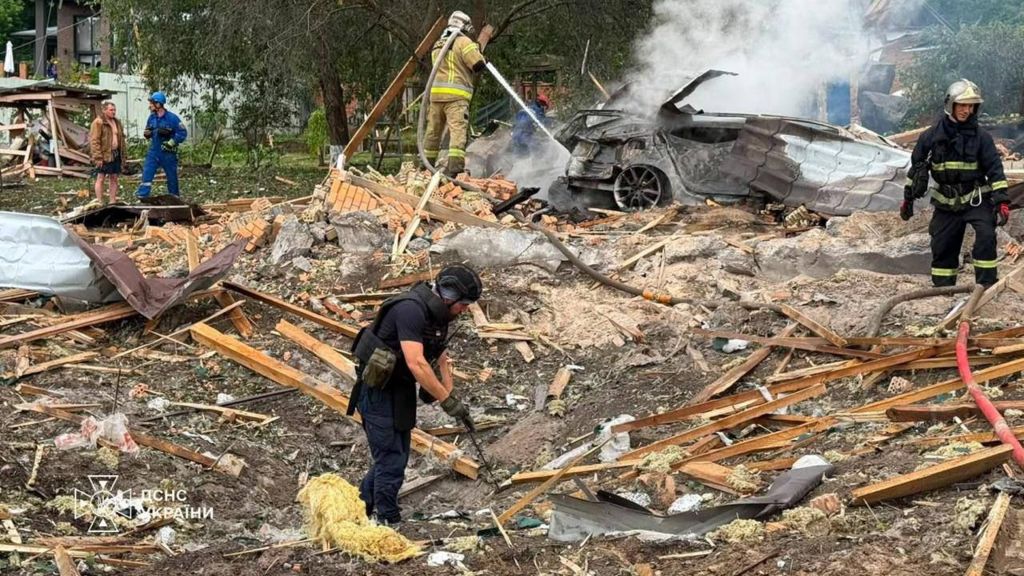
Russia launched a series of overnight and daytime attacks across Ukraine on Friday, killing at least 16 civilians and military personnel. The deadliest single incident was a ballistic missile strike on an outdoor training ground just outside Kyiv, where a public exhibition of Ukrainian defense industry technologies was being held. According to Ukrainian Air Force spokesman Yuri Ihnat, Russia fired three ballistic missiles at the site, and only one was successfully intercepted by Ukrainian air defense systems.
Initial official updates from Kyiv put the death toll from this strike at 10, with approximately 100 people injured. Emergency response teams have been working around the clock to clear rubble and search for survivors. Among the intended targets of the strike were two high-profile Ukrainian figures connected to the national military: Serhiy Beskrestnov, a Defense Ministry advisor widely known by the alias “Flash”, and Lyuba Shypovych, who leads development of military technologies for Ukraine’s armed forces. Both confirmed their safety via social media shortly after the attack.
This strike marks at least the third time that a public defense industry exhibition has been targeted by Russian strikes since the full-scale invasion began in February 2022. The incident has sparked significant domestic controversy in Ukraine, as public reports indicate the event was openly advertised and widely publicized despite ongoing conflict risks. Ukrainian President Volodymyr Zelensky has ordered a full official investigation into the incident, while the country’s prosecutor general has launched a probe to determine who authorized the public event and what safety protocols were in place to protect attendees.
A separate Russian strike on the eastern Ukrainian city of Sloviansk killed five additional people overnight, bringing the total Russian-caused death toll across Ukraine to 16 in the 24-hour period.
In reciprocal cross-border attacks, Ukraine launched strikes deep into Russian territory that left six dead and 26 injured near Kirov, a city located more than 600 miles behind Russia’s frontline combat positions. Zelensky confirmed that the Kirov strike targeted a key military production facility that supplies critical components for Russian aircraft and missile systems used to attack Ukrainian territory.
Ukrainian forces also carried out the third strike in six days against warehouses operated by Wildberries, Russia’s largest domestic online retailer. The latest attack hit a distribution center near Saint Petersburg, triggering massive fires that spread across the facility. In the first wave of Wildberries strikes over the previous weekend, two warehouses were hit: one in Elektrostal, east of Moscow, and another in Kotovsk, roughly 250 miles from the Ukrainian border. Eight nightshift workers were killed in those initial attacks, dozens more were injured, and an estimated $1 billion worth of stored goods were destroyed. The repeated strikes have hit the bottom lines of thousands of small and medium-sized Russian businesses that rely on Wildberries for e-commerce distribution.
Ukrainian officials have confirmed a shift in their long-range strike strategy: after months of targeting Russian energy infrastructure including oil depots and refineries, Kyiv is now prioritizing attacks on Russian logistics hubs that support military procurement and frontline supply lines. Publicly available screenshots of Wildberries’ website taken hours after the latest strike show the retailer continues to list body armor and other military-related equipment for sale to Russian buyers.
Beyond the territory of Russia and Ukraine, the conflict spilled over into NATO member state Romania on Friday. Romanian President Nicusor Dan confirmed that a Romanian Air Force F-16 fighter jet intercepted and shot down a Russian drone that had breached the country’s sovereign airspace. Romanian authorities had earlier issued public security alerts across multiple eastern and southeastern counties ahead of the interception, marking one of the most direct military encounters between NATO and Russian forces since the full-scale invasion began.