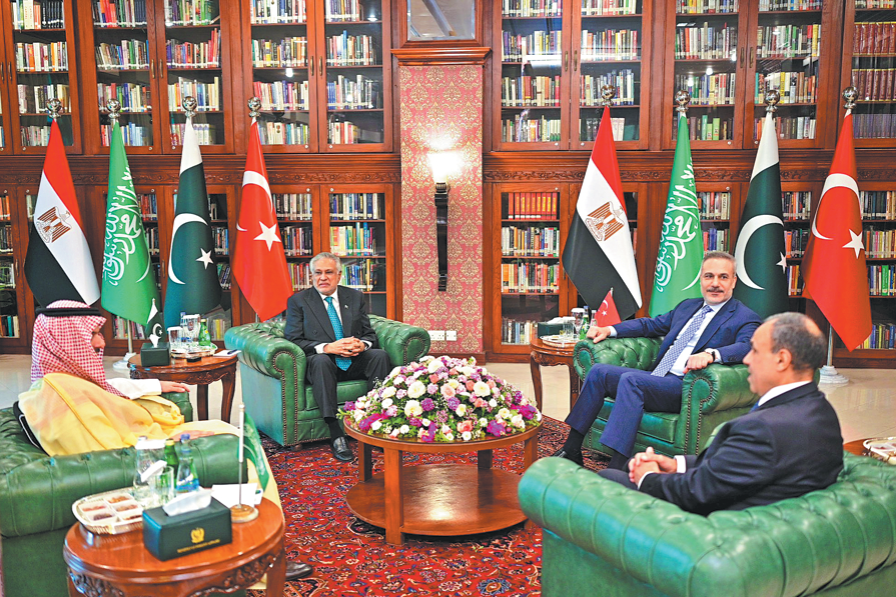
Amid escalating military tensions between the United States and Iran, Pakistan has emerged as a critical diplomatic intermediary, hosting high-level talks with Saudi Arabia, Turkey, and Egypt on Sunday. The meeting in Islamabad aimed to de-escalate the conflict that has now entered its fifth week, with Pakistani Foreign Minister Mohammad Ishaq Dar announcing plans to host US-Iran negotiations “in the coming days.”
The diplomatic push comes as former US President Donald Trump reignited controversy by openly discussing the potential seizure of Iran’s Kharg Island oil infrastructure in an interview with the Financial Times. “Maybe we take Kharg Island, maybe we don’t. We have a lot of options,” Trump stated, reviving a previously controversial proposition that military experts have warned could prove disastrous.
Iranian officials have responded with heightened warnings, accusing Washington of duplicity. “The enemy publicly sends messages of negotiation and dialogue while secretly planning a ground attack,” declared Iran’s Parliament Speaker Mohammad Bagher Ghalibaf on Sunday. Iran’s Navy Commander Shahram Irani issued a specific threat against the USS Abraham Lincoln, warning it would face shore-to-sea missile strikes if it entered Iran’s strike range.
The military situation continued to deteriorate as Israel launched fresh airstrikes across Iran on Monday, targeting facilities from the Persian Gulf coast to northern cities. The International Atomic Energy Agency confirmed that Iran’s heavy water production plant in Khondab is no longer operational following an Israeli military strike. Meanwhile, Iran’s Ministry of Energy reported widespread power outages in Tehran and surrounding areas, though authorities claimed these were quickly resolved through grid adjustments.
The conflict has expanded regionally, with Kuwait announcing an Indian worker was killed in an attack on a power and desalination plant. Other Gulf states reported intercepting drones and missiles, with Saudi Arabia intercepting five missiles targeting its oil-rich Eastern Province and Bahrain sounding missile alerts.
The economic impact continues to mount, with Brent crude nearing $117 a barrel on Monday—a nearly 60 percent increase since the conflict began on February 28. The disruption to global oil and natural gas supplies has triggered fertilizer shortages and raised concerns about broader economic consequences.
As diplomatic efforts continue, the situation remains volatile with no immediate response from Washington or Tehran regarding the proposed talks, leaving the international community watching carefully to see if dialogue can prevail over military escalation.