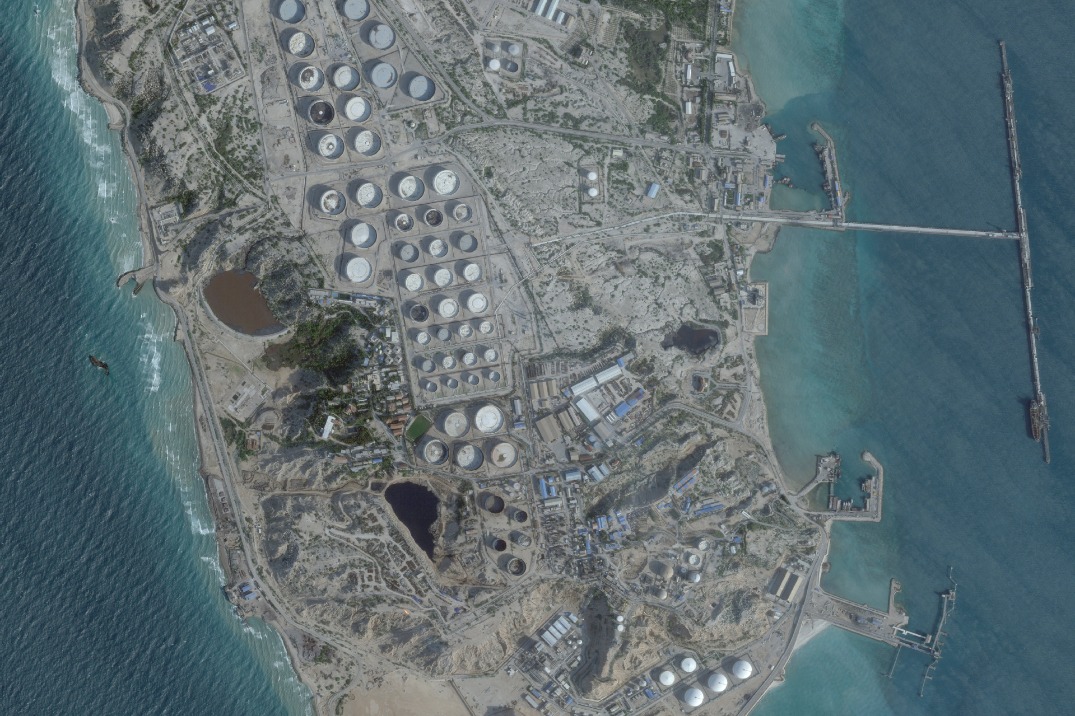
Tensions in the Middle East have reached a critical juncture as former US President Donald Trump openly contemplated seizing Iran’s strategic Kharg Island oil terminal, while regional diplomatic efforts intensified through Pakistani mediation.
In a provocative statement to the Financial Times, Trump revived his long-standing proposition to “take the oil” from Iran, specifically mentioning Kharg Island – the nation’s primary oil export facility located in the Persian Gulf. “Maybe we take Kharg Island, maybe we don’t. We have a lot of options,” Trump stated, though military experts immediately questioned the feasibility of such an operation given the need to navigate through the strategically vulnerable Strait of Hormuz.
The threat emerged against a backdrop of continued military action, with US and Israeli forces conducting strikes across Iran for the fifth consecutive week. Targets included the Tabriz Petrochemical Complex and Khondab’s heavy water production plant, which the International Atomic Energy Agency confirmed is no longer operational.
Iran responded with defiant rhetoric through Parliament Speaker Mohammad Bagher Ghalibaf, who accused Washington of duplicity: “The enemy publicly sends messages of negotiation and dialogue while secretly planning a ground attack. Our men are waiting for the arrival of the American soldiers on the ground to set them on fire.” Navy Commander Shahram Irani issued additional warnings that the USS Abraham Lincoln would face missile strikes if it entered Iran’s strike range.
Amidst the escalating rhetoric, Pakistan emerged as a crucial diplomatic intermediary, hosting foreign ministers from Saudi Arabia, Turkiye, and Egypt for extensive consultations aimed at de-escalation. Pakistani Foreign Minister Mohammad Ishaq Dar characterized the talks as “detailed and in-depth,” announcing that Islamabad would host US-Iran negotiations “in the coming days,” though the format—direct or indirect—remained uncertain.
The conflict has already produced significant regional consequences. Kuwait reported an Indian worker killed in an attack on a power and desalination plant, while Saudi Arabia intercepted missiles targeting its oil-rich Eastern Province. Bahrain activated missile alerts, and defenses in Dubai intercepted incoming projectiles.
The economic impact continues to intensify globally, with Brent crude approaching $117 per barrel—a nearly 60% increase since the conflict began—disrupting energy markets, triggering fertilizer shortages, and affecting international air travel.
Adding to the complexity, Iran experienced widespread power outages in Tehran and Alborz Province, which authorities attributed to attacks on electrical infrastructure, though the connection to Trump’s threats against Iranian energy facilities remained unclear. The former president extended his ceasefire deadline to April 6 as Washington circulated a 15-point peace plan.