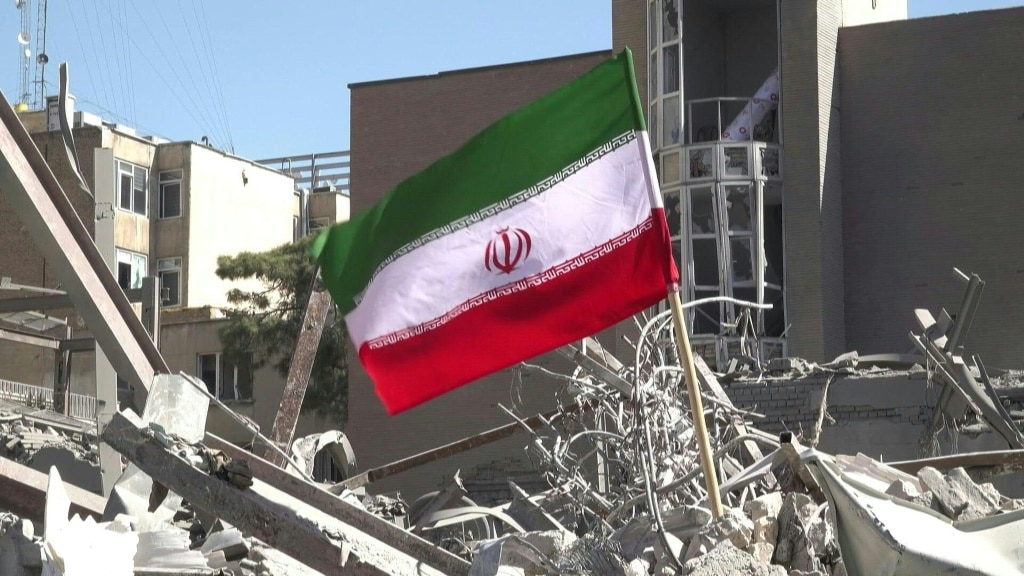
Tehran, Iran’s normally bustling capital of 10 million people, has been transformed into a virtual ghost town as sustained US-Israeli bombardment enters its fourth consecutive day. The cityscape, typically characterized by vibrant activity, now presents an eerie tableau of deserted streets and shattered infrastructure.
Central districts housing government power centers—including ministry buildings, judicial courts, and Revolutionary Guards headquarters—have borne the brunt of the aerial assaults. Ferdowsi Square, a major downtown junction, now lies in ruins with buildings blown apart by explosions. Amid the rubble, a flag of the Islamic Republic stands planted as a symbolic gesture of defiance.
Civilian residents who haven’t evacuated remain barricaded indoors, adopting extreme safety measures. “We slept on the floor with our heads protected in the middle of the apartment,” recounted Amir, 50, describing efforts to position themselves away from windows to avoid glass shattering from shockwaves. The psychological toll is severe, with nurse Samireh, 33, expressing terror at walking deserted streets while “bombs are still falling from the sky.”
Communication breakdowns have compounded the crisis. Israel’s evacuation warnings via social media platform X went largely unseen due to widespread internet blackouts. Meanwhile, security forces have established checkpoints at major intersections, conducting random vehicle inspections amid heightened military presence.
The economic and cultural impact is profound. Tehran’s famous Tajrish bazaar, which should be thriving in the lead-up to Nowruz (Persian New Year celebrations at month’s end), remains at a standstill. Shopkeepers face devastating financial losses during what is traditionally their most lucrative period. Upscale northern neighborhoods, typically vibrant with trendy cafes and restaurants, now echo with unusual sounds of meowing cats and birdsong instead of traffic.
Humanitarian concerns are mounting as families become separated. Nasim, 35, who fled to Turkey with her family, reports having “no news” from parents who remained in Iran. The crisis has forced many to abandon traditional holiday plans, instead focusing on survival amid the ongoing aerial campaign that shows no signs of abatement.