Escalating tensions between the United States, Israel and Iran have reached a new boiling point, after Tehran formally dismissed a harsh, expletive-laden ultimatum issued by former U.S. President Donald Trump that threatened widespread destruction of Iranian critical infrastructure. The rejection comes as international mediators circulate a tentative 45-day truce plan aimed at de-escalating the conflict that has roiled the Middle East since late February.
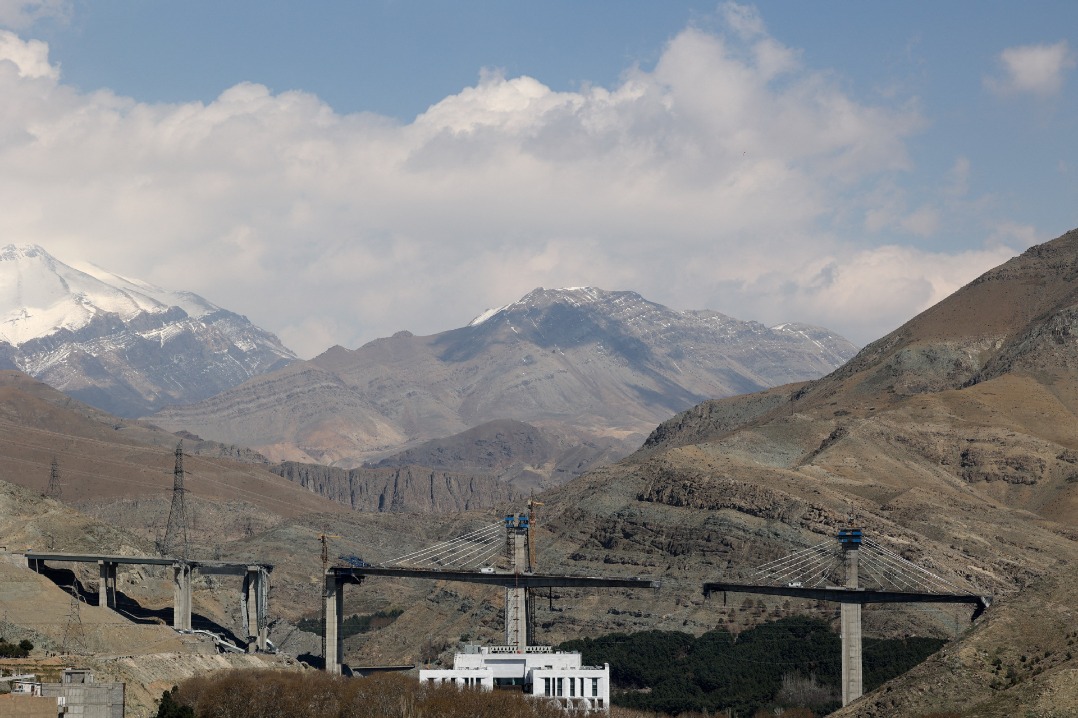
Trump’s ultimatum set a Tuesday deadline for Iran to immediately reopen the Strait of Hormuz, the strategic global chokepoint for nearly 20% of the world’s daily oil trade. In a provocative social media post, Trump warned that failure to comply would result in devastating targeted strikes on Iranian power plants and bridges, claiming a continued closure of the strait would leave Iran “back to the Stone Age” and its population “living in Hell”. The threat followed a coordinated wave of U.S. and Israeli airstrikes across Iran that had already killed more than 34 people earlier in the conflict, to which Iran responded by launching missile strikes against Israeli and Gulf Arab targets.
Tehran has refused to back down from its restriction on shipping through the strait, which remained fully open until the U.S.-Israeli military campaign began on February 28. In an official response to Trump’s threats, Iranian Parliamentary Speaker Mohammad Bagher Ghalibaf labeled the targeting of Iranian civilian infrastructure “reckless”, writing on the social platform X that “You won’t gain anything through war crimes.”
The ongoing conflict has already sent shockwaves through global energy markets. By early Monday spot trading, Brent crude, the global benchmark for oil prices, climbed to $109 per barrel — a 50% jump from pre-conflict levels. On Sunday, OPEC+ announced a modest output increase of 206,000 barrels per day set to launch in May, a small adjustment that has done little to cool rising energy prices.
As diplomatic efforts move forward, violent clashes continued across the region over the past 48 hours. On Monday morning, Tehran endured another night of intensive airstrikes that targeted eastern, southern and western districts of the capital. Local state media confirmed at least 34 fatalities from the strikes, including six children. The most significant damage was recorded at Sharif University of Technology, one of Iran’s most prestigious higher education institutions, where multiple campus buildings suffered unprecedented destruction.
Iran continued its cross-border retaliatory strikes on Monday as well. A missile hit a residential building in the Israeli city of Haifa, leaving at least two people dead and four more wounded. Across the Gulf Cooperation Council states, attacks hit power, desalination and oil facilities in Kuwait, while an oil installation was targeted in Bahrain. In the United Arab Emirates, air defense systems intercepted incoming missile and drone attacks early Monday. A stray drone strike damaged a telecommunications building owned by provider du in Fujairah, with no casualties reported, while falling debris from an intercepted attack left one person injured in an Abu Dhabi industrial zone.
The latest round of violence followed a high-stakes U.S. special operations mission on Friday that rescued the missing pilot of an F-15 fighter jet shot down over Iranian territory. The operation, which involved dozens of U.S. aircraft, closed a politically sensitive chapter of the conflict, but U.S. forces were forced to destroy two C-130 cargo planes and at least two MH-6 Little Bird helicopters after the aircraft became stuck in rough terrain during extraction. Iranian state media claimed it had shot down the abandoned aircraft, broadcasting footage of charred wreckage to support the claim.
Amid the ongoing bloodshed, diplomatic efforts have advanced to end the hostilities. A source familiar with the negotiations told Reuters that both Iran and the U.S. have received a draft truce plan that would immediately reopen the Strait of Hormuz once a ceasefire takes effect. Under the draft tentatively called the “Islamabad Accord”, an immediate ceasefire would be followed by 15 to 20 days of negotiations to finalize a broader long-term settlement, with final in-person talks scheduled to take place in Pakistan. Earlier, Axios reported that U.S., Iranian and regional mediators are discussing a potential 45-day temporary truce that could lay the groundwork for a permanent end to the conflict.
However, a senior Iranian official has already rejected a core condition of the proposal, stating that Iran will not agree to reopen the Strait of Hormuz in exchange for only a temporary truce. The official added that Tehran does not believe the U.S. is currently ready to negotiate a permanent ceasefire agreement.
Regional stakeholders have laid out their own requirements for any lasting peace deal. Anwar Gargash, diplomatic advisor to the UAE president, stated on Sunday that any final settlement must guarantee unimpeded, free passage for all commercial shipping through the Strait of Hormuz. He added that any deal that fails to address restrictions on Iran’s nuclear program, ballistic missile development and drone production would only set the stage for “a more dangerous, more volatile Middle East” in the long term.