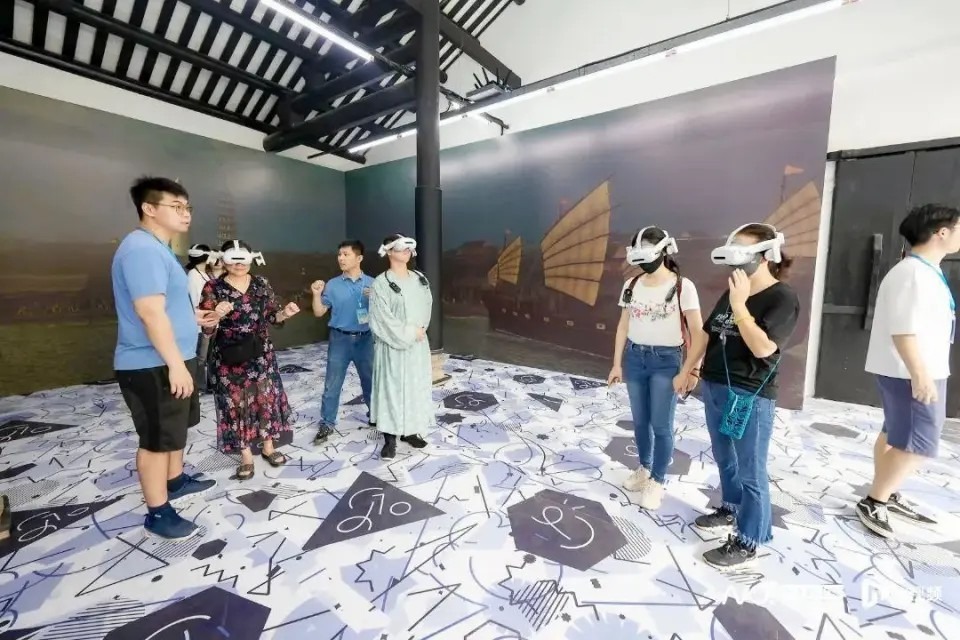
Across China, a new wave of tourism is taking shape, driven by cutting-edge technology and immersive experiences. From virtual reality (VR) journeys to the ancient Qin Dynasty’s Terracotta Warriors to simulated Mars missions in astronaut suits, ‘tech tourism’ is redefining how visitors engage with cultural and scientific landmarks. This innovative trend is not confined to museums or theme parks but is spreading across scenic spots nationwide, offering interactive and expansive experiences that captivate tourists of all ages. The integration of artificial intelligence (AI), VR, and robotics into tourism has transformed abstract technological concepts into tangible, engaging activities. For instance, the Shenzhen Science and Technology Museum allows children to ‘roam’ through space, while the Qingdao Science and Technology Museum turns them into ‘underwater archaeologists’ with VR goggles. Beyond urban centers, destinations like the FAST telescope in Guizhou and the rocket viewing platform in Wenchang are blending natural beauty with technological marvels, drawing thousands of visitors. Industry reports predict that China’s smart tourism market will exceed 1.4 trillion yuan ($197.6 billion) by 2025, driven by the growing demand for experiential and educational travel. Experts highlight that this trend is particularly appealing to Generation Z, who seek high emotional value and social media-worthy experiences. ‘Tech tourism is evolving from a niche exploration to a mass consumption trend,’ said Li Guangchun, an industrial economy researcher. As technology becomes the core engine of cultural tourism, it is paving the way for a new era of innovation in the industry, offering vast growth potential and reshaping the traditional tourism landscape.