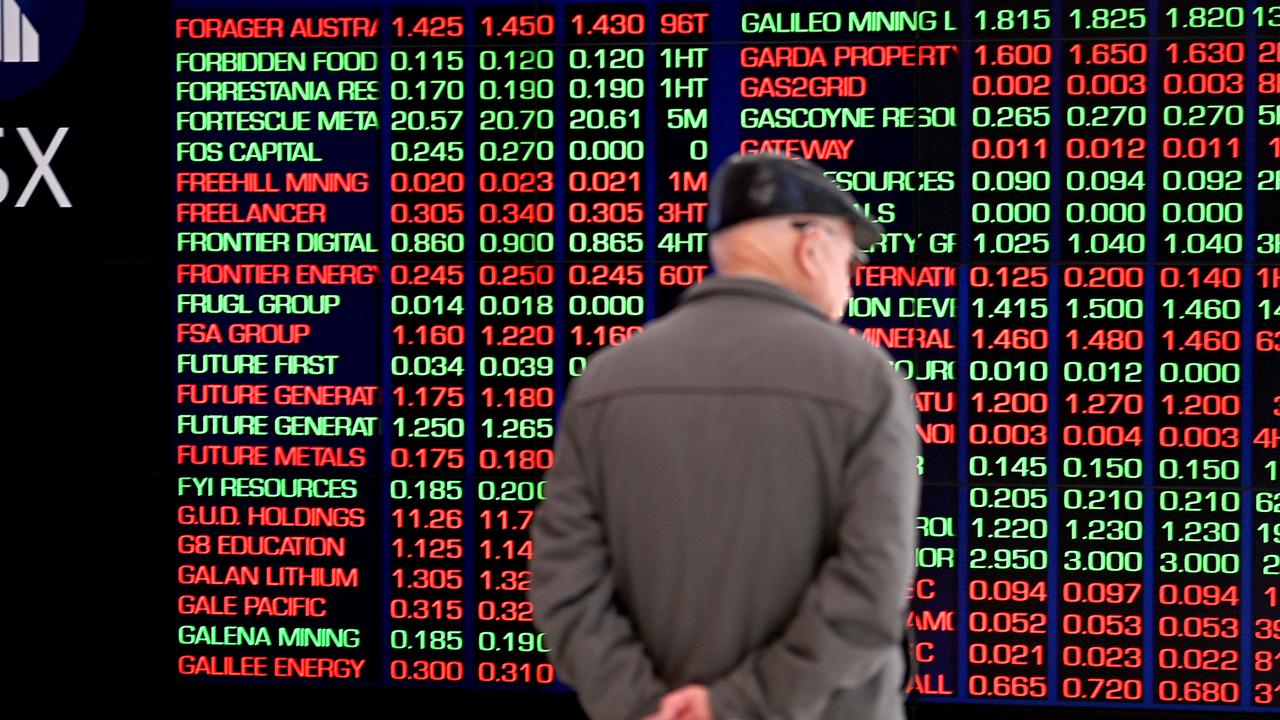
Australia’s financial markets staged a robust recovery on Wednesday, reversing a significant $63 billion downturn as new economic data altered monetary policy expectations. The benchmark ASX 200 index climbed 39.10 points (0.44%) to settle at 8,940.30, while the broader All Ordinaries index advanced 47.80 points (0.52%) to reach 9,164.90.
The resurgence was primarily fueled by unexpectedly modest household spending figures from the Australian Bureau of Statistics, which showed a mere 0.3% increase—substantially below market projections. This development significantly reduced pressure on the Reserve Bank of Australia to implement consecutive interest rate hikes, creating a more favorable environment for equity investments.
Technology equities spearheaded the market recovery with remarkable sector growth of 4.65%. Leading this charge were WiseTech Global, surging 7.14% to $47.57, Xero climbing 4.26% to $83.89, and Technology One advancing 4.41% to $26.30. Healthcare stocks also contributed substantially to the rally, with industry giant CSL jumping 2.54% to $146.49 following its announcement of a major vaccine supply agreement with Canada for pandemic preparedness.
The financial sector exhibited mixed performance with three of the four major banks recording gains. National Australia Bank led the group with a 1.39% increase to $47.33, while Commonwealth Bank edged up 0.44% to $172.66, and Westpac rose 0.58% to $41.37. ANZ bucked the trend, declining 0.45% to $37.77.
Commodity markets provided additional support as Singapore iron ore futures surged to a four-week peak of $US101.20, driven by China’s renewed commitment to addressing steel production overcapacity. This development propelled Rio Tinto shares upward by 1.16% to $164.58 and Fortescue Metals by 2.05% to $19.39. BHP experienced a 0.95% decline to $55.15 as the mining conglomerate traded ex-dividend.
The domestic recovery mirrored positive momentum on Wall Street, where stronger-than-anticipated ISM Services PMI data demonstrated continued resilience in the U.S. economy. Market analysts noted that declining price subindex components helped alleviate concerns about persistent inflationary pressures.
AMP economist My Bui commented on the spending data: ‘We anticipate further moderation in spending growth in coming months. Momentum had already begun slowing prior to February’s RBA rate hike, likely driven by weakening consumer sentiment, while rising inflation continues to erode real purchasing power.’
Overall, eight of the eleven market sectors finished higher, indicating broad-based recovery across the Australian equity landscape.