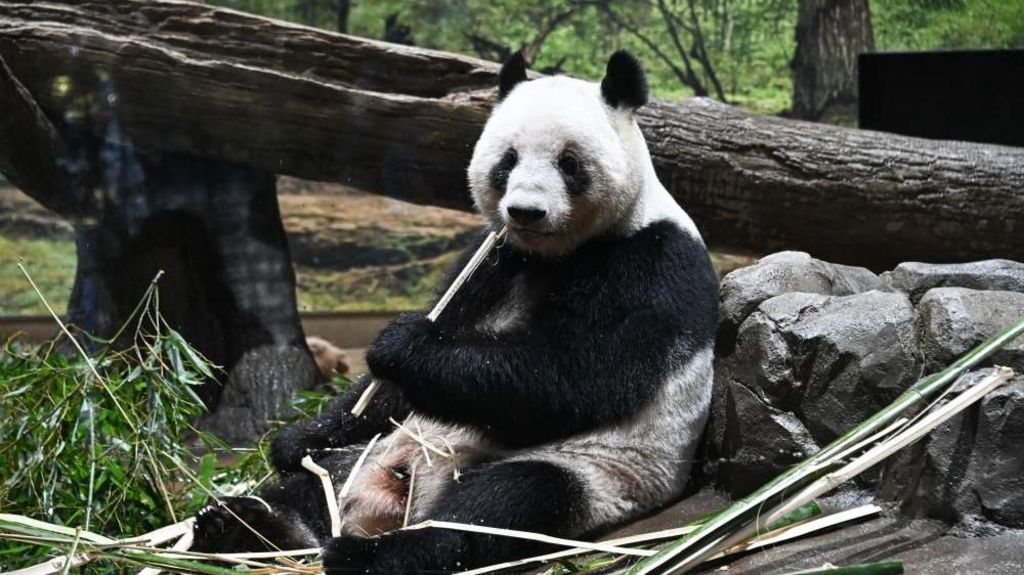
Thousands of Japanese citizens formed emotional queues at Tokyo’s Ueno Zoo on Sunday, waiting up to three-and-a-half hours for a final glimpse of the nation’s last remaining giant pandas. The twin cubs Xiao Xiao and Lei Lei are scheduled to return to China on Tuesday, marking the first time since 1972 that Japan will be without any pandas—a symbolic milestone coinciding with deteriorating Sino-Japanese relations.
The departure occurs against a backdrop of heightened diplomatic tensions following Japanese Prime Minister Sanae Takaichi’s recent statements regarding potential military involvement if China attacks Taiwan. Beijing, which considers Taiwan part of its territory, has responded with increasingly hostile rhetoric and recently tightened restrictions on rare earth exports to Japan.
China has employed panda diplomacy since 1949, using the beloved animals as instruments of soft power and goodwill gestures toward both allies and competitors. Under this program, China retains ownership of all pandas loaned abroad, including those born overseas, while host countries pay approximately $1 million annually per pair. The current situation illustrates how these cultural exchanges intersect with geopolitical realities.
Tokyo’s metropolitan government reported overwhelming public interest, with approximately 108,000 people competing for just 4,400 available viewing slots. Visitors expressed profound emotional connections to the bears, with one mother telling media she hoped the experience would become a cherished memory for her son. Another visitor reflected on the joy of witnessing the pandas’ growth since their birth in 2021 to parents Shin Shin and Ri Ri, both on loan for breeding research.
Historically, panda loans have frequently coincided with major trade agreements, as seen in 2011 when China loaned pandas to Edinburgh Zoo during negotiations involving salmon, Land Rovers, and energy technology. While standard loan agreements typically span 10 years with possible extensions, the current diplomatic climate casts uncertainty on future panda exchanges between China and Japan.