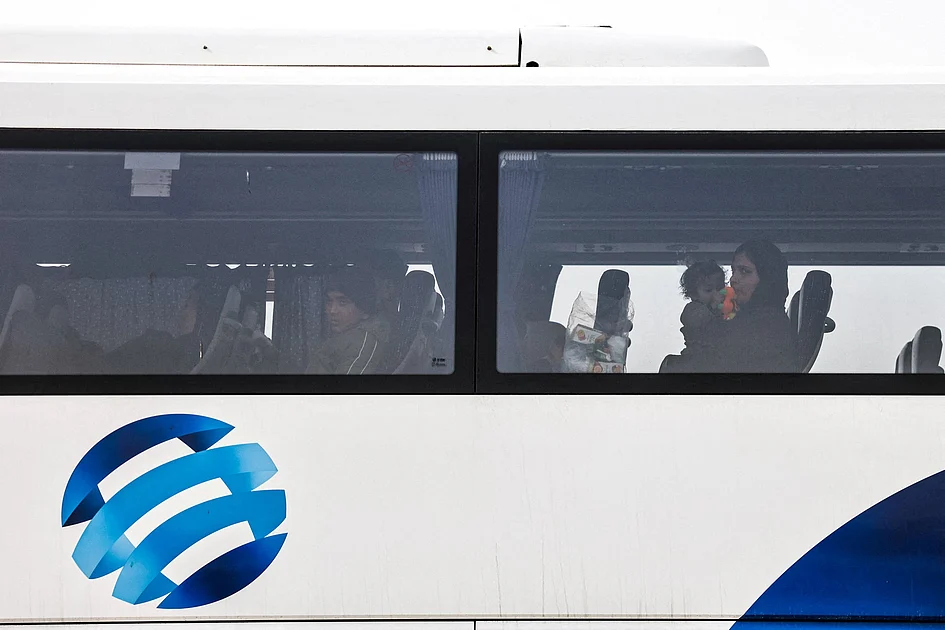
A limited reopening of the Rafah border crossing between Egypt and Gaza facilitated emotional, long-awaited reunions for a small number of Palestinians on Monday, February 3rd, 2026. The crossing, which serves as Gaza’s sole access point to the outside world not controlled by Israel, had been effectively sealed since Israeli military forces assumed control in May 2024 during the ongoing conflict with Hamas.
Jubilant yet tearful scenes unfolded at Nasser Hospital in Khan Yunis as returnees arrived late Monday. AFP footage captured crowds gathering around a bus, with individuals filming the poignant moments on their phones. The emotional weight was palpable as women wept upon embracing family members and a man held a young child up to a window to greet arrivals.
However, the return was marred by hardship and stringent Israeli inspections. Rotana Al-Riqib, a Palestinian woman in her thirties returning from Egypt, described the experience as a ‘humiliating journey,’ detailing interrogations and the confiscation of all belongings, including her children’s possessions, leaving them with only some clothes.
The reopening fell drastically short of initial expectations. While Egyptian officials had anticipated around 200 people to transit, sources on both sides reported only approximately two dozen movements in total. Gaza’s Hamas-operated Interior Ministry confirmed merely 12 individuals—nine women and three children—were permitted to return from Egypt, with only eight departing. An Egyptian source cited 12 admissions from Gaza, comprising five injured patients and seven companions.
Ali Shaath, head of a Palestinian technocratic committee for Gaza’s governance, termed the reopening a ‘window of hope’ for a territory shattered by two years of war. For many, particularly the estimated 20,000 patients in urgent need of medical care, the crossing represents a critical lifeline. The reopening is a component of a U.S.-backed truce plan, long demanded by the UN and aid agencies. Yet, Israeli coordination bodies have not indicated any plans to facilitate the long-awaited surge of humanitarian aid into the besieged territory, leaving dire conditions largely unaddressed.