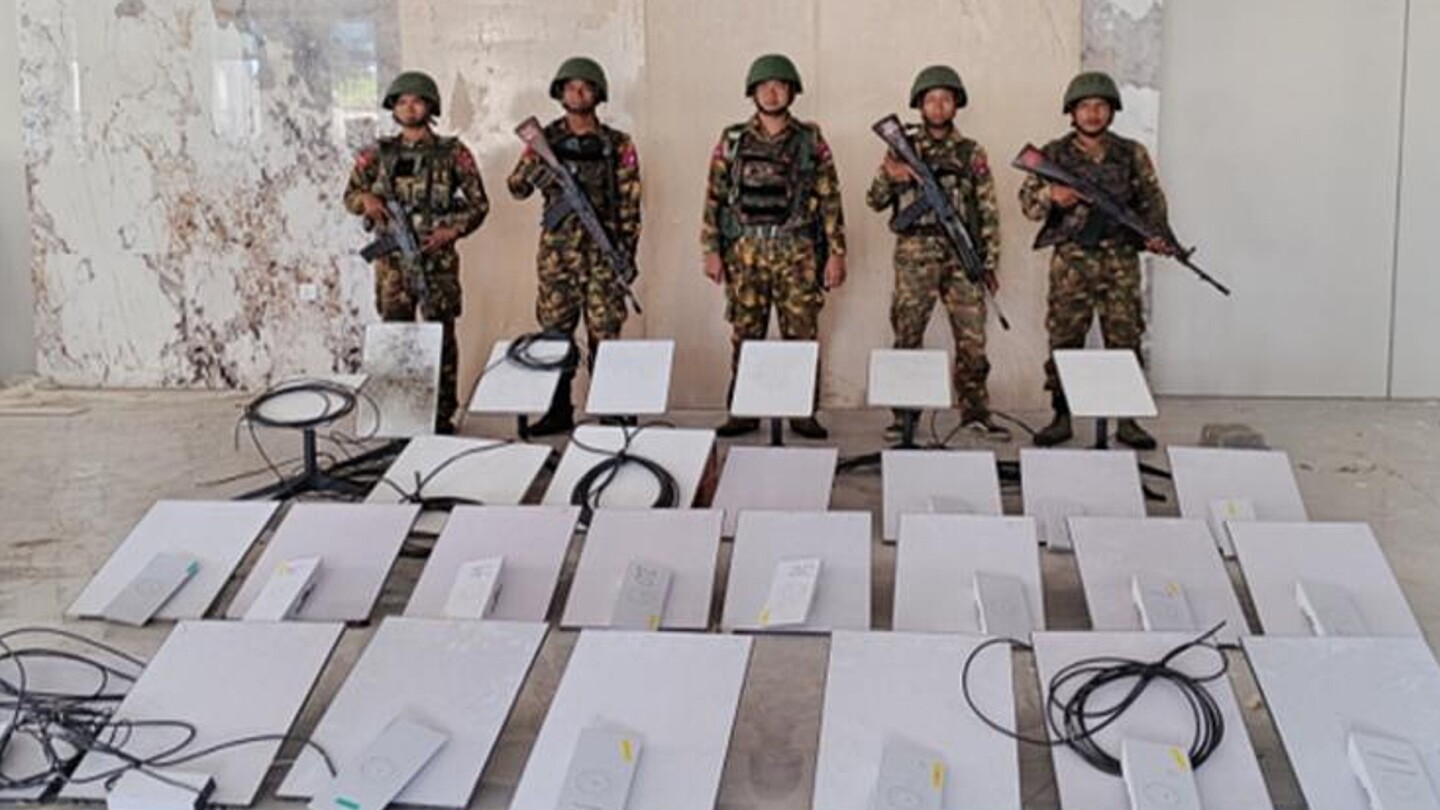
Myanmar’s military junta has launched a highly publicized offensive against industrial-scale cyberscam operations within its borders, implementing a new “zero tolerance” policy that culminated in the raid and partial demolition of KK Park—a notorious compound emblematic of the country’s sprawling cybercrime industry. The dramatic measures come amid mounting international scrutiny preceding national elections, positioning the regime as committed to combating one of the world’s most profitable criminal enterprises.
Satellite imagery analysis conducted by the London-based Center for Information Resilience reveals a discrepancy between government claims and actual demolition outcomes. While authorities announced the complete demolition of 413 structures by December 13th, visual evidence indicates only 31 buildings were fully flattened, with at least 78 sustaining partial damage. Investigators note that heavy machinery primarily targeted lower floors, leaving roofs and internal structures largely intact—suggesting potential for future reconstruction and reuse.
Historical patterns indicate this crackdown may represent more theater than substantive reform. Data from conflict analysis organization C4ADS demonstrates that previous raids conducted under Chinese pressure failed to curtail the industry’s expansion. Of 21 known scam compounds in Myawaddy Township, 14—including KK Park—have actually expanded since January. “This continued growth exemplifies the junta’s inability to rein in the industry,” noted C4ADS analyst Michael Di Girolamo.
The human dimension remains particularly troubling. While Thai authorities report approximately 1,500 workers exiting through official channels, this represents a fraction of the estimated tens of thousands employed at KK Park alone. Telegram channels now buzz with relocation offers for displaced workers, many reportedly transferring to operations in Cambodia, Mauritius, and African nations. Current victims trapped in neighboring compounds describe uninterrupted operations despite government claims of widespread raids.
Even technological countermeasures show limited effectiveness. Despite SpaceX deactivating over 2,500 Starlink units in Myanmar and state media showcasing confiscated equipment, workers at multiple compounds confirm continued access to the satellite internet service essential for their operations.
With approximately 30 similar compounds operating along the Thailand-Myanmar border, including the notorious Shwe Kokko complex targeted by U.S. authorities, activists remain skeptical about the operation’s long-term impact. “This doesn’t constitute a genuine crackdown,” stated Jay Kritiya of the Civil Society Network for Human Trafficking Victim Assistance, capturing the prevailing sentiment that systemic change remains elusive despite surface-level demonstrations of enforcement.