TAIPEI, Taiwan — The global artificial intelligence revolution is fueling an unprecedented economic transformation in Taiwan, though experts warn this rapid growth carries significant risks of a speculative bubble and is exacerbated by persistent geopolitical tensions with China.
Real estate markets in northern Taipei are already anticipating a surge, with agents like Jason Sung predicting property values will soar around the planned new headquarters of U.S. chip giant Nvidia. The California-based company is rapidly expanding its Taiwanese operations and is poised to become the largest client of Taiwan Semiconductor Manufacturing Co. (TSMC), the world’s dominant contract manufacturer of advanced AI chips.
Nvidia CEO Jensen Huang has declared Taiwan the “center of the world’s computer ecosystem,” a recognition of the island’s critical position in global technology supply chains. This status was underscored by Taiwan’s remarkable 8.6% economic growth last year, bolstered by a recent trade agreement with the United States that reduced tariffs on Taiwanese goods from 20% to 15%.
Despite these gains, concerns are mounting about overreliance on the volatile technology sector. “What if the AI bubble is real, and what if its rapid growth pace slows? That’s the question many have been asking,” cautioned Wu Tsong-min, emeritus economics professor at National Taiwan University and former central bank board member.
Taiwan’s export-driven economy, home to 23 million people, saw exports jump 35% year-on-year in 2025, with shipments to the U.S. surging 78% due to exploding AI demand. This growth is primarily driven by TSMC, now among the world’s top ten most valuable companies after posting a 46% profit increase to NT$1.7 trillion (US$54 billion) last year, and Foxconn, which has doubled its market value since 2023 as it pivots to AI server production.
Even TSMC Chairman C.C. Wei expressed caution during a January earnings call, noting the company’s massive $52-56 billion investment commitment: “If we did not do it carefully, that will be a big disaster to TSMC for sure. I want to make sure that my customers’ demands are real.”
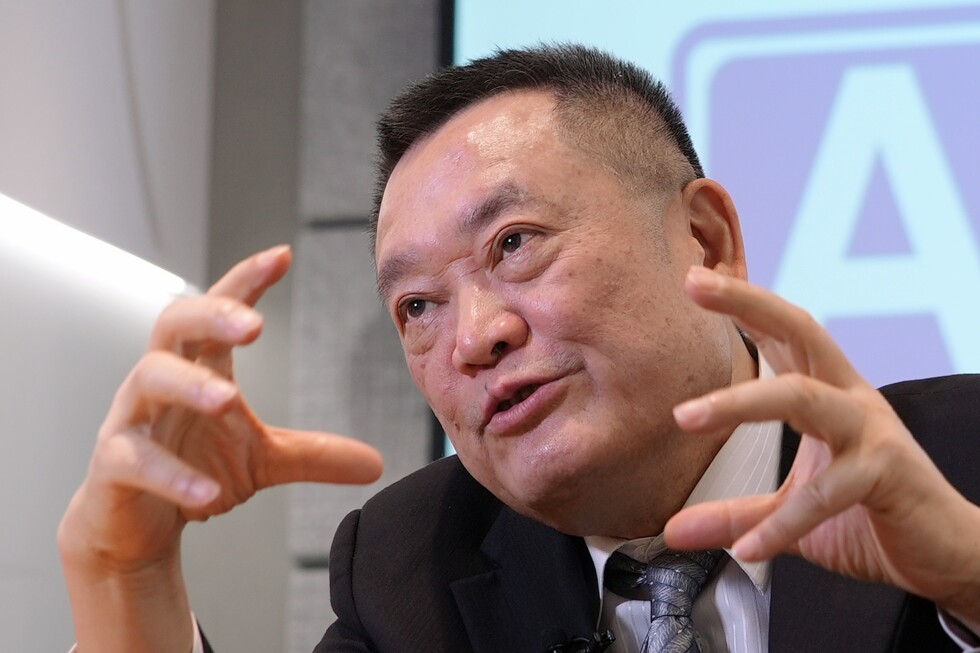
Industry leaders remain optimistic despite these concerns. Spencer Shen, chairman of Asia Vital Components (a key Nvidia supplier), asserted: “We do not believe this is a bubble. AI is driven by companies with real products and massive cash flows. In fact, AI infrastructure is still in short supply.”
Geopolitical tensions with China present another persistent threat. Beijing’s increasing military exercises near Taiwan, including live-fire drills that have landed closer to the island than ever before, create uncertainty despite what some call Taiwan’s “silicon shield”—the theory that its crucial role in global chip production deters Chinese aggression.
Meanwhile, Taiwan’s AI boom has exacerbated wealth inequality. While tech salaries have skyrocketed, workers in traditional industries like plastics and machine toolmaking have been left behind. Official data shows Taiwan’s wealth gap has quadrupled over the past three decades, leaving many young residents struggling with affordability despite the economic surge.
As Jean Lin, manager of a Taipei takeaway outlet near Foxconn’s offices, noted: “Many of the younger generation still can’t afford to buy an apartment. A lot of young people still feel they don’t have much money.”