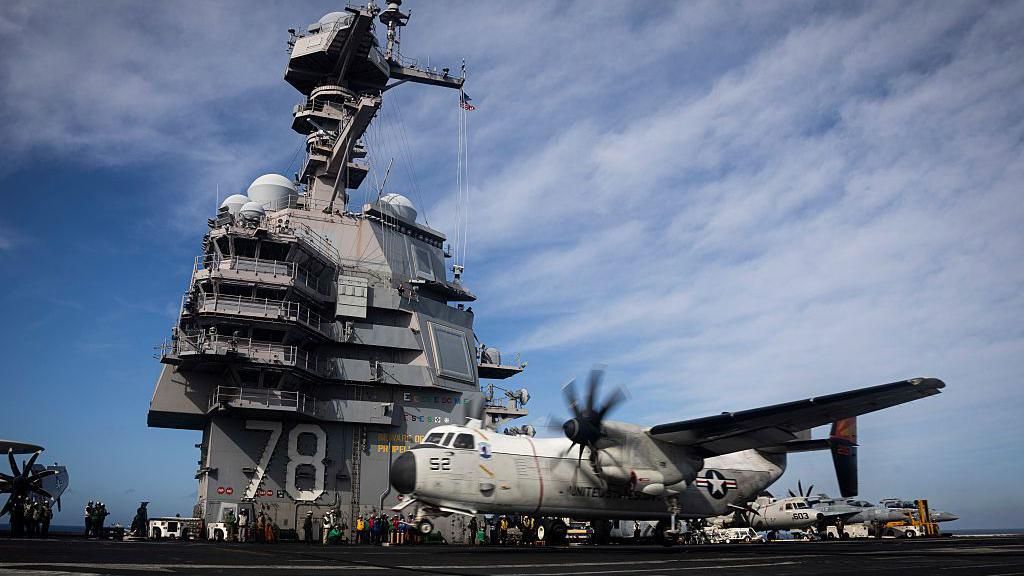
The US Navy has confirmed the arrival of a formidable naval strike force in the Caribbean, led by the USS Gerald R Ford, the world’s largest warship. This deployment, ordered by President Donald Trump last month, coincides with ongoing US military operations targeting alleged drug trafficking vessels and escalating tensions with Venezuela. The strike group, which entered the area of responsibility of US Southern Command on November 11, includes the USS Gerald R Ford aircraft carrier, guided-missile destroyers, and various support vessels. The carrier alone houses over 4,000 sailors and dozens of aircraft, significantly enhancing US military capabilities in the region. Pentagon spokesman Sean Parnell emphasized that the force aims to bolster the US capacity to detect, monitor, and disrupt illicit activities, particularly narcotics trafficking, which threatens the safety and prosperity of the nation. This deployment joins substantial military assets already stationed in the region, including thousands of troops, a nuclear-powered submarine, and military aircraft based in Puerto Rico, marking the largest US military presence in Latin America in decades. The US has conducted at least 19 strikes against suspected drug boats in the Caribbean and the eastern Pacific, resulting in 76 fatalities. These operations have drawn criticism from Venezuelan President Nicolas Maduro, who accuses the US of fabricating a crisis to destabilize Venezuela’s socialist government. Concerns have also been raised by observers regarding potential human rights violations and lack of due process. President Trump, however, defended the strikes, claiming they are essential to curbing drug trafficking into the US. In a recent interview, Trump refused to rule out the possibility of land-based strikes, further fueling speculation about US intentions in the region.
标签: South America
南美洲
-
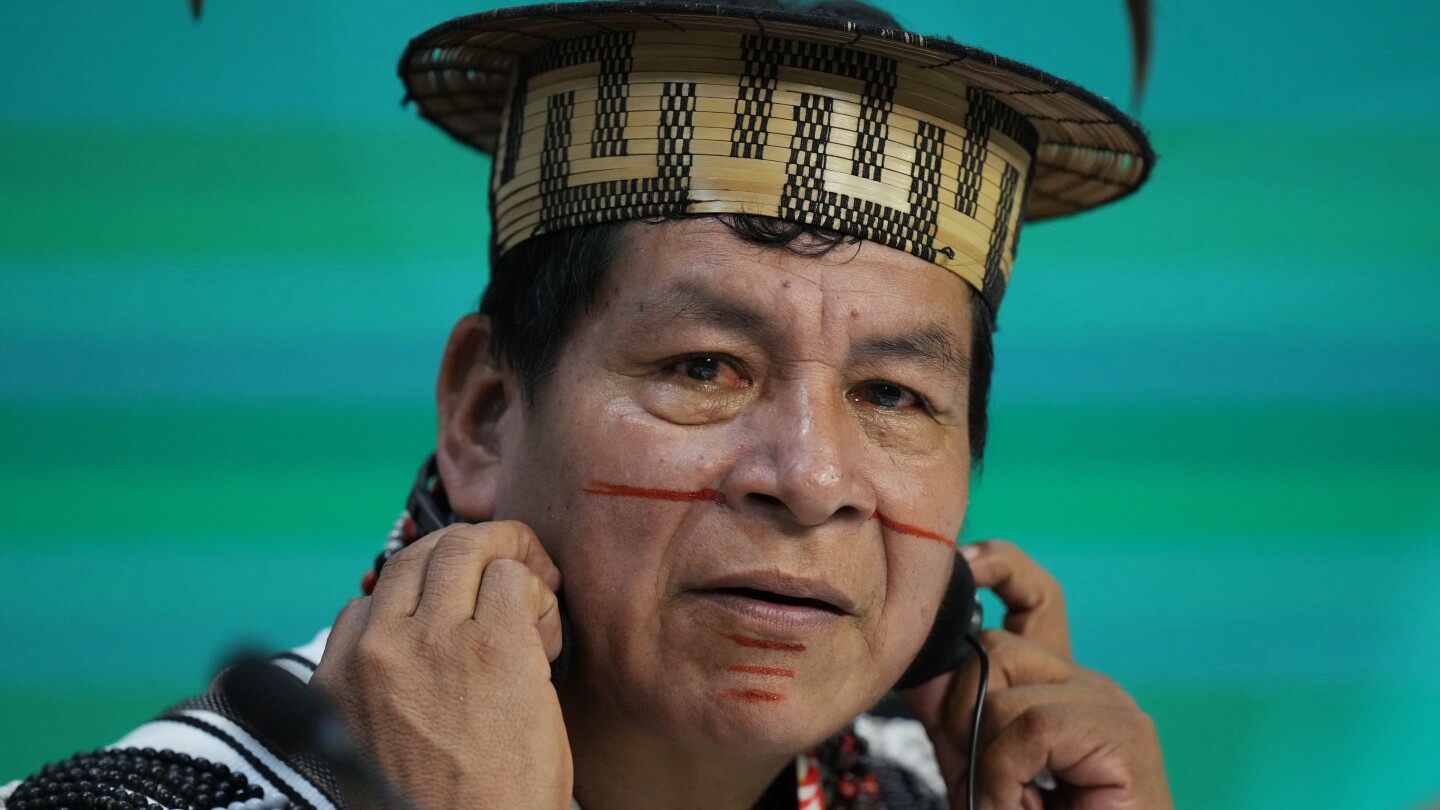
Indigenous groups get the spotlight at UN climate talks, but some say visibility isn’t power
The COP30 United Nations climate talks, held in Belem, Brazil, were dubbed the “Indigenous peoples COP” with promises to center Indigenous voices. However, the event’s opening was marred by a power outage, symbolizing the broader challenges faced by Indigenous participants. Despite the setback, attendees persevered, using paper fans and improvising without microphones during songs, dances, and prayers. Indigenous groups, who safeguard much of the world’s biodiversity and are disproportionately affected by climate change, expressed skepticism about whether their voices would truly be heard. Thalia Yarina Cachimuel, a Kichwa-Otavalo delegate, highlighted the systemic barriers Indigenous people face, stating they must work “10 times harder” to be included in spaces not designed for them. The Brazilian government’s decision to host the summit near the Amazon rainforest was seen as a nod to Indigenous communities’ sustainable practices. However, logistical challenges, such as limited lodging and language barriers, hindered robust participation. Edson Krenak of Cultural Survival noted the frustration of being excluded from policy development but expected to comply with decisions. Despite these hurdles, some remained hopeful. Lucas Che Ical of Ak’Tenamit emphasized the need for direct funding to Indigenous communities and expressed optimism that this COP could yield meaningful results. The summit’s focus on implementing past promises rather than forging new agreements underscored the ongoing struggle for Indigenous inclusion in global climate negotiations.
-
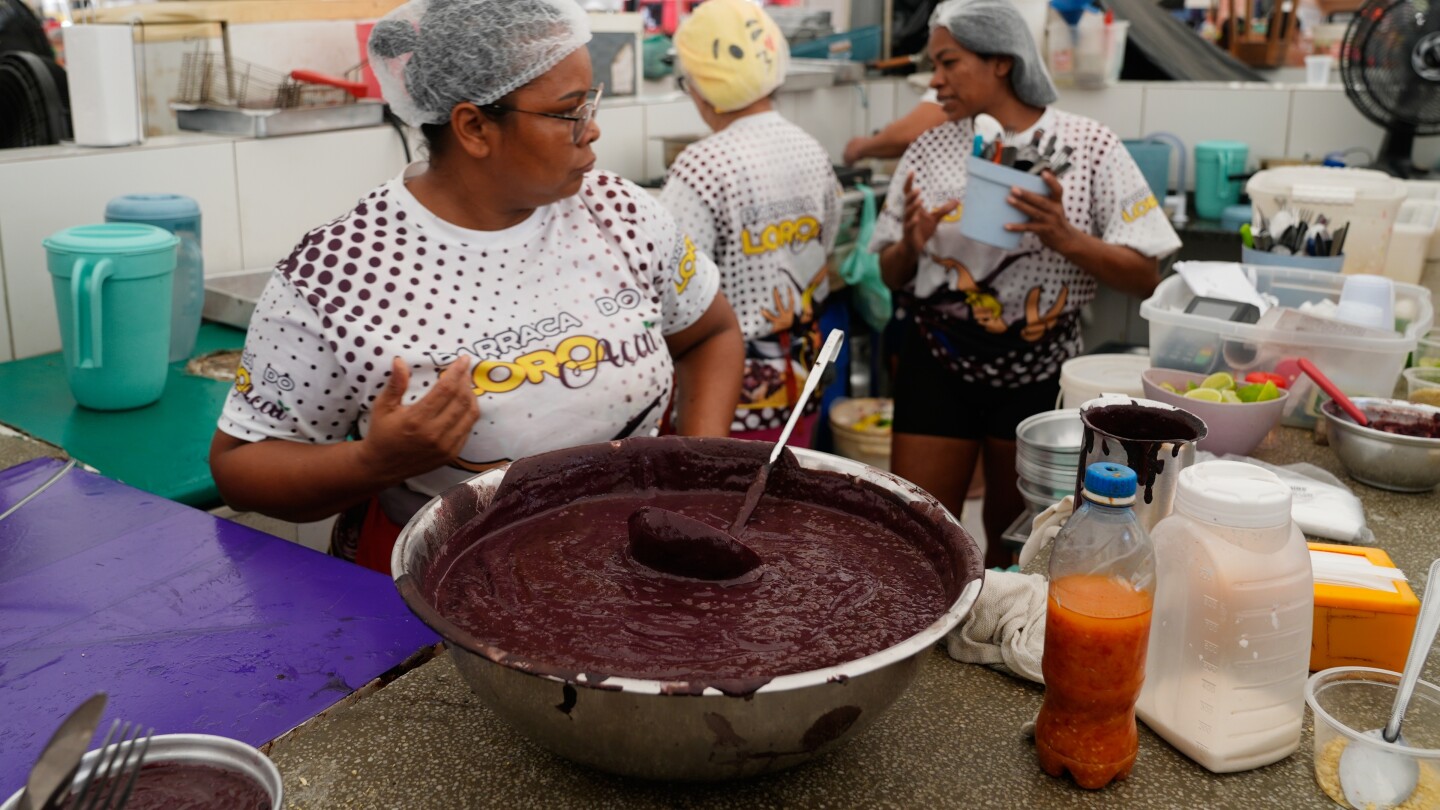
Traditional acai berry dishes surprise visitors to Brazil climate summit, no sugar added
BELEM, Brazil — Visitors attending the COP30 United Nations climate summit in Belem, Brazil, are discovering a different side of the globally popular acai berry. Unlike the sweetened, frozen versions commonly found in smoothies and breakfast bowls worldwide, the traditional acai bowls served by local vendors in Belem are unadulterated and sugar-free, staying true to their Amazonian roots. This authentic preparation, often served at room temperature as a thick liquid made from whole berries and a bit of water, has been a challenging experience for some international visitors accustomed to the sweeter, dessert-like versions. Catherine Bernard, a 70-year-old visitor from France, expressed her preference for the creamy, sweetened acai while acknowledging the cultural significance of the traditional dish. ‘Maybe if we add a little honey, some banana,’ she suggested. For the Indigenous communities of the Amazon, acai is not a dessert but a staple food, often serving as the main course of a meal. Tainá Marajoara, an activist and restaurant owner, emphasized the importance of protecting acai trees in the rainforest to maintain their quality. ‘Acai is also the blood running in the forest,’ she said. The traditional acai bowl, priced at 25 Brazilian reais ($5) at Marajoara’s COP30 pavilion restaurant, contrasts with the industrialized, sweetened versions popularized in the 1990s by surfers and jiujitsu fighters in Rio de Janeiro. Nearly all acai consumed in the U.S. originates from Brazil, with the state of Para accounting for 90% of the country’s production. However, U.S. consumers face uncertainty due to a 50% tariff imposed by former President Donald Trump on Brazilian exports. The harvesting of acai is a physically demanding job, with workers climbing tall trees to collect the berries. A full crate of acai sells for around $50 at local markets, but prices could drop if U.S. sales decline. Environmental challenges, such as erosion in coastal Amazon areas, are affecting the taste and quality of some acai berries, making them saltier and less vibrant. Marajoara and others advocate for greater environmental protection to preserve the acai trees and the rainforest ecosystem. ‘For acai to be healthy, the rainforest needs to be healthy too,’ she concluded.
-
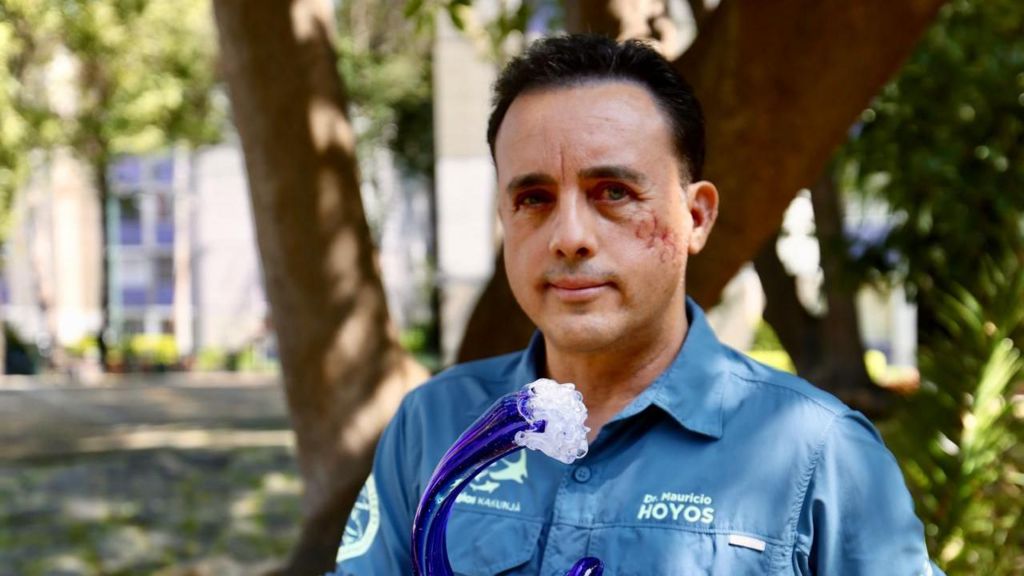
‘This animal spared my life’: Biologist bitten in head by shark hopes to meet it again
Marine biologist Mauricio Hoyos, a seasoned shark researcher with over three decades of experience, recently survived a harrowing encounter with a 3-meter-long female Galapagos shark off the coast of Cocos Island, Costa Rica. The incident occurred during a research trip in September, where Hoyos was tagging sharks to study their mating and spawning behaviors. Despite the attack, Hoyos describes his recovery as ‘incredible’ and remains undeterred in his mission to advocate for shark conservation.
-
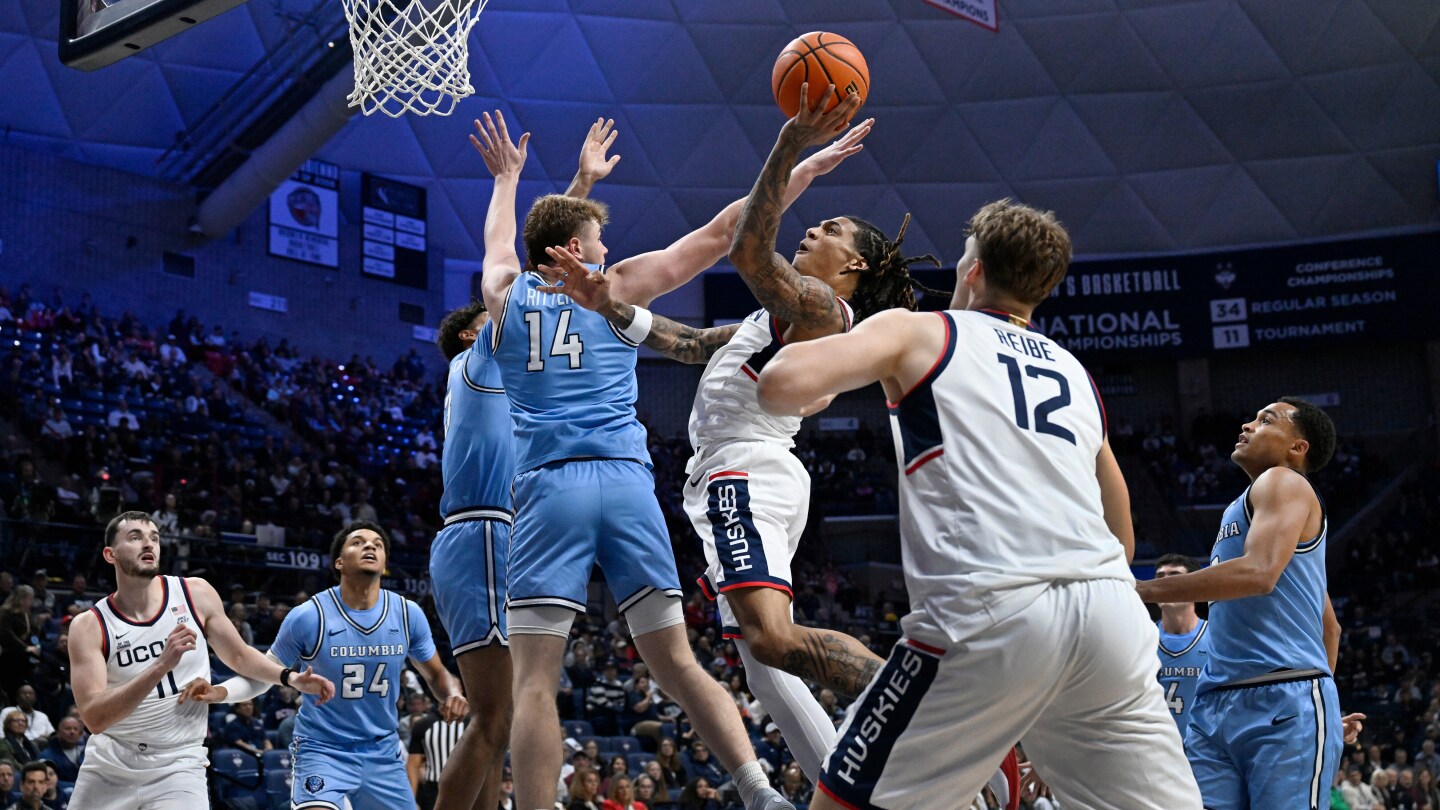
Solo Ball and Alex Karaban lead No. 3 UConn past Columbia 89-62
The third-ranked UConn Huskies showcased their dominance with an 89-62 victory over Columbia on Monday night, extending their unbeaten streak to 3-0. Solo Ball led the charge with 23 points, while Alex Karaban contributed 20 points and six rebounds. Tarris Reed Jr. added 19 points and eight rebounds, and Jayden Ross chipped in with 10 points off the bench. Despite a slow start, UConn found their rhythm, hitting 10 of their last 12 shots to take a commanding 50-27 lead at halftime. Columbia, led by Miles Franklin and Blair Thompson with 10 points each, struggled to keep pace, especially after missing 10 consecutive shots during a critical first-half stretch. The second half saw frequent substitutions by UConn coach Dan Hurley, as the Huskies maintained their lead without serious challenge. The game was marred by injuries to Columbia’s Avery Brown and Richard Nweke, who did not return after first-half incidents. Columbia will next face UMass Lowell at home, while UConn prepares for a high-stakes matchup against No. 7 BYU in the Hall of Fame Series at TD Garden in Boston.
-
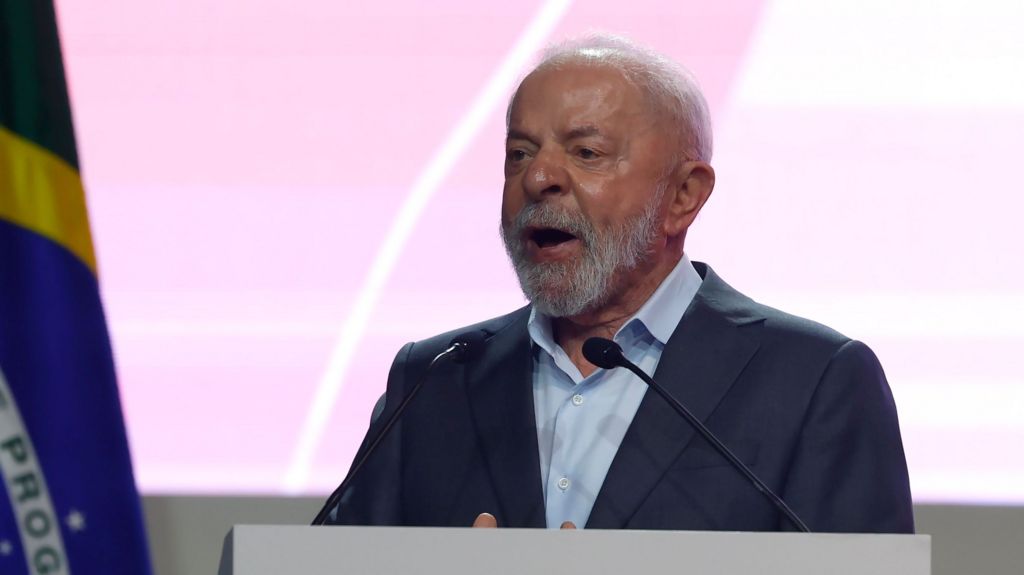
Fight fake news and defeat climate deniers, Brazil’s Lula tells UN talks
Brazilian President Luiz Inácio Lula da Silva delivered a passionate address at the opening of the COP30 climate conference in Belém, Brazil, urging the world to combat climate denialism and misinformation. Speaking to thousands of delegates gathered in the Amazonian city, President Lula emphasized the need for truth and scientific evidence in the face of ‘fake news and misrepresentation.’ While not explicitly naming former U.S. President Donald Trump, Lula criticized leaders who ‘control the algorithms, sew hatred, and spread fear,’ referencing Trump’s past dismissal of climate change as a ‘con job.’ The conference, held in a politically charged environment, began without the participation of senior U.S. officials, highlighting the ongoing tension between the U.S. and global climate efforts. President Lula unveiled Brazil’s ambitious Tropical Forest Forever Facility (TFFF), aiming to raise $125 billion for global forest protection, though fundraising has faced challenges, including the UK’s last-minute withdrawal of public funding. The conference also grapples with competing interests, such as the Alliance of Small Island States’ (AOSIS) call to prioritize limiting global temperature rise to 1.5°C, a goal the UN now deems increasingly unattainable. UN Climate Chief Simon Stiell warned of the economic consequences of climate inaction, urging nations to move beyond ‘squabbling’ and focus on collective progress.
-

Tyler Adams and Sean Zawadzki to miss US friendlies against Paraguay and Uruguay
The United States men’s national soccer team is grappling with significant player absences as it prepares for its upcoming exhibition matches against Paraguay and Uruguay. Midfielder Tyler Adams has joined a growing list of unavailable players, including Christian Pulisic, Weston McKennie, Tim Weah, Chris Richards, Antonee Robinson, and Malik Tillman. These absences come just before the team’s final preparations for the World Cup. The U.S. Soccer Federation announced on Monday that Adams and Sean Zawadzki withdrew due to injuries sustained during recent club matches. Adams collided heads with a teammate during a Premier League game, while Zawadzki injured his right knee in a playoff match. Despite these setbacks, the team has added Timothy Tillman, Malik’s brother, to the roster, bringing the total to 24 players. The 16th-ranked U.S. will face No. 39 Paraguay on Friday in Chester, Pennsylvania, followed by a match against 15th-ranked Uruguay in Tampa, Florida, three days later. Coach Mauricio Pochettino’s squad will use these friendlies to fine-tune their strategy ahead of their World Cup opener on June 12.
-

Real Madrid star Valverde picks up muscle injury ahead of Uruguay matches
MADRID — Real Madrid has announced that midfielder Federico Valverde sustained a muscle injury in his right leg during the team’s recent Spanish league match against Rayo Vallecano. The incident occurred on Sunday, November 5, 2023, when Valverde was substituted in the 83rd minute, making way for Trent Alexander-Arnold. The match concluded in a 0-0 draw. The club has not yet disclosed the severity of the injury or whether it will prevent Valverde from participating in Uruguay’s upcoming international fixtures against Mexico and the United States. Medical staff are closely monitoring his condition to determine the next steps in his recovery process. Valverde’s absence could pose a significant challenge for both Real Madrid and the Uruguayan national team, given his pivotal role in midfield.
-
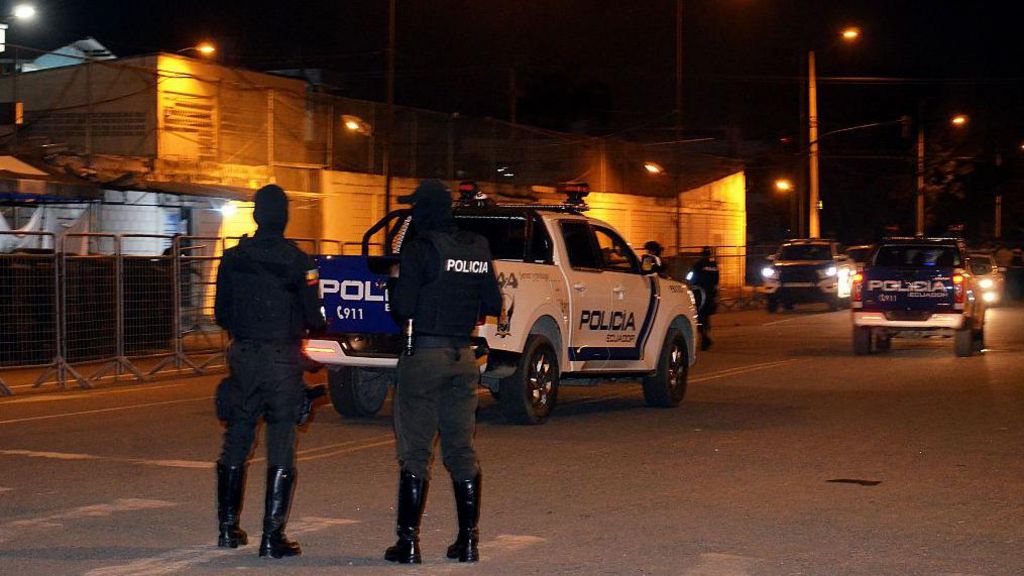
Dozens of inmates found hanged in Ecuador prison
A tragic incident at El Oro prison in Machala, southern Ecuador, has left at least 31 inmates dead, with 27 found hanged and four killed in violent clashes between rival gangs. The violence erupted in the early hours of Sunday, injuring more than 30 others. Security guards, alerted to renewed gang activity, discovered the hanged victims on the prison’s third floor. This marks yet another deadly episode in Ecuador’s overcrowded prison system, which has seen hundreds of fatalities in recent years due to riots and gang conflicts. The latest violence was reportedly sparked by plans to transfer inmates to a newly constructed facility. El Oro prison has a grim history, including a September incident that claimed 13 inmates and a guard. Relatives of the prisoners have urged authorities to enhance security measures, including separating rival gangs, while local residents have long advocated for relocating the prison from its central city location. In response to the crisis, President Daniel Noboa’s government announced the construction of El Encuentro, a maximum-security prison in Santa Elena province, set to open in late November with advanced security features. Prison gangs, such as Los Lobos and Los Choneros, have significantly contributed to Ecuador’s escalating violent crime, leading to their designation as Foreign Terrorist Organisations by the US Department of State in September.
-
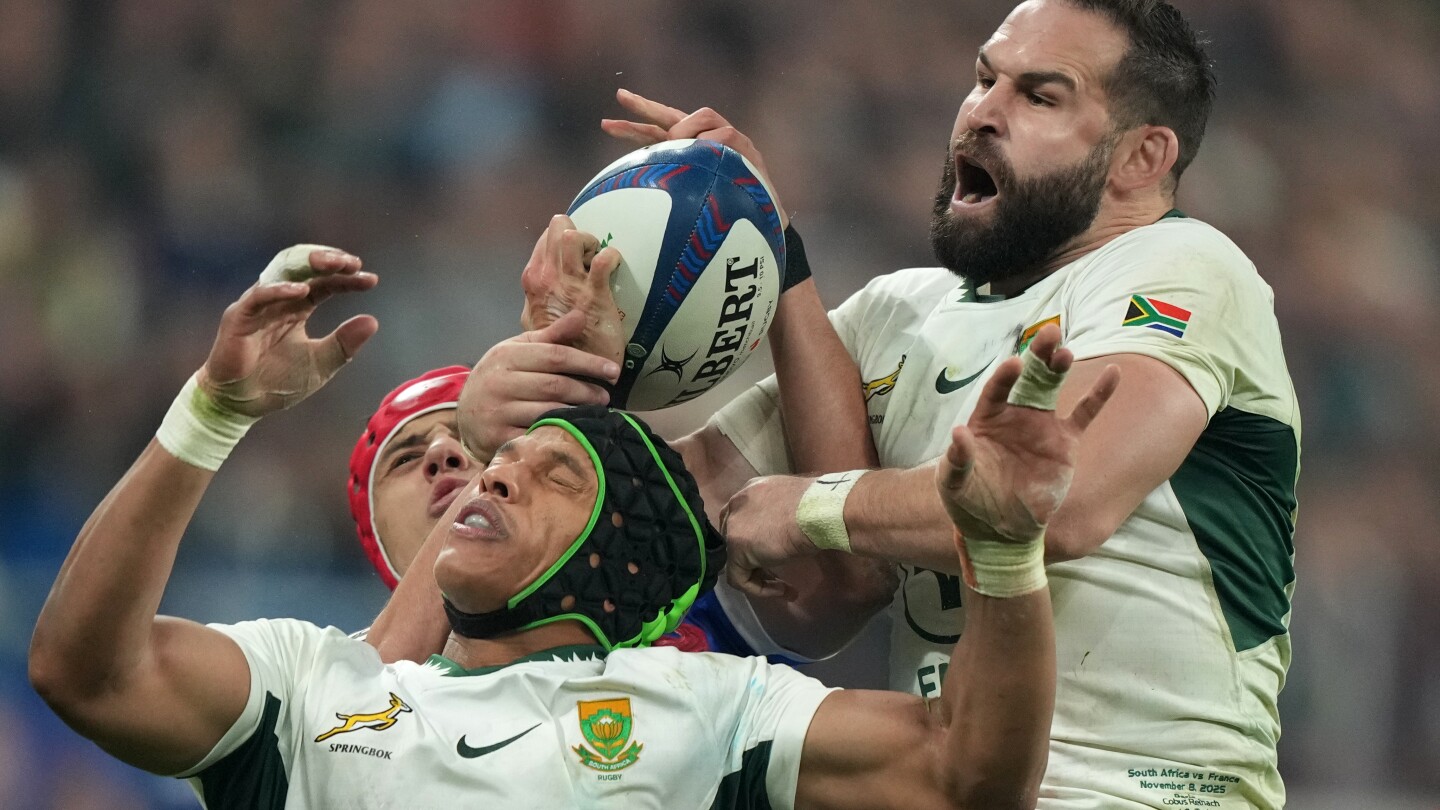
Springboks and All Blacks triumph despite setbacks in Paris and Edinburgh
The international rugby window kicked off with thrilling matches that showcased the dominance of traditional powerhouses and the rise of emerging teams. South Africa, despite being reduced to 14 men after Lood de Jager’s red card, delivered a masterclass to defeat France 32-17 at the Stade de France. Captain Siya Kolisi’s selfless sacrifice, being substituted during his 100th test, exemplified the Springboks’ team-first ethos. New Zealand, despite three yellow cards, edged out Scotland 25-17 at Murrayfield, with Damian McKenzie’s late-game heroics sealing the victory. England continued their resurgence with a commanding 38-18 win over Fiji, while Italy stunned Australia 26-19 in Udine. Ireland comfortably defeated Japan 41-10, and Argentina made history with a record-breaking 52-28 triumph over Wales in Cardiff. These results highlight the evolving dynamics of international rugby, with teams like England and Argentina showing significant progress. South Africa’s resilience and New Zealand’s tactical brilliance remain benchmarks for excellence. The weekend’s matches also underscored the importance of leadership, strategy, and adaptability in high-stakes rugby encounters.